



- DOOH uses digital screens in public and commercial settings.
- Programmatic buying allows advertisers to purchase screen inventory directly through DSP and SSP integrations.
- With buyers being able to determine restrictions like location, time, weather, audience movement and limitations.
- Open auctions allow exposed screen access while PMP deals restrict the supply to select buyers.
- DOOH measurement often uses modeled impressions, mobility data, footfall, and brand studies rather than clicks.
- Digital screens can change creative remotely under both direct and programmatic buying.
- All of the purchase price, order and scheduling reporting for the inventory changes with programmatic buying.
Table of Contents
- What Is Programmatic DOOH?
- Traditional DOOH vs Programmatic DOOH
- How Programmatic DOOH Buying Works Step by Step
- Open Exchange vs Private Marketplace Buying
- Targeting Signals in Programmatic DOOH
- Common Programmatic DOOH Formats
- Benefits of Programmatic DOOH
- Measurement in Programmatic DOOH
- Limits of Programmatic DOOH
- How BidsCube Can Help
- Final Thoughts
-
FAQs
- What Is Programmatic DOOH Advertising?
- How Is Programmatic DOOH Different From Traditional DOOH?
- Is Programmatic DOOH Bought Through Open Exchange or Private Marketplace Deals?
- What Targeting Signals Are Used in Programmatic DOOH?
- Is Programmatic DOOH Privacy-Safe?
- What Is the Average CPM for Programmatic DOOH?
Now, billboards are not purchased simply over the phone, with spreadsheets and through static media buys in a given market. Screens in airports, shopping centers, transit stations, stores, fuel stations, and city centers can now enter automated media transactions.
The shift is already visible in US spending. OAAA reports that digital OOH represented 34% of total OOH spending in 2024. Programmatic accounted for 24% of DOOH spend that year, up from 15% in 2023, and MAGNA expects the share to reach about 65% by 2029.
That growth explains the interest in dooh advertising. Even though the screen is reflective of traditional out-of-home media, programmatic DOOH transforms how advertisers discover, evaluate, schedule and purchase that impression.
What Is Programmatic DOOH?
what is programmatic dooh? It is the automated buying and selling of digital out-of-home screen inventory through programmatic media systems.
A media owner connects screens or screen groups to an SSP. Advertisers or agencies use a DSP to set buying rules and submit bids when eligible inventory becomes available.
The IAB defines DOOH as digital media used for marketing outside the home, including screens in public and commercial locations.
The difference between direct and programmatic digital out of home buying is mainly the transaction method.
A direct DOOH campaign may reserve selected screens for agreed dates and prices. Programmatic buying can evaluate available screen inventory against campaign rules as buying opportunities appear.
Read the BidsCube DOOH glossary for a shorter definition.
Traditional DOOH vs Programmatic DOOH
Direct and programmatic campaigns can use the same digital screen. The difference sits behind the screen.
| Parameter | Traditional DOOH | Programmatic DOOH |
| Buying method | Direct agreement with media owner or sales partner | Automated buying through DSP, SSP, exchange, or deal |
| Inventory selection | Screens or packages chosen before launch | Screens can qualify according to campaign rules |
| Pricing | Negotiated rate or package price | Auction price, deal floor, or agreed programmatic terms |
| Targeting | Location, schedule, venue, expected audience | Location, schedule, weather, venue, audience movement, and other available signals |
| Campaign changes | Media owner updates schedules or creative digitally | Buyers can change bids, schedules, rules, and creative settings through buying systems |
| Reporting | Screen delivery and audience estimates | Auction logs, delivery data, audience models, and campaign reports |
Direct DOOH does not require someone to physically replace creative. Digital screens can already receive new files remotely. Programmatic buying changes the media transaction, not the basic ability to update a digital screen.
That distinction matters when comparing digital out of home advertising methods.
How Programmatic DOOH Buying Works Step by Step
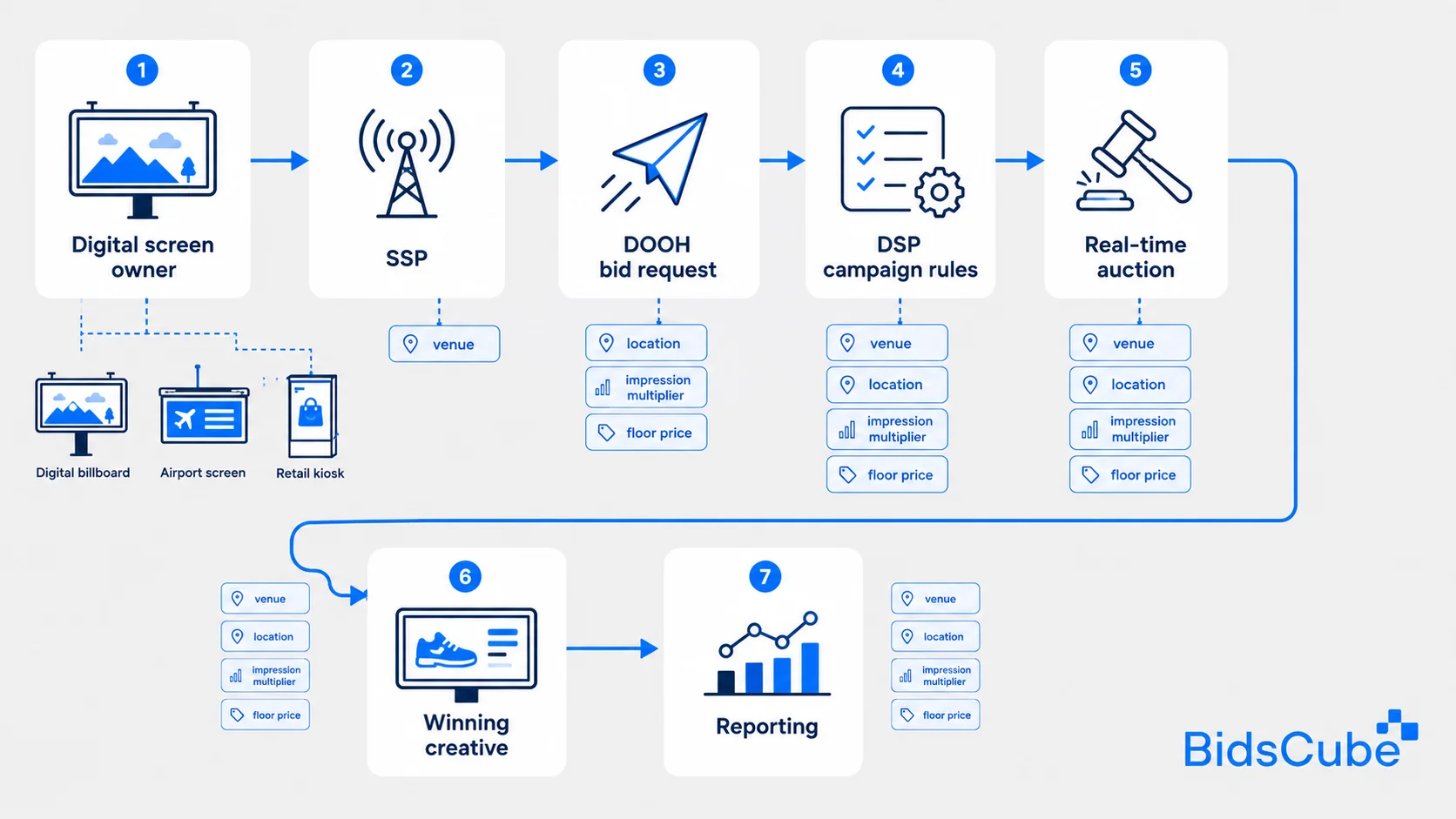
The answer to how does programmatic dooh work starts with the media owner.
- The screen owner connects inventory. Screens or venue groups connect to an SSP or another programmatic selling system.
- The seller describes the opportunity. The inventory can include venue, screen, format, schedule, floor price, and audience information.
- The advertiser sets campaign rules. The DSP receives budget, geography, time, venue, creative, and other buying instructions.
- An eligible screen opportunity appears. The SSP sends a bid request to connected buyers.
- The DSP reviews the request. It checks the opportunity against campaign settings and decides whether to bid.
- The auction selects an eligible buyer. Open auction or private deal rules determine which bid wins.
- The creative plays on the screen. Delivery information returns to the programmatic systems for reporting.
OpenRTB now includes a specific DOOH object. It can describe the placement, venue type, publisher, and other screen information. OpenRTB 2.6 also includes a quantity multiplier because one DOOH ad play may represent several estimated audience impressions rather than one person viewing one browser page.
See the BidsCube OpenRTB glossary and RTB guide for the transaction mechanics.
Follow the Screen Auction
For programmatic dooh advertising, check how the seller describes venues, impression multipliers, pricing, and deal access before comparing CPMs.
Open Exchange vs Private Marketplace Buying
digital out of home programmatic inventory can enter an open auction or a restricted private marketplace.
An open exchange makes eligible inventory available to a broader pool of connected buyers. This can work for campaigns that need wider geographic coverage or more screen options.
A private marketplace, or PMP, limits access to selected buyers. A media owner may use a Deal ID to provide access to a specific venue group, screen package, or pricing agreement. This private marketplace (PMP) route protects access to selected screen packages.
PMPs often make sense for sought-after inventory such as airport screens, major city placements, retail networks, or selected venue groups.
The choice is not only about prestige. A buyer should ask whether the screen package offers a reason to pay more, such as location, audience, timing, or limited availability.
Read the BidsCube Private Marketplace glossary for the deal structure.
Targeting Signals in Programmatic DOOH
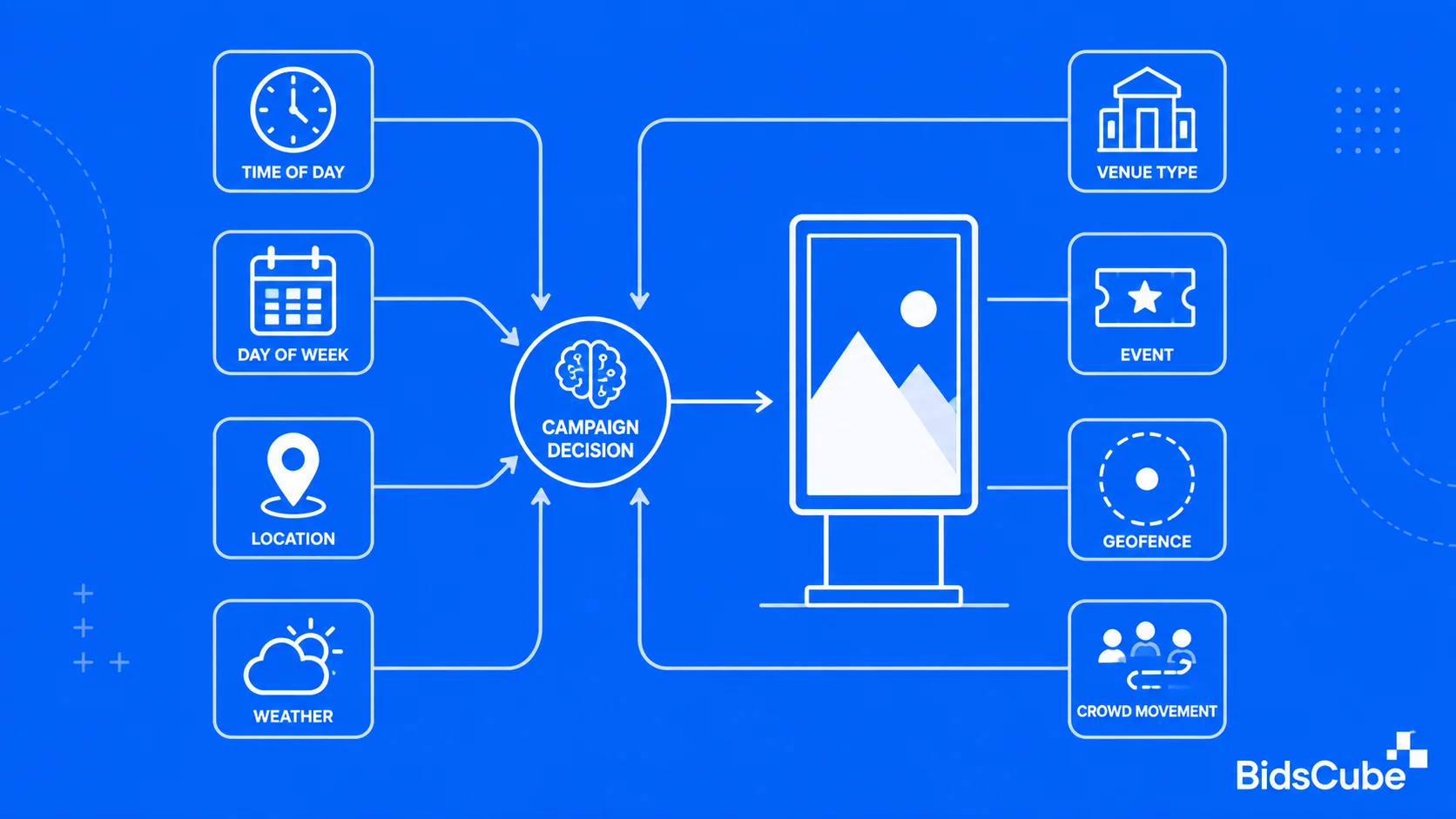
Programmatic digital out of home does not usually target one identified person standing in front of a screen. Most campaigns work with location and aggregated audience signals.
Common inputs include:
- Time of day
- Day of week
- Venue type
- Screen location
- Weather
- Nearby events
- Geofencing around points of interest
- Aggregated mobility patterns
- Expected audience composition
A coffee advertiser might raise bids for screens near commuter stations during the morning. A rainwear brand could run only when local weather meets predefined conditions.
This type of buying is different from browser retargeting. One screen can reach many people at the same time.
Common Programmatic DOOH Formats
dooh advertising covers much more than roadside billboards.
Large digital billboards. These screens appear near roads, city centers, and major public locations.
Transit screens. Airports, train stations, metro systems, bus shelters, and other transport locations carry digital inventory.
Place-based screens. Shopping centers, gyms, cinemas, offices, entertainment venues, and fuel stations can run digital media.
Retail screens. Stores can place screens near entrances, aisles, shelves, or checkout areas.
BidsCube has also worked with AXES on programmatic monetization for video-enabled screens in gaming machines and kiosks across US retail locations. The setup uses BidsCube SSP infrastructure, private deals, direct deal paths, and programmatic video buying.
Benefits of Programmatic DOOH
The main benefit of programmatic DOOH is that advertisers can buy outdoor screen inventory with media rules closer to other programmatic channels.
Faster campaign changes. Teams can adjust timing, bids, targeting rules, or media allocations without renegotiating every screen package.
More specific scheduling. A campaign can focus spend on selected hours, venues, weather conditions, or geographic areas.
Auction access. Buyers can compare eligible screen opportunities instead of committing the full budget to one fixed package.
Cross-channel planning. DOOH can sit beside mobile, display, video, or CTV campaigns when teams want contact both outside and inside the home.
Less dependence on browser identifiers. DOOH does not require third-party browser cookies to place an ad on a public screen. Audience planning still requires proper handling of mobility and location data.
Read Top Programmatic Trends for more on DOOH alongside other programmatic formats.
Measurement in Programmatic DOOH
Measurement works differently from web advertising. A billboard does not produce a click every time someone notices it.
Measurement challenges arise from the physical environment, a complication that does not exist in this way online according to IAB’s 2025 DOOH Measurement Guide. Audience estimates could be influenced by factors like the weather, blockages, movement, physical limitations of indoor GPSs and screen visibility.
Common methods include:
- Estimated impressions
- Audience reach
- Frequency models
- Footfall attribution
- Store or venue visitation
- Brand studies
- Mobility data
- Sales lift studies where suitable
Footfall attribution may compare screen exposure areas with later visits to a store or location. It should be treated as modeled attribution rather than proof that one specific screen caused one visit.
Limits of Programmatic DOOH
Not every screen network is available through programmatic buying. Supply varies by country, city, media owner, venue, and platform connection.
Measurement also remains less direct than website conversion reporting. One screen can reach many people, and audience counts often depend on models rather than individual impression logs.
Premium locations may sit behind PMP deals or direct agreements instead of open auctions.
Creative approval can add another restriction. Some media owners review content before it goes live and may limit last-minute changes or creative rotation.
Programmatic does not remove those physical and commercial rules.
How BidsCube Can Help
BidsCube connects advertisers and publishers through DSP, SSP, and programmatic trading infrastructure.
For screen owners, the BidsCube SSP can connect inventory with programmatic demand and provide auction and reporting controls. The AXES partnership gives a current example: BidsCube infrastructure is being used to monetise video-enabled screens in US gaming and retail environments through auction, PMP, and direct deal paths.
On the buying side, the BidsCube DSP provides bidding, targeting, budgeting, reporting, and supply access across supported programmatic inventory. DOOH-specific screen availability depends on connected supply and deal setup, so buyers should confirm available inventory before planning a campaign.
That is the practical answer to the second what is programmatic dooh question: the buying software matters, but so do the connected screen owners.
The second how does programmatic dooh work check should therefore happen at the supply level. Ask which screens are connected, how audience quantities are counted, which deal types are available, and what reporting comes back.
Header bidding is more closely associated with web and app monetization than outdoor screen trading. See Header Bidding vs Waterfall if the same publisher stack also includes browser inventory.
Independent client feedback is available on the BidsCube Clutch profile.
Final Thoughts
digital out of home programmatic buying brings auction logic and campaign controls to screens in physical locations.
It does not turn a billboard into a browser ad. Audience counting, creative approval, venue access, and measurement still follow the realities of outdoor media.
The second programmatic dooh advertising decision should start with supply. See which screens are open, how impressions are tallied, and what the deal is per view, and if those areas work for your campaign.
Our tech staff and AdOps are formed by the best AdTech and MarTech industry specialists with 10+ years of proven track record!

FAQs
What Is Programmatic DOOH Advertising?
Programmatic DOOH is the automated purchasing & selling of digital screen inventory via programmatic media systems. The buyer can enforce policies around location, time window, price and many other contextual signals.
How Is Programmatic DOOH Different From Traditional DOOH?
Direct DOOH usually involves negotiated screen packages and fixed commercial terms. It employs automated transactions, auction pricing or deal pricing and the use of DSP campaign rules.
Is Programmatic DOOH Bought Through Open Exchange or Private Marketplace Deals?
Both methods are possible. Open auctions allow for broad access, while PMP deals limit curated inventory to vetted purchasers.
What Targeting Signals Are Used in Programmatic DOOH?
Some examples of these signals are location, venue type, time, day of the week, weather conditions, local events and aggregated movement of an audience.
Is Programmatic DOOH Privacy-Safe?
But DOOH does not rely on browser cookies to display an ad on a public screen. There just needs to be some good rules around any mobility, location, audience or attribution data used around the campaign by advertisers and vendors.
What Is the Average CPM for Programmatic DOOH?
There is no single market-wide CPM for digital out of home advertising. Prices depend on the venue, city, screen size, audience, demand, avails, auction type and whether the inventory comes through an open exchange or private deal.
This Article's Ad Tech terms


