



- Native describes an advertising format that follows the surrounding content and interface.
- Programatic is an automated way of purchasing and selling media via DSPs, SSPs, and ad exchanges.
- Agencies and marketers can purchase native traffic through real-time bidding (RTB), private agreements, or directly with publishers.
- Programmatic native offers wider reach, audience targeting, retargeting, and faster campaign changes.
- Custom sponsored content and dedicated publisher partners still leverage traditional native.
- OpenRTB Native lets buyers send creative assets that publishers arrange inside their own templates.
- BidsCube provides full support for native inventory within the DSP, SSP, and White Label AdExchange.
Table of Contents
- What Are Native Ads?
- What Is Programmatic Advertising?
- The Core Distinction: Format vs. Buying Method
- Programmatic Native vs. Traditional Native Buying
- Can You Combine Native Ads vs Programmatic Buying?
- Benefits of Combining Native and Programmatic
- When to Keep Native Non-Programmatic
- How BidsCube Can Help
- Final Thoughts
-
FAQs
- What Is the Difference Between Native Ads and Programmatic Advertising?
- Can Native Ads Be Bought Programmatically?
- What Is the Difference Between Programmatic Native and Traditional Native Buying?
- Should I Combine Native Ads With Programmatic Buying?
- When Is Direct Native Advertising Better Than Programmatic Native?
- Does OpenRTB Support Native Ad Formats?
Native ads vs programmatic buying often appear in the same campaign, so teams sometimes treat them as competing options. The concepts sit on different levels:
- Native refers to the ad experience.
- Programmatic refers to the transaction used to buy or sell it.
The overlap keeps growing because more native inventory now enters automated auctions. Just like a display or video inventory, a DSP can also bid on an in-feed card, content recommendation, app placement, or effectively a promoted listing.
According to the Native Advertising Institute, native ads are nine times more likely to be clicked on than traditional display ads. While the figure provides helpful context, teams should read it like an industry guide for direction instead of a concrete campaign expected outcome. Final CTR is still determined by the factors such as: creative quality, publisher context, audience fit, disclosure and landing-page relevancy.
What Are Native Ads?
Native ads are paid placements designed to match the form, function, and visual structure of the environment where they appear. They should feel consistent with the page or app without hiding their commercial purpose.
Layout and disclosure control are in the hands of the publisher. In this case, the advertiser provides headline, image, brand name, description, logo, and call to action.
Formats that are commonplace include but are not limited to in-feed ads, recommendation units, promoted listings, in-app cards, sponsored search results, and custom content units.
The query what are native ads programmatic usually to do with confusion between the buying system and the ad format itself. Native ads are not necessarily programmatic, but they can be. A publisher could also sell them using a content recommendation network or direct sponsorship.
Clear labels matter. Native design is about reducing visual disruption, not hiding advertising within independent editorial content. Brand safety also covers the surrounding page, the destination, the identity of the advertiser, and the correctness of the assertion.
Read Native Advertising vs. Display Advertising to compare layout, attention, creative requirements, and campaign roles.
What Is Programmatic Advertising?
Programmatic advertising is the automated buying and selling of digital media through software. A DSP helps advertisers evaluate impressions and submit bids. An SSP helps publishers offer inventory and manage demand. An ad exchange can connect both sides and apply auction rules.
In an RTB transaction, the seller sends a bid request describing an available impression. The DSP checks campaign rules, audience signals, content context, device, geography, budget, frequency, and price. It then bids or declines.
The method can buy display, native, online video, connected TV, audio, mobile app, and digital out-of-home inventory. Programmatic does not describe how the final creative looks.
IAB Tech Lab describes OpenRTB as a foundation for real-time programmatic trading. Its separate Native Ads API defines native objects, asset requirements, layouts, and event tracking used with OpenRTB.
The Core Distinction: Format vs. Buying Method
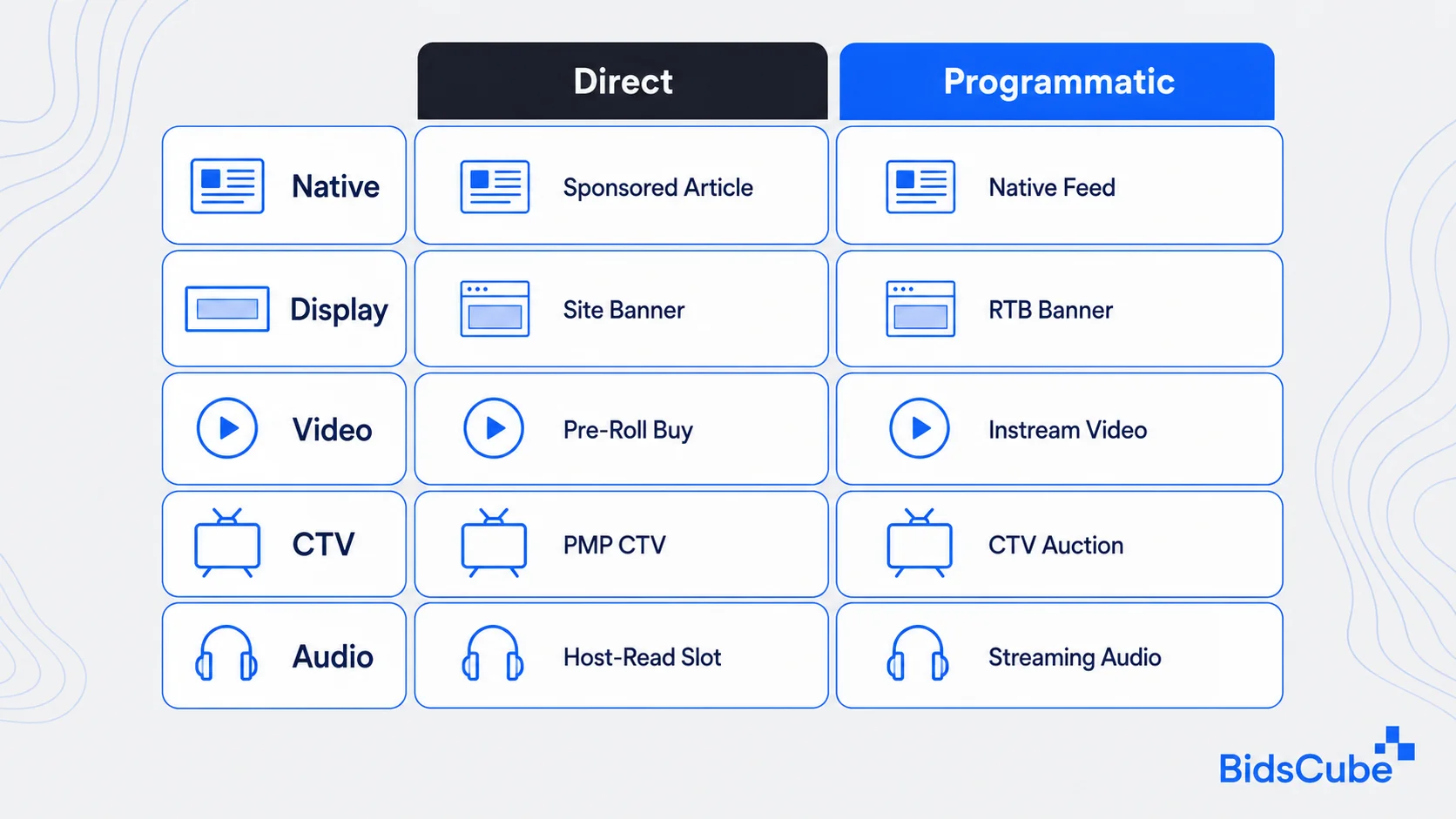
The difference between programmatic and native ads becomes clear when teams separate two questions:
- What will the audience see?
- How will the advertiser buy the placement?
Native answers the first question. Programmatic answers the second.
| Format | Direct Buying | Programmatic Buying |
| Native | Sponsored article, custom content package, or reserved publisher card | In-feed unit, recommendation card, or promoted listing bought through RTB or a deal |
| Display | Reserved banner placement or site sponsorship | Banner bought through a DSP |
| Video | Direct publisher or streaming agreement | Video impression bought through a DSP |
| CTV | Direct streaming package | Connected TV inventory bought through programmatic supply |
| Audio | Direct podcast or streaming sponsorship | Audio impression bought through automated platforms |
The phrase programmatic native ads vs traditional native buying compares two buying paths for the same general format. It does not compare two unrelated advertising types.
Some teams use native display for programmatic ads as a loose label for visual native inventory bought through a DSP. The wording is not a formal industry category, but it usually refers to image-and-text units rendered through a publisher template.
Programmatic Native vs. Traditional Native Buying
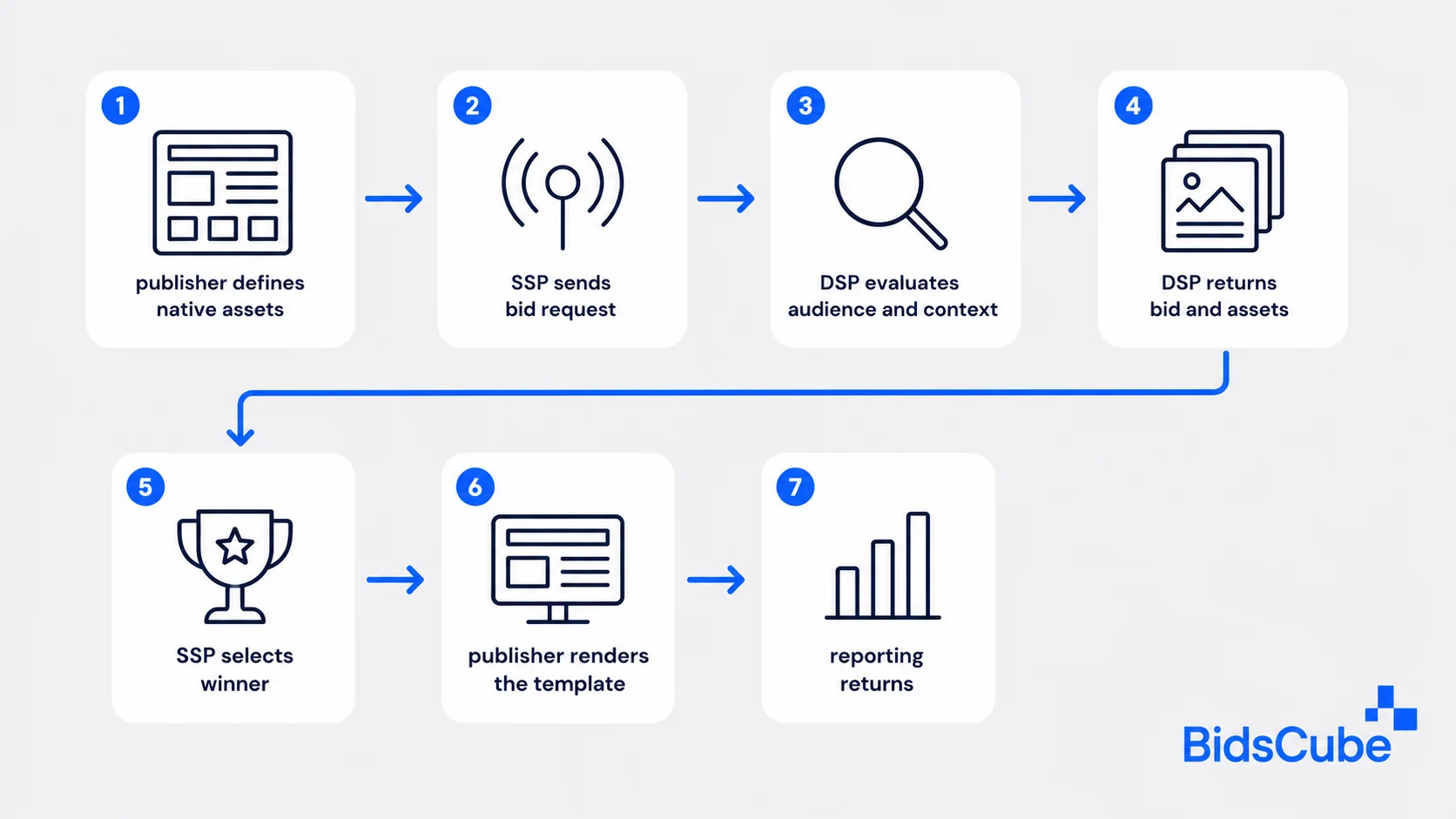
Programmatic native and traditional native can use similar headlines, images, and landing pages. The media workflow differs.
| Parameter | Programmatic Native | Traditional Native |
| Buying model | RTB, PMP, or automated deal through a DSP and SSP | Direct agreement with a publisher or content recommendation network |
| Placement reporting | Can include domain, app, placement, impression, and auction data | Often based on publisher or network summaries |
| Reach | Inventory across connected open-web partners | The contracted publisher or network partner pool |
| Targeting | Audience segments, context, retargeting, geography, device, and first-party data | Often publisher context, site audience, or negotiated placement |
| Creative process | Structured assets delivered into a native ad template | Standard network unit or custom publisher production |
| Optimization | Bids, audiences, supply, and creative can change during delivery | Changes often require publisher or network coordination |
| Typical use | Scalable awareness, content distribution, performance, and audience retargeting | Sponsored content, exclusive placements, and editorial partnerships |
The right route depends on the offer, content needs, audience, reporting requirements, and publisher relationships. See Top Programmatic Advertising Types and Formats for native, display, video, audio, CTV, and other inventory options.
Can You Combine Native Ads vs Programmatic Buying?
Yes. The combination is common because native units can be described as separate assets rather than one finished banner.
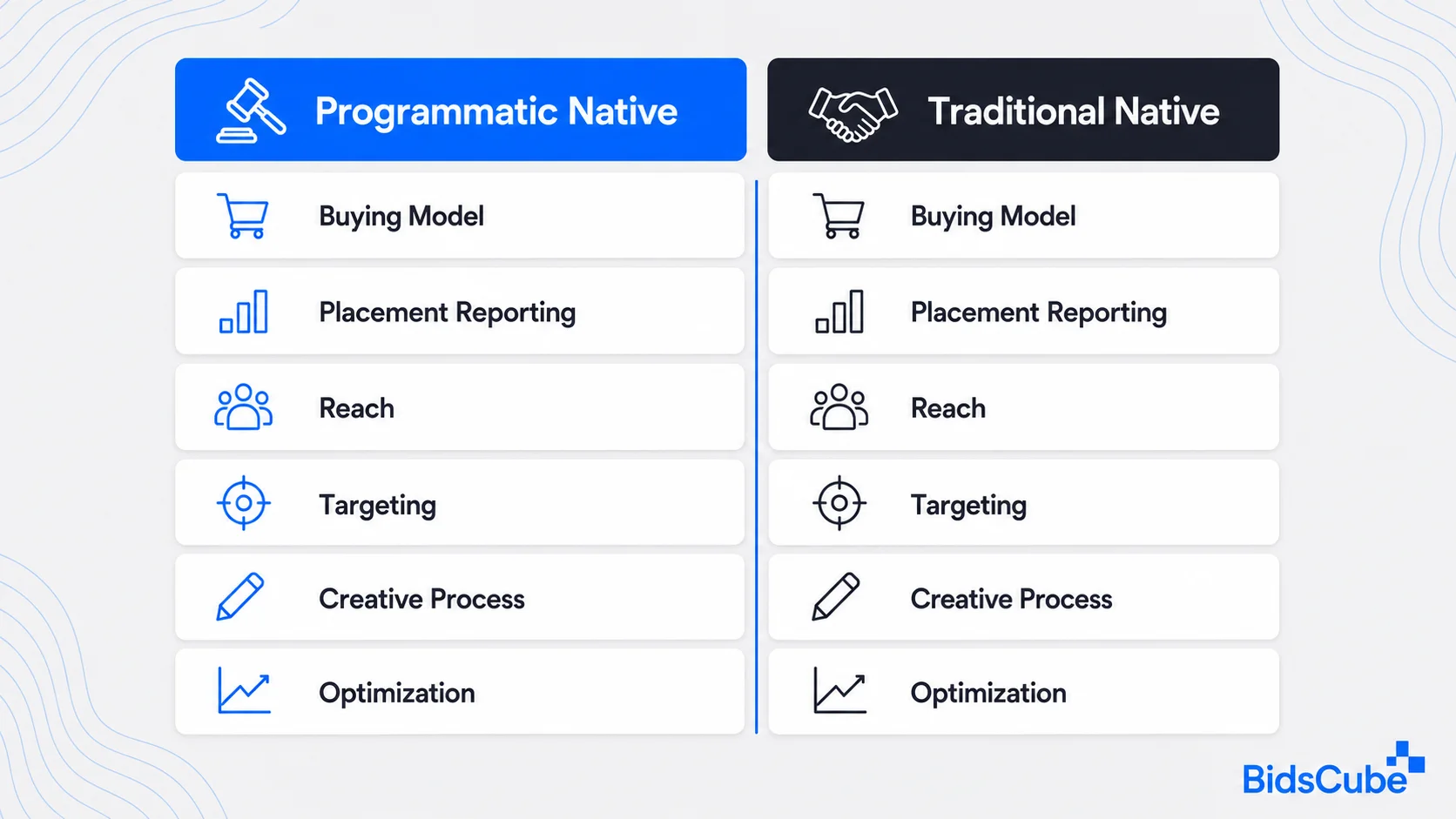
A publisher defines the required components in the bid request. These may include headline length, image dimensions, logo size, body-text length, call-to-action rules, and event trackers.
The DSP returns a bid with the requested assets. The SSP or exchange selects a winner, and the publisher places those assets into its own native ad template.
This structure lets one campaign adapt to several publisher layouts while keeping the core message consistent.
The IAB OpenRTB Dynamic Native Ads API was created for this purpose. It describes the native object, ad-unit information, layout, creative assets, links, and tracking. The standard supports programmatic native transactions while remaining useful in some non-RTB environments.
A hybrid strategy can also combine automated placements with direct publisher content. A single flagship sponsored article that a company commissions can be distributed on relevant sites and apps via programmatic native units.
The second difference between programmatic and native ads appears at the campaign-planning level. Native defines the experience, while programmatic adds audience selection, auction pricing, pacing, and reporting.
Benefits of Combining Native and Programmatic
Programmatic buying adds broader reach, audience controls, live campaign changes, and shared reporting to native formats. It also lets buyers choose between open auctions, private deals, and other buying methods.
1. Scale Beyond a Small Publisher List
A direct campaign may run with one publisher or one native network. Programmatic buying can connect the same asset set with inventory across many SSP partners.
Buyers still need allowlists, contextual rules, supply checks, and placement reports. The main benefit is controlled scale without separate negotiations for every placement.
2. Audience Targeting and Retargeting
Programmatic systems can apply approved audience signals to native placements. A campaign may use first-party segments, content context, location, device type, time, or previous site activity.
Audience retargeting can show a case study after a product-page visit or remind a shopper about a viewed category. Frequency rules remain essential.
3. Real-Time Creative and Supply Decisions
Teams can compare headlines, images, calls to action, publishers, devices, and audience groups while the campaign runs.
A weak placement can be removed, while stronger headlines and segments receive more budget. Optimization should use business outcomes because a high CTR can still lead to poor conversions.
4. Shared Reporting With Other Formats
A DSP can place native results beside display and video data in one reporting structure. This helps buyers compare reach, frequency, cost, engagement, and conversions across formats.
Teams still need consistent conversion rules, naming, time windows, and deduplication.
5. Flexible Deal Types
Programmatic does not mean open auction only. Buyers can use private marketplace deals, preferred access, curated supply, or programmatic guaranteed terms where supported.
A private deal may offer known inventory, agreed price rules, and tighter brand-safety conditions. Read Programmatic Advertising Examples for practical ways automated media buying supports different formats and campaign goals.
When to Keep Native Non-Programmatic
Automated buying is not the best route for every native campaign.
1. Custom Sponsored Content
Enhanced sponsored content, commission byline, and the sponsored post and podcast must typically be arranged directly with the publisher.
You may give writers, editors, legal review, and distribution help to book publishers. These services sit outside a standard RTB auction.
2. Exclusive Premium Placements
Direct buyers have reserved spots on publisher home page modules, newsletters, category sponsorships, and major event packages.
In return, the advertiser owns certainty, timing, and exclusivity which an open auction might not provide them.
3. Sensitive Brand Requirements
A direct deal may fit campaigns that require manual approval of the exact environment, article, disclosure language, and release schedule.
Some partnerships still need closer editorial and commercial coordination.
4. Complex Production
A content recommendation unit usually works with standard assets. A custom interactive piece may require design, development, hosting, analytics, and approval processes.
The value comes from the full partnership, not only the impression.
The query programmatic native ads vs direct publisher content should therefore focus on production and control, not only CPM or reach.
How BidsCube Can Help
BidsCube provides connected products for programmatic buyers, publishers, agencies, and AdTech operators.
- The BidsCube DSP supports native alongside display, video, and mobile formats. Its current product page lists real-time bidding across sites and apps, real-time reporting, bidstream access, retargeting, device controls, frequency limits, category targeting, user segments, and private marketplace deals.
Advertisers can use these controls to activate native assets, compare placements, manage budgets, and apply audience rules.
- The BidsCube SSP lists native among its supported formats and provides real-time reports, price-floor controls, header-bidding connections, Prebid SDK support, and several integration options.
Publishers can define inventory rules and connect suitable demand while keeping control over how the final native unit appears in their environment.
- The BidsCube White Label AdExchange supports native, banner, video, and audio inventory. The product page also lists oRTB connections, bidstream access, real-time reports, user sync, global block lists, and issue inspection.
Both sides should confirm asset requirements, OpenRTB Native versions, trackers, disclosure rules, and template behavior during integration.
Teams can review BidsCube on Clutch as part of platform and partner research.
Some marketers use native display for programmatic ads to describe this mixed setup. The integration should still use precise native fields rather than standard banner logic.
Expert View
Roman Vasyukov explains why native ads need both a natural fit and clear disclosure. The format should match the surrounding content without hiding its commercial purpose.
Native creative works best when the message belongs in the user experience but the advertising label stays clear. Programmatic technology adds scale and control, but it cannot replace relevance or honest disclosure.
Roman Vasyukov, CEO and Founder of BidsCube
The quote points to a practical rule for native campaigns: fit the environment, label the ad clearly, and judge performance by relevance rather than reach alone.
Final Thoughts
Native and programmatic are not competing categories. One defines the advertising format, while the other defines the buying method.
Combine them when the campaign needs native presentation, open-web scale, audience targeting, audience retargeting, live optimization, and shared reporting. Keep direct native deals for custom content, exclusive positions, and partnerships that need editorial production.
Use BidsCube to connect native demand and supply through programmatic infrastructure.
Our tech staff and AdOps are formed by the best AdTech and MarTech industry specialists with 10+ years of proven track record!

FAQs
What Is the Difference Between Native Ads and Programmatic Advertising?
Native advertising is a format designed to follow the surrounding content and interface. Programmatic advertising is an automated method for buying and selling native, display, video, audio, CTV, and other inventory.
Can Native Ads Be Bought Programmatically?
Native ads can be bought through RTB, private marketplace deals, preferred deals, and other automated transactions. The DSP provides creative assets, and the publisher displays those assets within a template that it creates.
What Is the Difference Between Programmatic Native and Traditional Native Buying?
Programmatic native uses DSP and SSP technology for auctions, targeting, reporting and optimization across all connected inventory. Traditional native usually relies on a direct publisher or network agreement and may include custom production or reserved placement.
Should I Combine Native Ads With Programmatic Buying?
When you need open-web reach, audience targeting, retargeting, rapid A-B testing, and sharing of reporting, use native in conjunction with programmatic buying. Be sure that you are still disclosing clearly, have rules for supply-quality and for landing-page relevance.
When Is Direct Native Advertising Better Than Programmatic Native?
Direct native is better for custom sponsored content, exclusive publisher placements, complex production, and campaigns requiring close editorial cooperation. A direct agreement can include services that an automated auction does not provide.
Does OpenRTB Support Native Ad Formats?
OpenRTB supports native transactions through the OpenRTB Dynamic Native Ads API. The specification defines native requests, responses, assets, layouts, links, and tracking used by DSPs, SSPs, and exchanges. The phrase what are native ads programmatic can be answered in one line: native is the format, and programmatic is one way to buy it.


