



U.S. programmatic advertising revenue reached $162.4 billion in 2025, up 20.5% from the previous year. The increase added $27.6 billion in annual revenue, according to the IAB Internet Advertising Revenue Report prepared by PwC.
Table of Contents
- Understanding the Importance of Programmatic Strategy Optimization
- How to Build a Programmatic Advertising Strategy From Scratch
- Programmatic Strategy: Building vs Optimizing
- Critical Components of a Programmatic Strategy
- Benefits of Optimizing Your Programmatic Strategy
- Common Mistakes That Undermine a Programmatic Strategy
- External Issues That Can Hurt Campaign Results
- Steps to Improve an Existing Campaign
- Best Practices for Programmatic Optimization
- Tools for Programmatic Campaign Review
- Measuring the Success of Your Updated Strategy
- What Will Shape Programmatic Buying Next
- Conclusion
More spending doesn’t equal profitable campaigns. Even with strong audience rules, fresh creative, solid supply, tight frequency settings, or bids that mirror the campaign goal, a team can still lose money.
This guide includes a comprehensive overview of both toc build your first programmatic advertising strategy and how to assess an existing strategy. It describes setting up initial campaigns, judging the current state of play, solving some internal issues, selecting tools and aligning media reports with business records.
Understanding the Importance of Programmatic Strategy Optimization
A transaction typically starts when someone visits a website or an app. The publisher sends an impression request through an SSP or ad exchange. A DSP checks the request against active campaign rules and decides whether to bid. If the bid wins, the selected ad loads.
The auction takes place while the page loads. It is based on the available impression, not on a search query entered elsewhere.
Campaign review matters because buying conditions change. Bid pressure rises and falls. Creative response drops after repeated exposure. Some publishers perform better than others. Audience data also ages.
Regular checks help teams:
- Find wasted spend
- Remove poor inventory
- Control frequency
- Compare creative versions
- Adjust bids by placement or audience
- Connect media activity with sales or lead records
How to Build a Programmatic Advertising Strategy From Scratch
Start with one business goal. Decide whether the campaign should create awareness, bring qualified visitors, generate leads, raise sales, or bring previous visitors back.
When choosing a DSP, look to the volume of inventory available, what formats are supported, depth of reporting available, how much data control you get access to, any fees for service or technology support. The BidsCube DSP supports real-time bidding across sites and apps, several ad formats, more than 55 campaign settings, and placement-level reporting.
Build two or three audience groups for the first launch. One group may use first-party records, another may use page context, and a third may cover previous site visitors.
Set a test budget that can collect enough data without exposing the whole media budget. Add daily limits, bid limits, frequency caps, and blocked supply before launch.
Finish by choosing a small metric set. Match every metric with the campaign goal. Awareness may use reach and viewability. Lead campaigns may use CPA and qualified lead rate. Sales campaigns may use ROAS and revenue.
Set Up the First Campaign
Review the BidsCube DSP for audience controls, budget settings, reporting, and real-time buying
Programmatic Strategy: Building vs Optimizing
| Stage | What You Need to Set Up | Typical Tools |
| Goal Setting | Campaign purpose, conversion event, sales target, and reporting period | CRM, analytics software, sales records |
| Media Setup | DSP, formats, supply sources, budget, bids, and campaign dates | DSP, ad exchange, PMP deal tools |
| Audience Setup | First-party groups, contextual categories, retargeting, and exclusions | CRM, DMP, CDP, DSP audience tools |
| Measurement Setup | Pixels, server events, attribution rules, naming, and dashboards | Web analytics, DSP reports, BI tools |
| Campaign Review | Bid changes, audience changes, creative tests, supply checks, and budget moves | DSP reports, verification tools, bidstream records |
The building stage creates the campaign rules. The review stage tests whether those rules work under real auction conditions.
A clear programmatic media buying strategy should state who the campaign targets, which supply it may buy, how much it may pay, and which event counts as success. Without those answers, reports become a collection of numbers with no decision attached.
Critical Components of a Programmatic Strategy
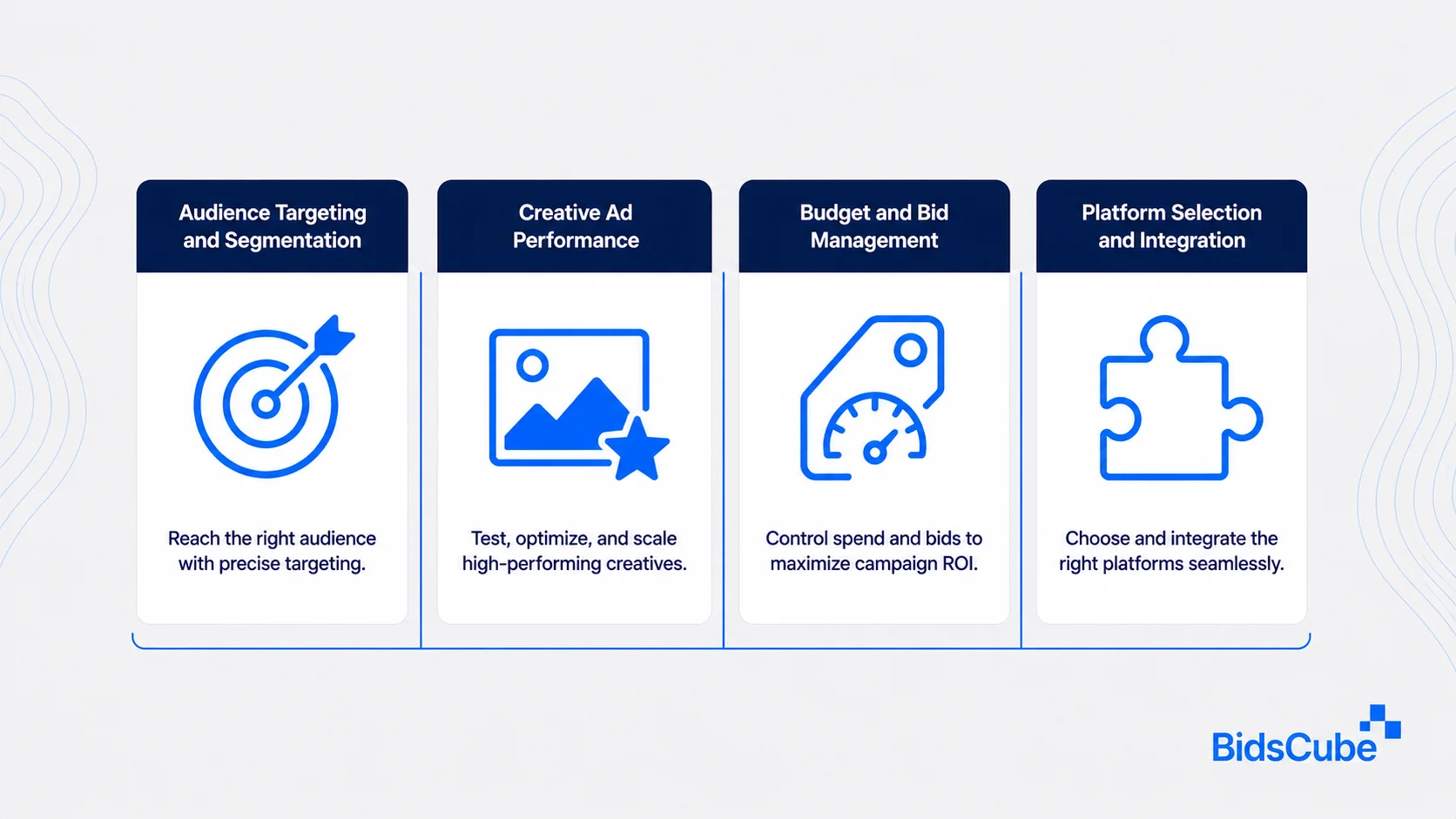
Focusing on critical components that can benefit significantly from ongoing optimization is crucial to getting the most out of your programmatic advertising. Each element is crucial to helping your strategy reach its full potential.
Audience Targeting and Segmentation
Audience groups should reflect a real difference in intent, account status, behavior, or context. Avoid building dozens of tiny groups before launch. Small groups may not produce enough impressions or conversions for a fair comparison.
Broad groups can create the opposite problem. They collect volume but make it hard to identify which signals matter.
Start with a few distinct groups. Add exclusions so existing customers do not receive acquisition messages and converted users do not keep seeing the same offer.
Creative Ad Performance
Creative response changes over time. A headline or image may work during the first week, then lose clicks or conversions as frequency rises.
Test one variable at a time:
- Headline
- Main image
- Offer
- Call to action
- Product shown
- Ad format
- Landing page
Keep the audience, bid, and placement rules stable during each creative test. Changing everything at once makes the result hard to interpret.
Creative rotation also reduces ad fatigue. Prepare several approved versions before launch instead of waiting for response to fall.
Budget and Bid Management
A high bid can win more auctions but may raise CPA. A low bid may protect CPM while preventing the campaign from reaching suitable supply.
Set bids around the campaign goal and available conversion history. Review bid rate, win rate, clearing price, CPA, and conversion quality together.
Daily caps stop short bursts of traffic from consuming the full budget. Pacing rules spread spend across the campaign period. Separate budgets by audience or format when each group serves a different purpose.
Real-time bidding optimization should not mean changing bids after every small movement. Look for repeated patterns across enough impressions, days, and conversions.
Platform Selection and Integration
A platform decision should compare DSPs and exchanges, not closed social advertising accounts with open-web media tools.
For example, a travel advertiser may compare one DSP with strong mobile and native supply against another with broader CTV inventory and private publisher deals. The decision depends on format access, geographic reach, reporting, service fees, and data controls.
Check whether the platform connects with:
- CRM and analytics systems
- Verification vendors
- Data providers
- Attribution tools
- BI software
- Private marketplace partners
- Server-side event feeds
A platform with many features may still be a poor fit when the team cannot export reports or connect its existing records.
Benefits of Optimizing Your Programmatic Strategy
There are countless benefits of optimizing your programmatic advertising strategy that can assist with boosting your bottom line. In the following, we write about some benefits that you can get by having the optimization approach done properly.
Lower Wasted Spend
Placement reports can reveal sites, apps, devices, or audience groups that consume budget without producing useful activity.
Removing those sources gives stronger inventory more room within the same budget.
Better Reach Control
Frequency caps prevent a small audience from receiving too many impressions. Audience exclusions stop spend on people who already completed the desired action.
Reach reports also show whether narrow settings block too much of the market.
Stronger Creative Response
Creative tests can show which message fits each audience group. A product-focused ad may suit retargeting, while an educational message may work better for new visitors.
Common Mistakes That Undermine a Programmatic Strategy
Many campaign problems come from internal setup decisions rather than outside market conditions.
- Teams often run one creative version for too long. Repeated exposure lowers response and makes later reports look worse than the original campaign idea.
- Missing frequency caps can waste budget on a small group. Weak supply controls can place ads on unsuitable pages or low-quality apps. The brand safety in programmatic advertising guide covers allowlists, blocklists, verification, and private deals.
- Audience size also needs attention. A group that is too narrow may not spend. A group that is too broad may produce volume with little commercial relevance.
Other common errors include changing several variables in one test, judging campaigns too early, and letting platform-reported conversions stand without checking CRM or sales data.
External Issues That Can Hurt Campaign Results
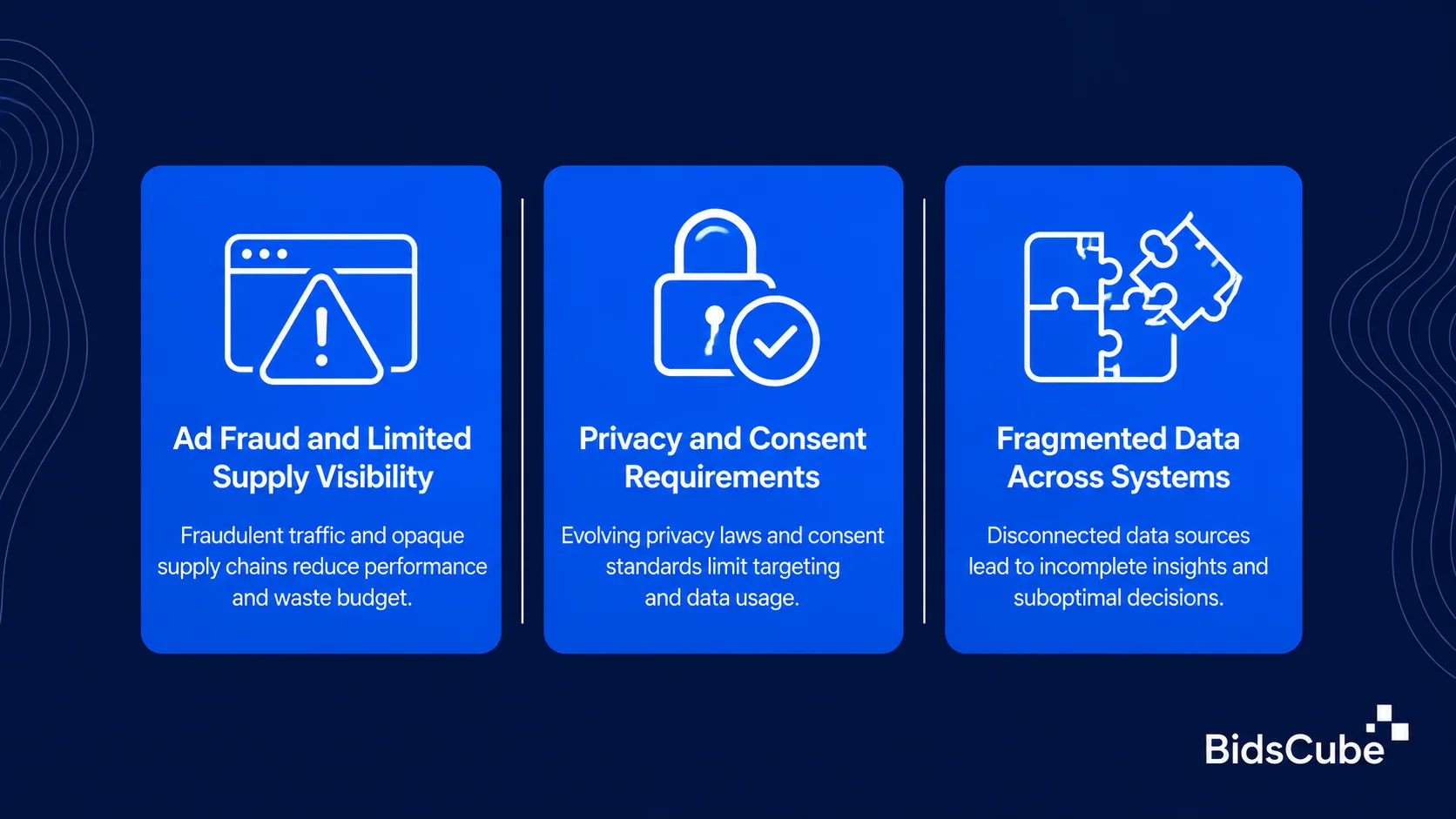
There are particular problems or issues that can affect the campaign results. Knowing these makes a great difference.
Ad Fraud and Limited Supply Visibility
Invalid traffic can create fake impressions, clicks, or conversions. Domain spoofing may also make poor inventory appear to come from a trusted publisher.
Use seller records, domain and app reports, blocked lists, verification services, and placement checks. Ask the platform which fees and supply paths appear in exported reports.
Privacy and Consent Requirements
Advertising should subject to rules regarding personal information, approval, storage and audience sharing and deletion.
A privacy-first advertising plan begins with data the company has permissions to use. Contextual targeting first-party records help reduce reliance on cross-site identifiers.
Fragmented Data
DSP, website, CRM, sales, and app reports may use different names, time zones, attribution windows, and user identifiers.
Set naming rules before launch. Decide which system records the final conversion and how the team handles duplicate credit.
Steps to Improve an Existing Campaign
Optimization is an ongoing process. Below is a guide to help you make better-informed decision making for your programmatic campaigns.
Step 1. Review Current Performance
Spend, impressions, reach, frequency, viewability (slightly less important), CTR, CPA and ROAS. Train on audience, format, device, domain, app & geography and creative.
Do not remove a placement because of one conversion-free day. Check whether the pattern repeats and whether the sample is large enough.
Step 2. Refine Audience Groups
Compare audience size, CPM, response, conversion quality, and sales status. Remove overlapping groups where the same people receive competing campaign messages.
Use recent first-party activity where permission allows. Separate previous customers from new prospects.
Step 3. Test Creative Assets
Formulate a clear test question i.e. Does an image of the product outperform an image lifestyle for repeat visitors? Leave the rest of setup displays a status quo. Note start date, audience, format and success metric.
Step 4. Adjust Bids and Budget Rules
Raise bids where suitable inventory repeatedly loses auctions but produces strong post-click or post-view activity.
Lower bids or pause supply that wins often but produces weak business records.
The goal of programmatic campaign optimization is not to change every setting. It is to make a small number of supported changes and measure what happened next.
Check the numbers before moving the budget. Use these programmatic metrics that define campaign success to separate delivery numbers from business performance.
Best Practices for Programmatic Optimization
It is vital to know the best practices for programmatic campaigns in order for them to work optimally. This guide document serves to maximize with your ad spend.
Use Dynamic Creative Optimization Carefully
Dynamic Creative Optimization can assemble approved headlines, images, prices, locations, or products based on available campaign signals.
Set strict templates and review every possible combination. A system may assemble a technically valid ad that reads poorly or pairs the wrong image with the wrong offer.
Review Market Changes
Auction prices, publisher supply, seasonal demand, and audience behavior change. Compare current data with the same weekday, month, or sales period where possible.
Do not copy last quarter’s bids into a new campaign without checking current clearing prices and available inventory.
Work Closely With Platform Teams
Platform support teams can help investigate no-bid reasons, integration errors, reporting differences, and supply settings.
Ask for written explanations and supporting records. Keep a log of changes so the team can connect later movement with a specific action.
Give Each Channel a Separate Role
Display, native, video, CTV, and audio do not need identical metrics.
Display may bring previous visitors back. Native may distribute educational content. Video may introduce a product. CTV may add household reach.
Shared branding matters, but each format needs its own budget, creative, and measurement rules.
Tools for Programmatic Campaign Review
This is where the right tools and technologies come into play, enabling you to harness a programmatic strategy more effectively. These tools can make complex processes easier and enable you to take better decisions.
Analytics and Reporting Software
Web analytics connects ad traffic with page activity and conversion events. CRM records show lead status, sales stage, and revenue after the click.
DSP reports show auction and media activity. BidsCube DSP lists real-time data, filtering, bidstream access, a built-in issues inspector, campaign autorules, and audience controls. These records can help teams trace low spend, weak win rates, or unsuitable supply.
The most useful programmatic ad optimization tools let the team move from a dashboard total to the placement, audience, device, bid, or creative behind it.
Predictive and Automated Bidding Tools
Automated bidding can assess large sets of auction and conversion records faster than manual rules. It still needs clean conversion data and limits set by the buyer.
Teams using predictive analytics in digital marketing should compare model recommendations with actual sales, lead quality, and customer records.
Fraud and Media Quality Software
Verification vendors can check invalid traffic, viewability, page context, app quality, and domain accuracy.
These tools do not replace supply reports. Use both. A verification alert may identify the problem, while bidstream or placement data shows where it entered the campaign.
Measuring the Success of Your Updated Strategy
Measuring your success is crucial for understanding what’s working and where further improvements are needed.
Metrics to Track
| Metric | What It Shows | Direction for Review |
| CTR | Share of impressions that produce a click | Compare by creative and placement, not as a standalone success measure |
| Viewability | Share of measured impressions that had an opportunity to be seen | Check by site, app, device, size, and format |
| Win Rate | Share of submitted bids that win | Review bid level, competition, and supply rules |
| Frequency | Average number of impressions per person or device | Look for repeated exposure and audience saturation |
| CPA | Media cost for each recorded action | Compare with lead quality, margin, and sales records |
| ROAS | Revenue linked to advertising spend | Check attribution rules and returned or cancelled orders |
| Invalid Traffic Rate | Share of traffic flagged as non-human or invalid | Investigate sources with repeated alerts |
No single metric can judge the whole campaign. A high CTR with poor lead quality is not a win. A low CPM with weak viewability may also waste budget.
Use Attribution With Care
Attribution models assign credit to the contacts that occurred before a conversion.
Last-click attribution is easy to read but may ignore earlier display, video, or native exposure. Multi-touch models include more contacts but can overstate weak interactions.
Compare attributed conversions with CRM records, sales dates, and customer history. Keep the attribution window consistent when comparing periods.
Apply Findings in Measured Rounds
Change one or two settings, record the date, and wait for enough new data.
A useful change log includes:
- Setting changed
- Previous value
- New value
- Reason
- Start date
- Metric watched
- Review date
This record prevents the team from repeating failed tests or misreading a temporary shift.
What Will Shape Programmatic Buying Next
Staying on top of new trends gives you an edge. It helps you adapt to the changing digital ad landscape.
Predictive Campaign Management
Models will take a larger role in bid selection, pacing, audience scoring, and media allocation.
Human review remains necessary. Teams need to know which conversion signal trained the model and whether the model favors cheap activity over profitable customers.
Privacy-Led Media Planning
Browser rules, consent choices, and regional laws continue to affect audience access and measurement.
First-party records, contextual signals, publisher data, and server events give teams more than one route to campaign planning.
CTV and Audio Buying
CTV and digital audio add inventory beyond browser display. Each channel has different creative rules, identifiers, reporting, and frequency limits.
Use the same campaign message where it makes sense, but do not assume one measurement setup works for every screen or listening device.
Conclusion
A sound campaign begins with a goal, a limited audience plan, clear supply rules, and measurement tied to business records. Regular review then shows which bids, placements, audiences, and creative versions deserve more budget.
Teams learning how to build a programmatic advertising strategy should start small and document every decision. Teams with an existing setup should fix internal mistakes before adding more tools or inventory.
BidsCube DSP supports banner, video, native, audio, CTV, desktop, and mobile buying. Its current product page also lists more than 55 campaign settings, real-time reports, bidstream data, audience controls, and troubleshooting tools.
For a fuller review of branded platform setup, deployment, and ownership, read the BidsCube article on white-label programmatic auction platforms.


