



- A retailer-owned is a type of ad platform called a retail media network.
- They are used by brands to target shoppers close to the point of purchase.
- Searches, carts, loyalty programs and purchases all become part of the first-party data retailers control.
- Amazon Advertising leads through Sponsored Ads and Amazon DSP.
- On-site retail media runs on retailer sites and apps.
- Off-site retail media uses retailer data across the open web, CTV, social, and partner media.
Table of Contents
Retail media has moved from a side channel to a core media line. This retail media networks explained guide shows why retailers now act as media owners, not only sales channels. For teams that need more control over trading, reporting, and partner setup, BidsCube connects advertising businesses with programmatic tools for buying, selling, and marketplace logic.
The new digital shelf is not an aisle. It is a search result, a sponsored listing, a video slot, and a CTV impression tied to shopper data.
Retail media is growing because retailers sit close to the sale. They know what people search for, add to carts, buy, repeat, and ignore. That gives brands a cleaner path to shoppers, especially as third-party signals lose value.
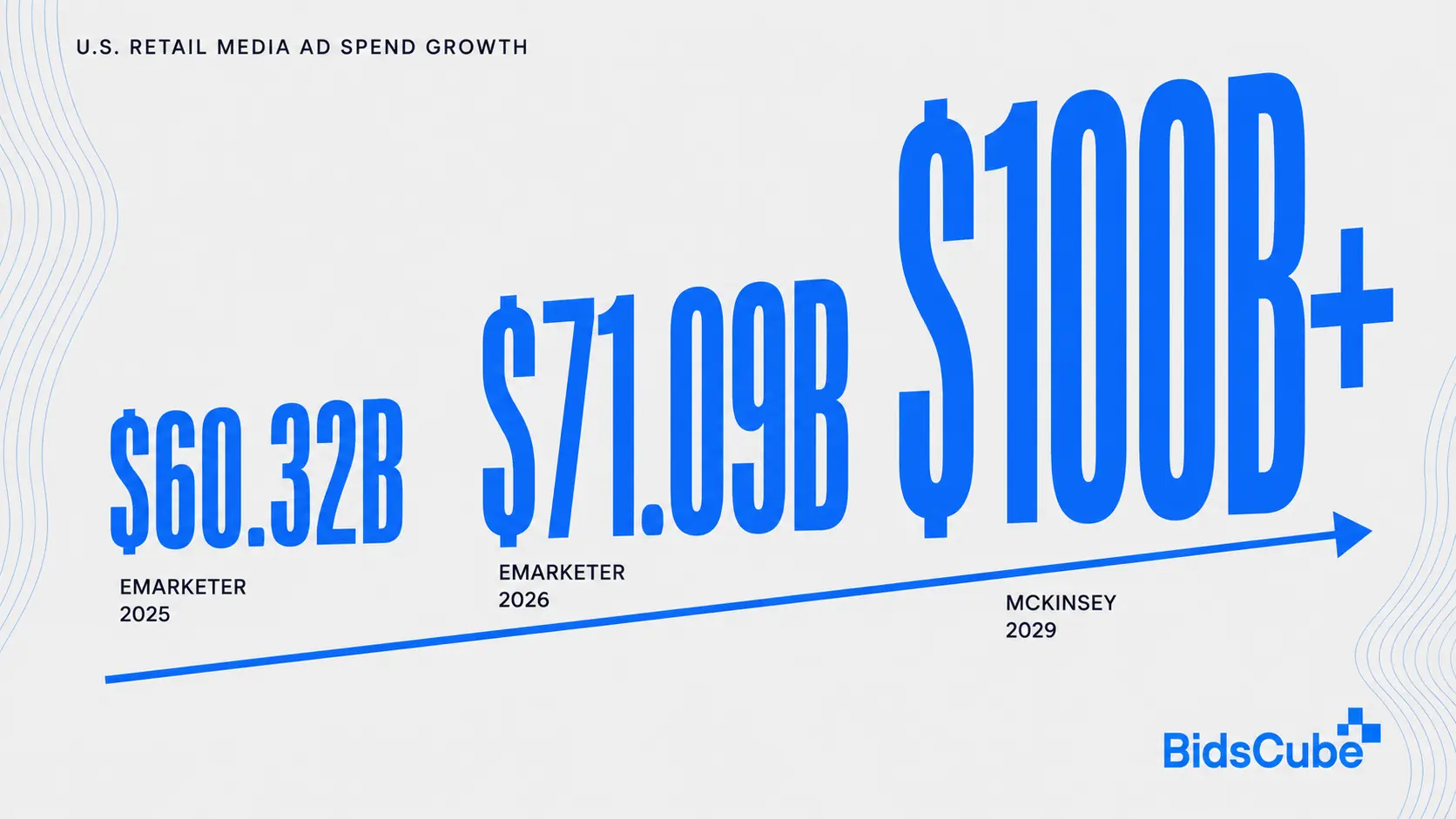
The numbers explain the rush.
- EMARKETER says US advertisers spent $60.32 billion on retail media in 2025 and will spend $71.09 billion in 2026.
- McKinsey predicts that retail media networks will account for over $100 billion in advertiser spending by 2029.
- Grand View Research estimates the global retail media platform market at $16.77 billion in 2024 and expects it to reach $36.53 billion by 2033, growing at a 9.3% CAGR over 2025-2033.
According to our experts, retail media belongs in the plan when the brand can tie spend to product, margin, and shopper intent. This article explains the retail media networks definition, shows key examples, and breaks down how brands buy ads on Amazon and other retail platforms.
Definition of Retail Media Networks
A retail media network is an advertising platform owned by a retailer. It lets brands buy ads across the retailer’s owned media, partner media, and sometimes store media. In plain words, the retailer turns shopper attention and shopper data into ad inventory.

Retailers launch these platforms because advertising can add a high-margin revenue line. They already have traffic, product pages, checkout data, loyalty data, and search behavior. Instead of giving that value to outside ad platforms, retailers package it for brands.
First party data is the big plus. Retailers operate on the data retailers collect directly from shoppers with account activity, purchases, loyalty programs, searches and cart behavior. This helps brands reach people based on real shopping signals.
That is why the awkward search phrase what is retail media networks keeps showing up in briefs. The answer is not only “ads on retailer websites.” It is a media model where retailers use shopping behavior to connect brands with buyers.
For a broader reference, see the general retail media entry. For SEO teams, what is retail media networks usually maps to this same idea: retailer-owned media powered by shopper data.
Key Examples of Retail Media Networks
Retail media has a few large leaders and many category-specific players. What are retail media networks in real buying terms? They are platforms where retailers sell media access to shopper audiences.
| Retail Media Network | What It Is Known For |
| Amazon Advertising | Sponsored Products, Sponsored Brands, Amazon DSP, Amazon store data, and strong marketplace reach. |
| Walmart Connect | Walmart.com, Walmart app, store media, and off-site media tied to Walmart shopper data. |
| Target Roundel | Target shopper audiences, display, search, and partner inventory for retail brands. |
| Kroger Precision Marketing | Grocery purchase data, loyalty data, and CPG advertising programs. |
| Home Depot Retail Media+ | Home improvement audiences, contractor signals, DIY intent, and seasonal demand. |
| Instacart Ads | Grocery and delivery intent signals from frequent shopping sessions. |
| Costco Media | Membership-based audiences and media access tied to Costco buyers. |
Our experts say brands should never run one campaign on all networks. You can have Amazon selling grocery-related inventory, or Walmart, or Instacart, or Kroger, but their shopper moments and measurement rules differ.
How the Retail Media Model Works
A retail media network turns shopper data into ad opportunities. How do retail media networks work in the simplest flow?
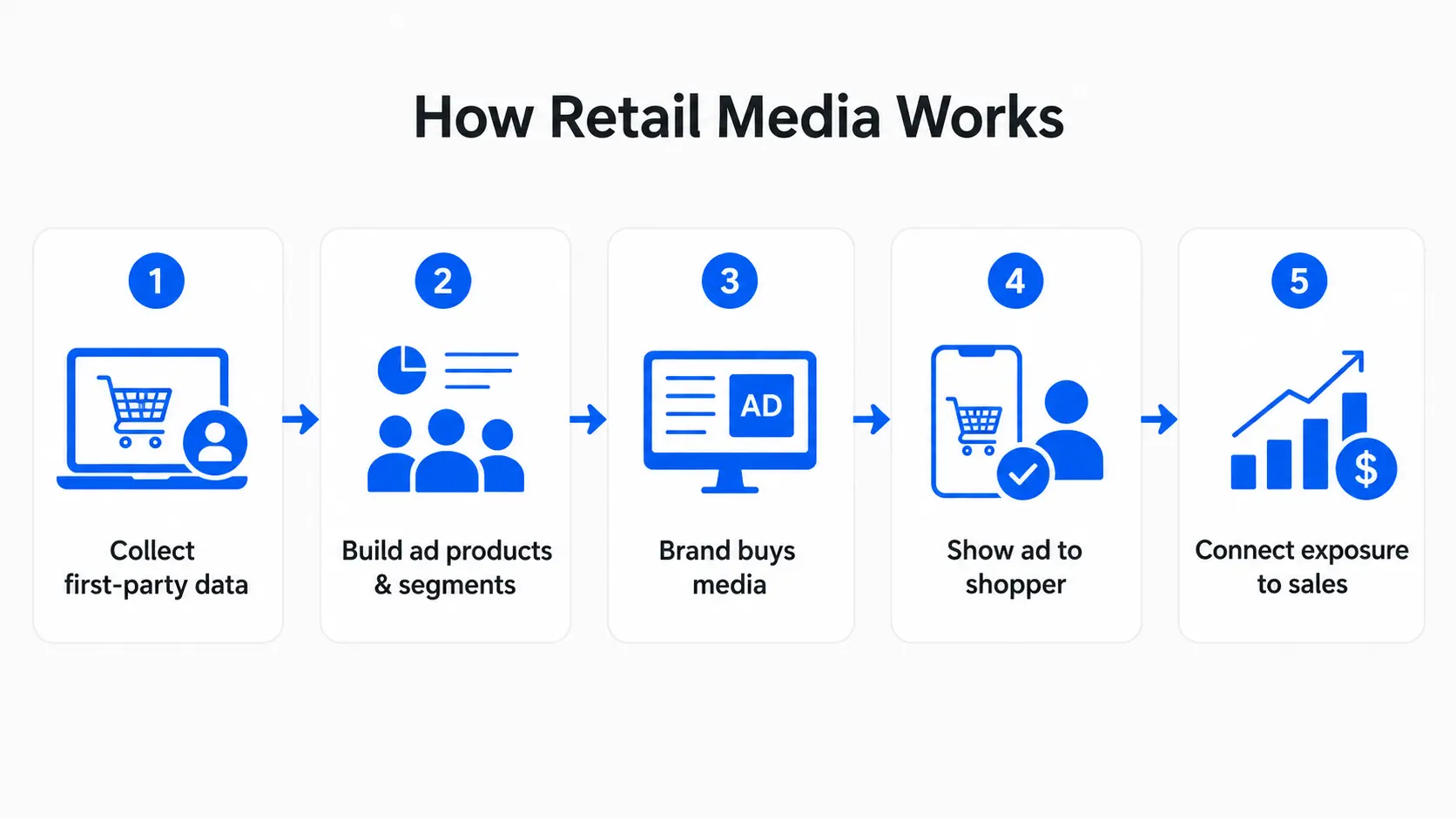
Retailer collects first-party data. The retailer builds ad products and audience segments. A brand buys media through self-serve tools, managed service, or a DSP. The ad appears to a shopper with purchase intent. The retailer connects ad exposure to sales where measurement rules allow it.
On-Site Retail Media
On-site retail media runs inside the retailer’s own site or app. Common formats include sponsored products in search results, display ads on category pages, video placements, and product detail page units.
This layer fits lower-funnel campaigns. A shopper searches “protein powder,” “running shoes,” or “dishwasher tablets.” A brand can appear inside that buying path and compete at the point of choice.
Off-Site Retail Media
Off-site retail media uses retailer data outside the retailer’s owned properties. Ads can run across programmatic advertising, social platforms, publisher sites, streaming video, and CTV.
The DSP matters here. Amazon DSP gives advertisers a way to buy inventory outside Amazon while using Amazon shopping signals. Other retailers connect off-site media through DSP partners, agencies, and buying platforms.
This is where retail media starts to work as a full-funnel channel. Brands can use retail data for awareness, retargeting, loyalty, and competitor conquest campaigns, as long as spend links back to retail outcomes.
How Brands Use Retail Media Networks
Retail media works when campaign structure follows shopper intent. How brands can use retail media networks depends on product type, sales cycle, margin, and channel mix.
Programmatic buying via a retail DSP, Display Ads, Video Ads, Sponsored Products, and Sponsored Brands are considered as core ad formats. The following can be placed on both the Amazon properties and third party websites. Sponsored Products are product ads in retail search. Banner, video and placements for category recall in Sponsored Brands. Retargeting, Cross-sell, Seasonal offers and awareness. Where Are Video Ads Used: Product Demos, Streaming, In-Feed Placements, Brand Education.
FMCG, CPG, DTC, Electronics, Home Goods and Beauty & Grocery & Wellness & Pet brands are typically a good fit for retail media. It also suits challenger brands that need to be seen alongside category leaders during active purchasing.
Practical tips for brands:
- Start with products that already convert.
- Split branded search, category search, and competitor campaigns.
- Match creative to shopper stage, not only to audience segment.
- Watch margin because high CPC can eat profit quickly.
- Compare sales lift against holdout groups where possible.
- Use retail media data to guide product, pricing, and shelf decisions.
According to our experts, the mistake is treating retail media as only a performance channel. It can sell, but it can also shape awareness, repeat buying, basket size, and category share.
Benefits of Retail Media Networks for Brands
Retail media gives brands a closer view of buying behavior than many media channels. The value comes from the retailer’s position between search, shelf, cart, and checkout.
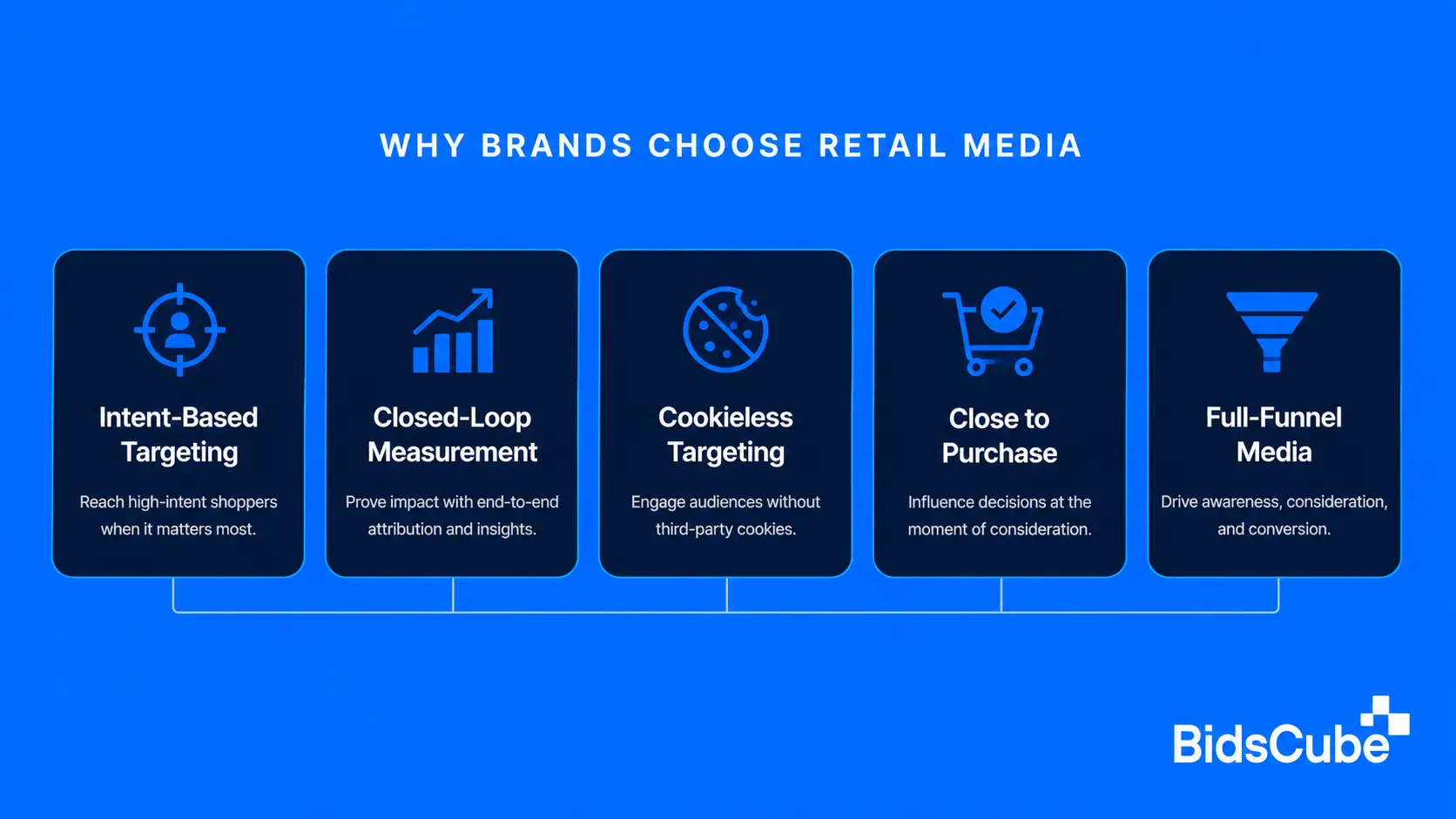
First, retail media supports intent-based targeting. A person browsing a product category shows clearer buying interest than a broad interest audience.
Second, it supports closed-loop measurement. EMARKETER notes that retail media measurement links ad exposure to purchases using first-party transaction data.
Third, it supports cookieless targeting. Retailer data comes from direct shopper relationships, so brands can reduce dependence on third-party cookies.
Fourth, ads sit close to the purchase decision. Sponsored placements appear where shoppers compare products, prices, reviews, and delivery terms.
Fifth, retail media can support full-funnel media. It can help brands build awareness, retarget interested shoppers, and measure sales impact closer to the point of purchase.
The takeaway is simple: Retail media works when brands use it as a shopper data channel, not only as ad space.
Challenges of Retail Media Networks
Retail media is useful, but it is not a magic money printer. Brands need clean planning, strict measurement, and enough margin to survive higher auction costs.
Fragmentation is the first challenge. Each retailer has its own API, dashboard, naming rules, formats, and metrics.
Cost is the second challenge. High-intent inventory attracts competition. EMARKETER notes that rising competition has lifted CPMs, especially in sponsored search placements.
Limited auction visibility is the third challenge. Retailers control much of the data, so advertisers may not see every auction mechanic or supply path.
Incrementality is the fourth challenge. Retail media can over-credit sales that might have happened anyway. Brands need holdouts, geo tests, or matched-market tests.
The answer is not to avoid retail media. Set rules before spending: target, margin, measurement, budget caps, test design, and campaign role.
How BidsCube Can Help
Retail media sits inside a wider ad trading system. Brands, retailers, and AdTech partners often need more control over how supply, demand, and data paths connect.
- BidsCube White-Label AdExchange can support marketplace logic for companies that want to connect demand and supply under their own rules.
- BidsCube DSP can support buyer-side media activation, targeting controls, and campaign management.
- BidsCube SSP can support publisher-side monetization, inventory controls, and demand access.
For vendor checks, teams can also review BidsCube on Clutch as part of due diligence.
Roman Vasyukov, CEO and Founder, BidsCube.
According to our experts, the stack matters most when teams move from one retailer network to many. At that point, reporting, partner routing, and clear campaign rules matter as much as the media buy.
Final Thoughts
Retail media has become a serious media channel because retailers own high-value shopper data and the ad space near purchase moments. Amazon leads the market, but Walmart, Target, Kroger, Instacart, Costco, and other retailers give brands more ways to reach active buyers.
The next stage will not be about adding every network to the plan. It will be about choosing the right retail partners, testing incrementality, and building clean paths between shopper signals and real sales.
The core of retail media networks explained is simple: Retailers sell access to shopper attention, and brands buy that access to influence demand closer to purchase.
Need help building a programmatic setup for retail media buying or selling? Connect with BidsCube to discuss the right ad tech layer for your business.
Our tech staff and AdOps are formed by the best AdTech and MarTech industry specialists with 10+ years of proven track record!

FAQs
What Are Retail Media Networks?
Retail media networks are retailer-controlled advertising platforms that monetize media on TPV across retailer websites, applications, physical stores and partner channels. They assist brands in the point of consideration and buying journey, when shoppers are browsing, comparing, and preparing to buy.
What Is the Retail Media Networks Definition?
Retail media networks are advertising platforms controlled by retailers and enhanced by shopper data from searches, carts, purchases, and loyalty programs. This data allows advertisers to target real behaviour at the point of purchase, not an audience segment based on broad assumptions.
How Do Retail Media Networks Work?
First, retailers collect their own data, then package up their ad inventory and sell placement to brands, who measure results against shopper behaviour. It ties together media spend with signals such as product views, add-to-carts and completed purchases.
How Can Brands Use Retail Media Networks?
How brands can use retail media networks depends on the campaign goal, but most brands use sponsored products, display ads, video ads, and retail DSP buying. These formats which are able to support awareness, retargeting and sales-sensitive campaigns should start now.
What Is Amazon’s Retail Media Network?
Amazon Advertising consists of Amazon’s retail media network, which contains Sponsored Ads, Amazon DSP, display and video products as well as measurement tools. During that time brands leverage Amazon properties and off-site inventory to reach shoppers through Amazon’s demand-side platform.
What Is the Difference Between Retail Media and Programmatic Advertising?
Retail media is advertising fuelled by shopper data that retailers own. Programmatic advertising is an automated media buying across the digital ecosystem. This can overlap when brands leverage retail data to buy programmatic inventory on- and off-site.


