


The history of digital advertising begins with a single clickable banner in 1994. It triggered, a journey of over a decade, through search, social media, programmatic auctions, connected TV (CTV), retail media and AI to name a world wide media system that is driven by the means of data, automation and real time buying and changing of ads.
Table of Contents
The history of the simple act of placing an ad online has grown into a massive medium of communication, spreading at the speed of light and is, for now, online.
DataReportal reports that digital channels currently make up 72.7% of global ad spend with online spend totaling over $790 billion. Below is the digital advertising history from that very first single ad to a world wide media system dominated by digital advertising, to the extent it is the majority of global media spend.
This is a re-imagining of a history of online advertising, moved on from the age-based guide to a concise and very fresh take on the history of digital advertising online. This is an up-to-date online advertising timeline highlighting all the main events of online advertising’s history.
The Banner Age (1994-1998)
The history of online advertising began with basic display ads, email promotions, early cookies, and the first banner ad. This period shaped the history of banner advertising because advertisers first learned that websites could sell attention as measurable media.
Replace the current bullet list with this table:
| Year | Milestone | Impact on Digital Advertising |
| 1994 | First clickable banner ad appeared on HotWired | Display advertising became a real commercial format. |
| 1994 | First e-commerce transaction over NetMarket | Online buying started to connect ads with digital commerce. |
| 1994 | Initial cookie specification appeared | Cookies later became core to targeting and measurement. |
| 1995 | Yahoo launched | Search portals became important ad entry points. |
| 1996 | DoubleClick history | Ad serving, tracking, and ROI reporting became more structured. |
| 1996 | IAB was founded | The industry began creating shared standards. |
| 1997 | Pop-up ads appeared | Intrusive formats grew, then triggered early ad blocking. |
| 1998 | Google launched | Search became the next major ad channel. |
The Channel Age (1999-2002)
The second stage in the history of online advertising moved attention from banners to search. This part of online advertising history matters because advertisers started paying for intent, not only exposure.
| Year | Milestone | Impact on Digital Advertising |
| 1999 | GoTo.com introduced pay-for-placement search | Keyword bidding created a direct link between search intent and ad price. |
| 2000 | Dot-com bubble peaked | Large ad budgets moved online, then many weak internet businesses collapsed. |
| 2000 | Google AdWords launch | Paid search became more relevant, scalable, and quality-driven. |
| 2001 | First mobile marketing campaign by Universal Music | Mobile became an early test field for direct audience contact. |
| 2002 | Firefox AdBlock extension appeared | Users started pushing back against intrusive ad formats. |
| 2002 | CPC and PPC models spread | Advertisers tied spend more closely to clicks and response. |
The Social Age (2003-2008)
Social platforms changed the digital advertising history by turning user profiles, interests, likes, and communities into ad signals. The market moved from search intent to identity, interest, and social behavior.
| Year | Platform / Event | Advertising Feature or Milestone |
| 2003 | Google AdSense | Publishers could monetize content through contextual ads. |
| 2003 | LinkedIn launched | B2B audience data became more useful for advertisers. |
| 2004 | Facebook launched | Social identity became a future ad targeting asset. |
| 2005 | YouTube launched | Video ads gained a major distribution channel. |
| 2006 | Twitter launched | Real-time public conversation became ad inventory. |
| 2007 | Facebook Ads launched | Social targeting entered the mainstream. |
| 2007 | iPhone released | Mobile advertising started moving toward app-first behavior. |
The Native Age (2009-2011)
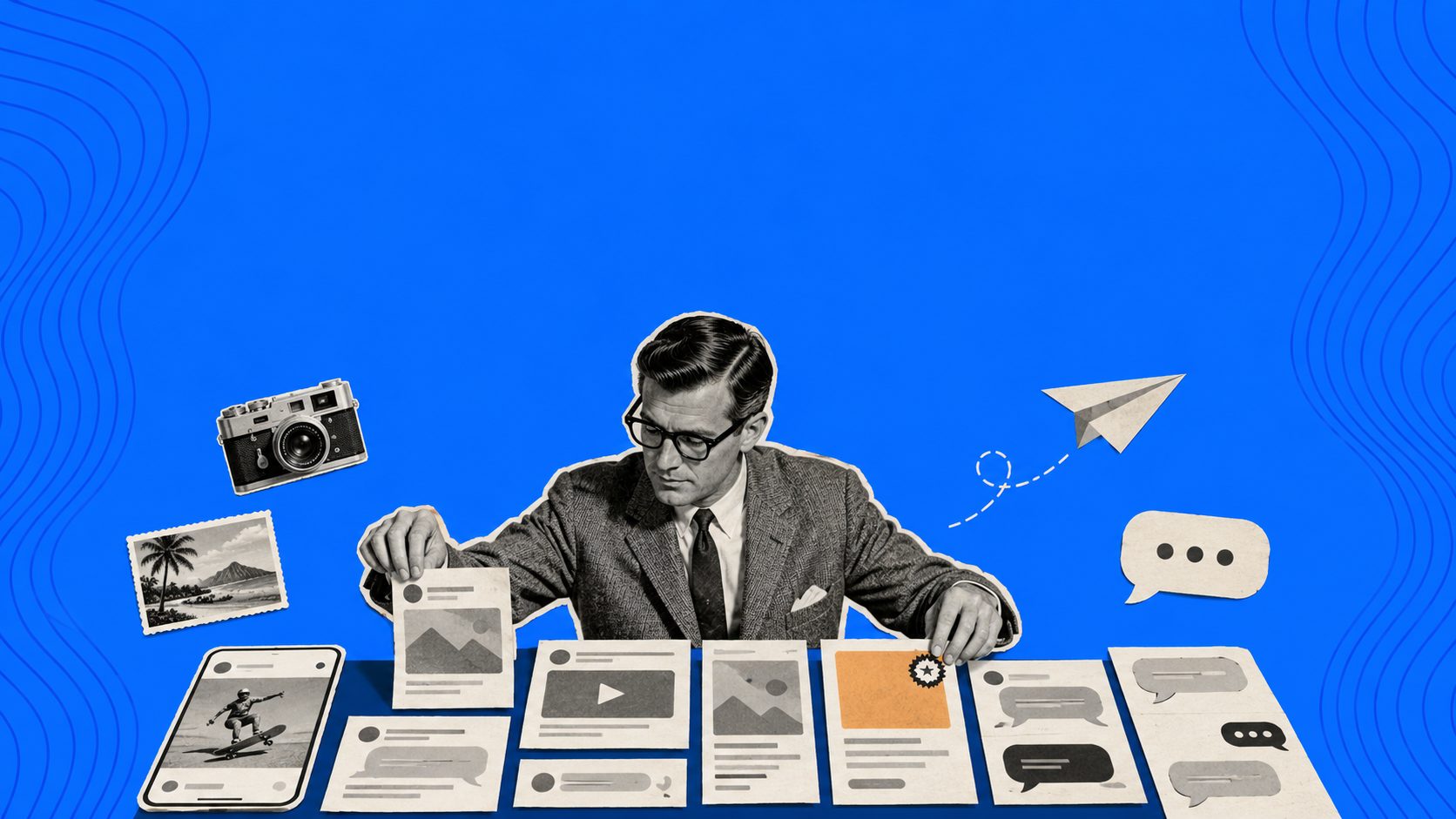
The evolution of digital advertising during this period focused on less disruptive formats. Native ads, promoted posts, and in-feed placements became popular because users were becoming blind to banners and irritated by pop-ups.
| Year | Milestone | Impact on Digital Advertising |
| 2009 | Real-time search results launched | Trending content became more useful for ad timing. |
| 2009 | Real-time bidding gained adoption | Auctions started moving toward automated impression-level buying. |
| 2009 | WhatsApp launched | Messaging apps later became key customer contact points. |
| 2010 | Instagram launched | Visual content became a major advertising format. |
| 2011 | Snapchat launched | Short-form visual communication created new ad formats. |
The Modern Age (2012-2019)
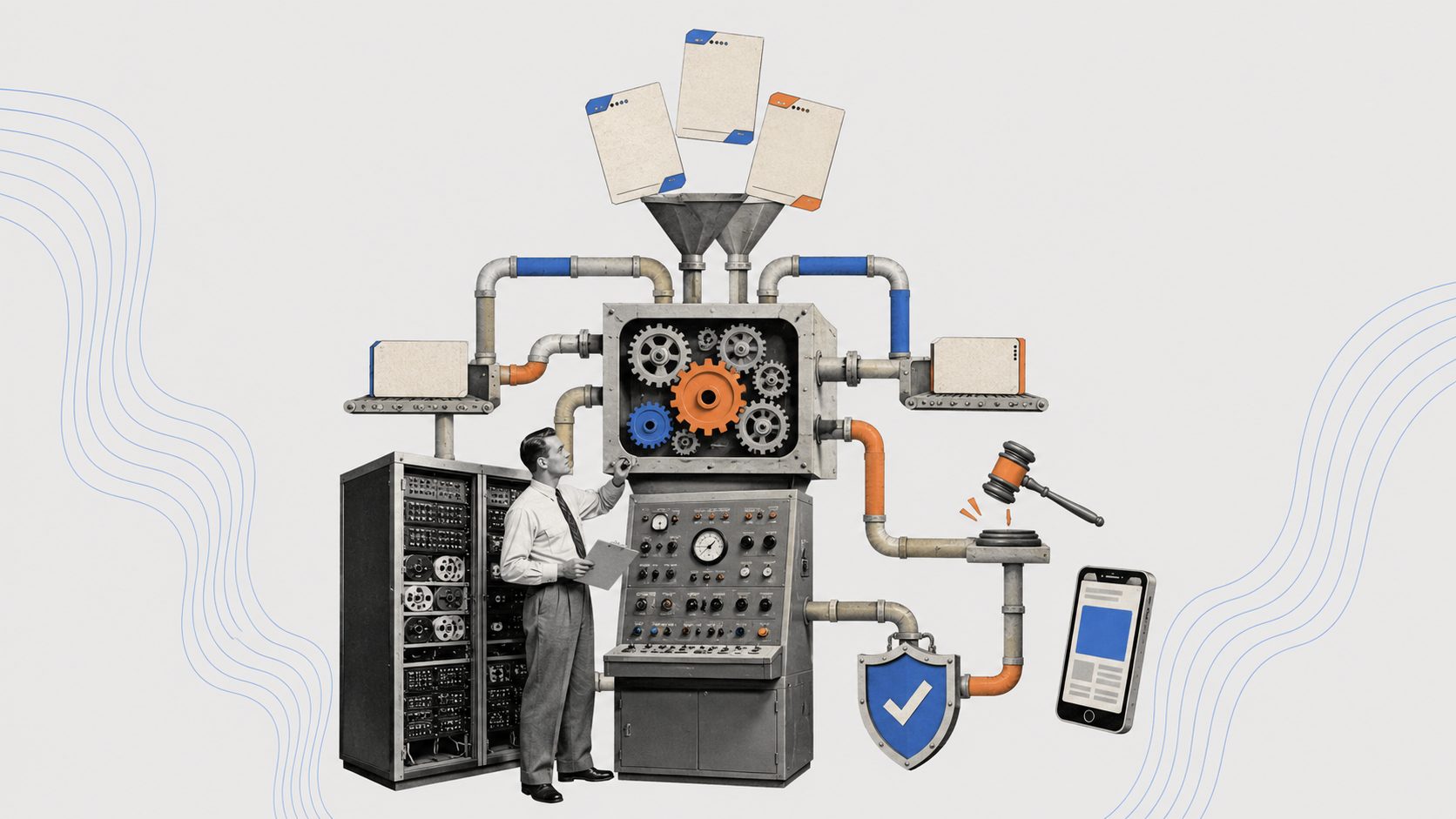
The history of programmatic advertising became central in this period. OpenRTB became the standard for automated ad buying in 2014. Programmatic advertising history notes the year when the protocol helped to make automated buying a matter of a standard market in which to buy and sell ad inventory using automated systems, working with each other as platforms.
| Year | Milestone | Impact on Digital Advertising |
| 2012 | Internet of Things grew | More connected devices created more media touchpoints. |
| 2013 | Instagram sponsored posts launched | Social platforms expanded paid creator-style placements. |
| 2014 | OpenRTB protocol released | Programmatic buying became easier to connect across platforms. |
| 2015 | Prebid.js launched | Header bidding history started to reshape publisher yield. |
| 2016 | Mobile ad spend passed desktop | Mobile became the main digital advertising screen. |
| 2017 | Ads.txt launched | Publishers gained a tool to fight unauthorized inventory resale. |
The Decentralized Age (2019-present)
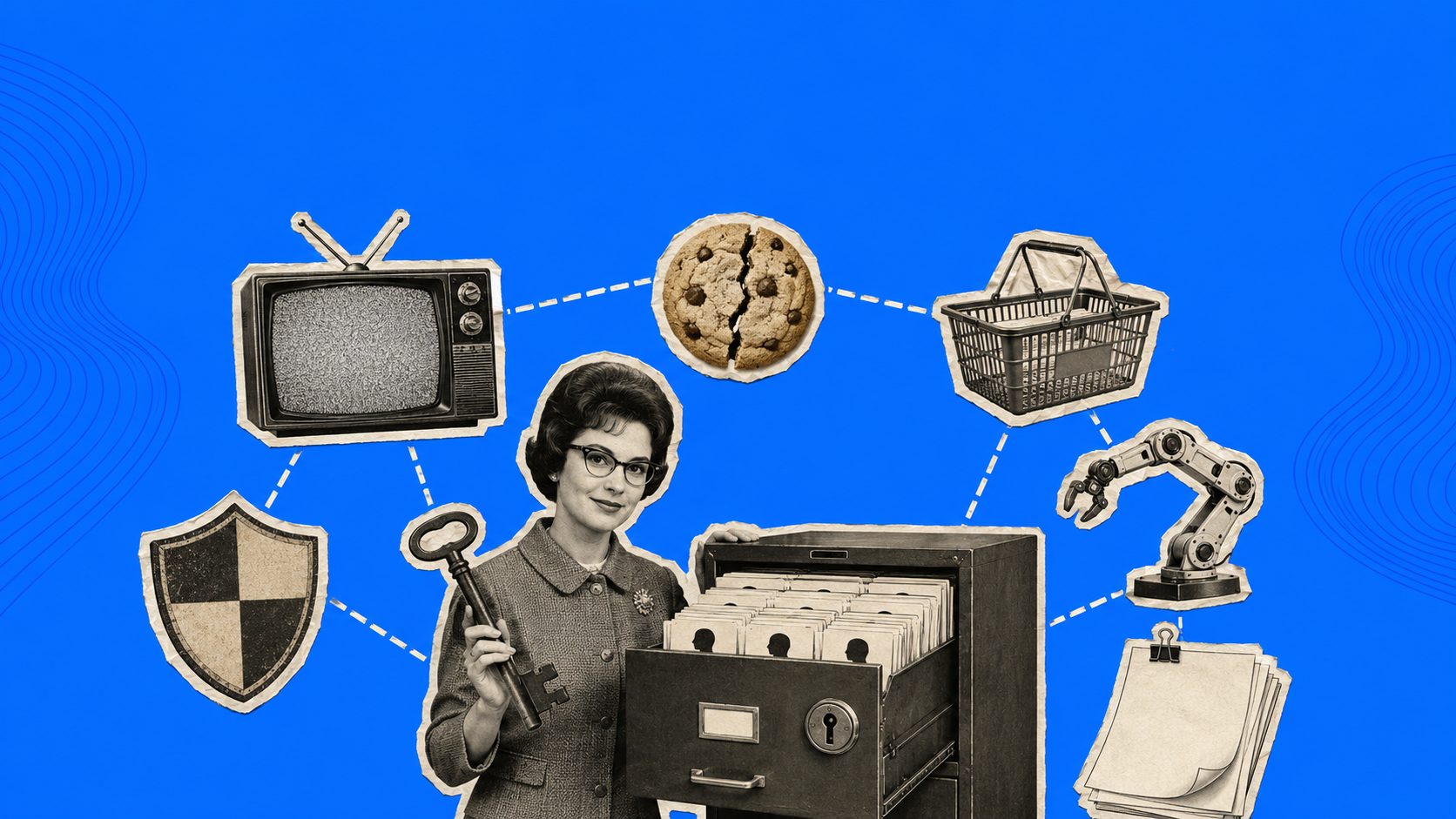
The latest stage connects digital marketing history with privacy, AI, CTV, and first-party data advertising. The old model depended heavily on third-party cookies. The new model leans more on consent, direct audience relationships, retail media advertising, and cleaner supply paths.
For now, Google will allow users to allow or block third-party cookies across all Chrome browser sessions when the change is rolled out to affect the digital advertising timeline in 2024.
| Year | Milestone | Impact on Digital Advertising |
| 2018 | GDPR took effect | GDPR programmatic advertising rules forced stronger data controls. |
| 2018 | CCPA was introduced | US privacy regulation became more important for ad tech. |
| 2020 | CTV and OTT grew fast | CTV advertising history moved into the programmatic era. |
| 2020 | AI in digital advertising gained wider use | Targeting, bidding, and creative testing became more automated. |
| 2021 | iOS App Tracking Transparency launched | Mobile attribution became harder, and first-party data gained value. |
| 2024 | Google delayed cookie removal and changed course | Advertisers kept cookies for now, but consent and signal loss stayed important. |
| 2025 | AI-driven advertising boom | $650 billion global programmatic advertising spend reached, on track to $800 billion by 2028 |
| 2025 | Retail media grew as a major channel | Shopper data became a larger part of the online advertising evolution. |
Key Trends Shaping the Future of Digital Advertising
There are three pillars of digital marketing: data, inventory and measurement. In the three decades of thirty odd years of digital marketing history since the first banner ad was launched, there will be further evolution towards AI-assisted buying of media across online and offline channels. This will include Retail media and Connected TV and other environments where first-party data is king. The future of digital advertising seems bright. The web will become an even more regulated place to advertise with increasingly strict privacy measures.
As we look forward to the next decade or so of digital advertising trends, it will be interesting to see how these new ways of buying and selling online media change the online advertising evolution.
- AI-driven targeting and creative testing: By using AI, a marketing team is able to test many more different targeting approaches and ads and automatically adjust the bid for each in real-time.
- Retail media growth: Retail media advertising is now becoming another programmatic channel of commerce media, allowing retailers to now sell advertising using the same data they collect from their shoppers that they already use for other purposes.
- Cookieless targeting: First-party data and contextual signals become key to targeting in a post-cookie world and as browser privacy settings continue to evolve.
- CTV and connected TV: Premium video inventory is now being sold in programmatic pipes.
- Generative AI (GAI) in creative work: This will allow for the massive amounts of advertisements that customers today are used to seeing to be created, and then to be tested for maximal performance.
- Privacy-first advertising: With growing restrictions on data collection and use imposed by privacy laws around the world (e.g. the GDPR in Europe and the CCPA in California, USA), digital advertising is changing.
| Trend | What It Means | Who It Affects Most |
| AI in digital advertising | Faster targeting, bidding, and creative tests | Advertisers and agencies |
| Retail media advertising | Shopper data becomes media inventory | Brands and retailers |
| Third-party cookies deprecation | Targeting depends more on consent and direct data | Publishers and ad tech teams |
| CTV growth | TV-like inventory enters programmatic buying | Media owners and advertisers |
| Privacy-first ads | Data use needs clearer rules | Everyone in the ad chain |
Digital Advertising Timeline: Key Milestones at a Glance
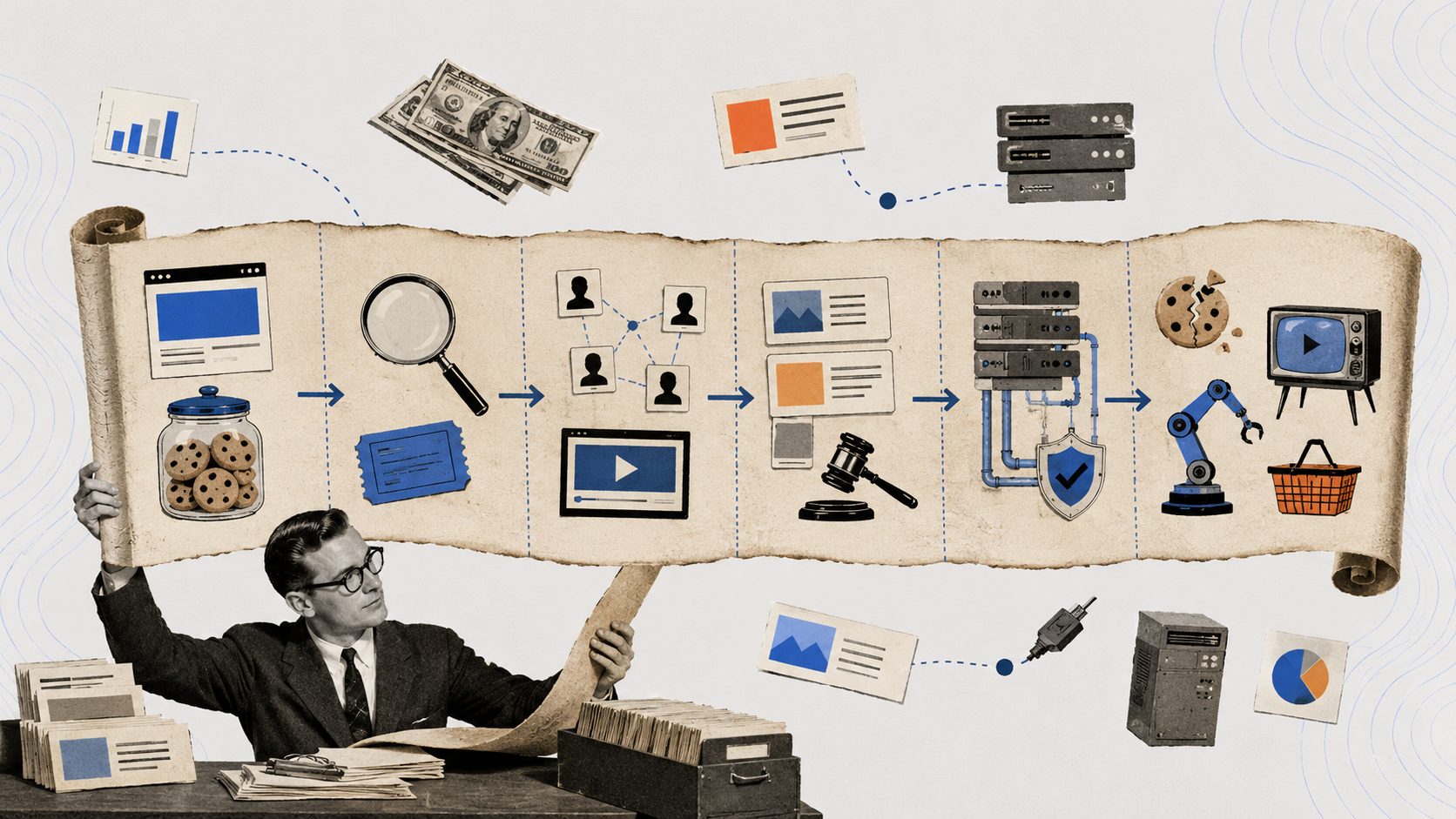
Use this online advertising timeline as the quick reader map.
| Era | Years | Key Development | Significance |
| Banner Age | 1994-1998 | First banner, cookies, DoubleClick, Google | Digital ads became trackable and searchable. |
| Channel Age | 1999-2002 | Paid search and CPC | Advertisers started buying intent. |
| Social Age | 2003-2008 | Facebook, YouTube, Twitter, iPhone | Social and mobile changed targeting. |
| Native Age | 2009-2011 | Native ads and RTB | Ads moved into feeds and automated auctions. |
| Modern Age | 2012-2019 | OpenRTB, header bidding, Ads.txt | Programmatic infrastructure matured. |
| Decentralized Age | 2018-present | GDPR, CTV, AI, first-party data | Privacy and automation now shape growth. |
Summary
The history of online advertising has its roots in the banner ads of the web’s early days, search marketing, social media, native, mobile, and programmatic buying. Today, the evolution of digital advertising moved into a more privacy-first data environment where advertisers can use AI to optimize and plan their campaigns in Retail media and CTV.
However, this digital advertising revolution is not set to be brought down any time soon. A majority of the tools used for online advertising are going to be around for a long time, even when the cookies have been removed from Chrome.
BidsCube supports this shift with programmatic products for different sides of the market. Publishers can review BidsCube SSP, advertisers can review BidsCube DSP, and AdTech partners can review BidsCube White-Label AdExchange.
For vendor checks, teams can also review BidsCube on Clutch.
Our tech staff and AdOps are formed by the best AdTech and MarTech industry specialists with 10+ years of proven track record!

FAQs
What Is the History of Digital Advertising?
Over the last three decades, the digital advertising history has gone through many changes from the first clickable banner ad launched by AT&T on the website of HotWired (a subsidiary of MCI) for the launch of The Wired magazine in 1994 to current search, social media, mobile, programmatic, CTV, AI and privacy-first targeting and other forms of online advertising.
When Did Digital Advertising Start?
It was AT&T that was responsible for the first clickable banner ad that appeared on the HotWired web site. This campaign is notable in the history of banner advertising.
What Was the First Digital Ad?
The first clickable banner ad was launched by AT&T for the Web site hosted on HotWired in 1994. The campaign became a key moment in the history of banner advertising.
How Has Digital Advertising Evolved Over Time?
Now, online advertising encompasses a wide variety of formats, static banners, search listings, social media ads, native ads, mobile ads, and more. With growth of the Internet, these formats as a part of online advertising history have evolved along with users’ behavior, technology advances and changes in privacy policies.
What Is Programmatic Advertising and When Did It Start?
In digital advertising, programmatic advertising are the use of software to purchase, sell and manage online advertising space on an impression by impression basis through an automated auction that has become much more structured since the history of programmatic advertising witnessed the adoption of Real Time Bidding (RTB) and the release of the OpenRTB protocol.
What Are the Key Trends in Digital Advertising Today?
In order to gain greater control of data, of inventory and of measurement, three decades of digital advertising trends are being re-written in terms of AI-assisted buying, Retail media, CTV, first-party data and, above all, stricter privacy rules in order to enable targeting and advertising of greater quality and greater added value to users.


