



- A data clean room is a secure environment where two or more parties analyze combined data sets without exposing raw, individual-level data to each other.
- Data goes in, and aggregated insights come out. PII never leaves the environment.
- Advertisers use clean rooms for audience overlap analysis, attribution, incrementality testing, frequency management, and retail media measurement.
- About 66% of US data and advertising professionals already use clean rooms, and budgets keep growing, according to the IAB.
- The major platforms are Google Ads Data Hub, Amazon Marketing Cloud, Meta Advanced Analytics, LiveRamp, Snowflake, Habu, and InfoSum.
- Clean rooms shine for measurement and insights. They do not replace real-time bidding or activation, so they complement programmatic trading rather than compete with it.
Table of Contents
Advertisers now faced a new problem that stemmed from three converging forces. 1) third-party cookies died, 2) privacy regulations proliferated, and 3) walled gardens fiefdomed. Brands need to continue to get insights on shared data with publishers, retailers, and platforms. But they won’t be able to share their data directly because it involves legal and reputational risk.
Data clean rooms emerged as the answer. They let partners run joint analysis without any actual exchange of PII. The market has voted with its wallet.

According to IAB research, 66% of US data and advertising professionals have adopted clean rooms, and companies planned to invest 29% more in them in 2025 than in 2024.
This guide explains the concept, mechanics, main data clean room use cases, platforms worth knowing, and the limits you should plan for.
What Is a Data Clean Room?
A data clean room is a technology environment that allows two or more parties to analyze data together without exposing each other to the raw dataset run through an analysis on the level of individuals. Consider it like a non-bias storage facility. Every party deposits their data, the vault executes the analysis on the inside, and only the summary makes it out.
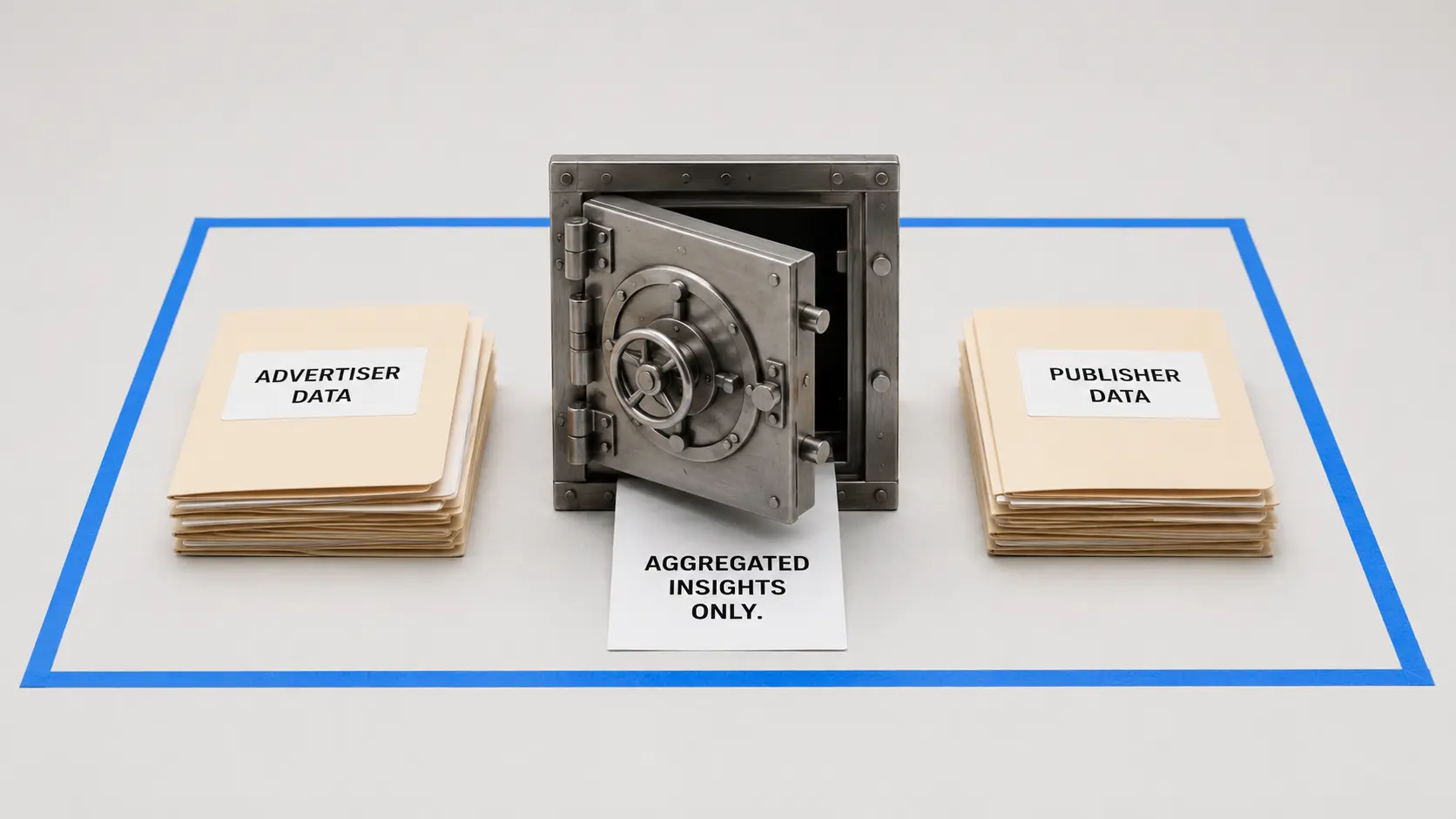
The key principle is one-way flow. Data goes in to the clean room, results come out, individual-level records never leave the room. No party can read, copy or export the raw data from another party.
The participants can be any two or more sides with complementary data: an advertiser and a publisher, a brand and a retailer, an agency and a platform. Who purchased is known to the advertiser, who engaged is known to the publisher, and the clean room depicts how these two behaviours intersect.
This design is what makes the approach privacy-safe. Each party keeps full control of its own data. Access to raw records is blocked by design, and only aggregated outputs are released. That structure is why clean rooms align well with GDPR, CCPA, and similar privacy laws.
How Data Clean Rooms Work: Step-by-Step
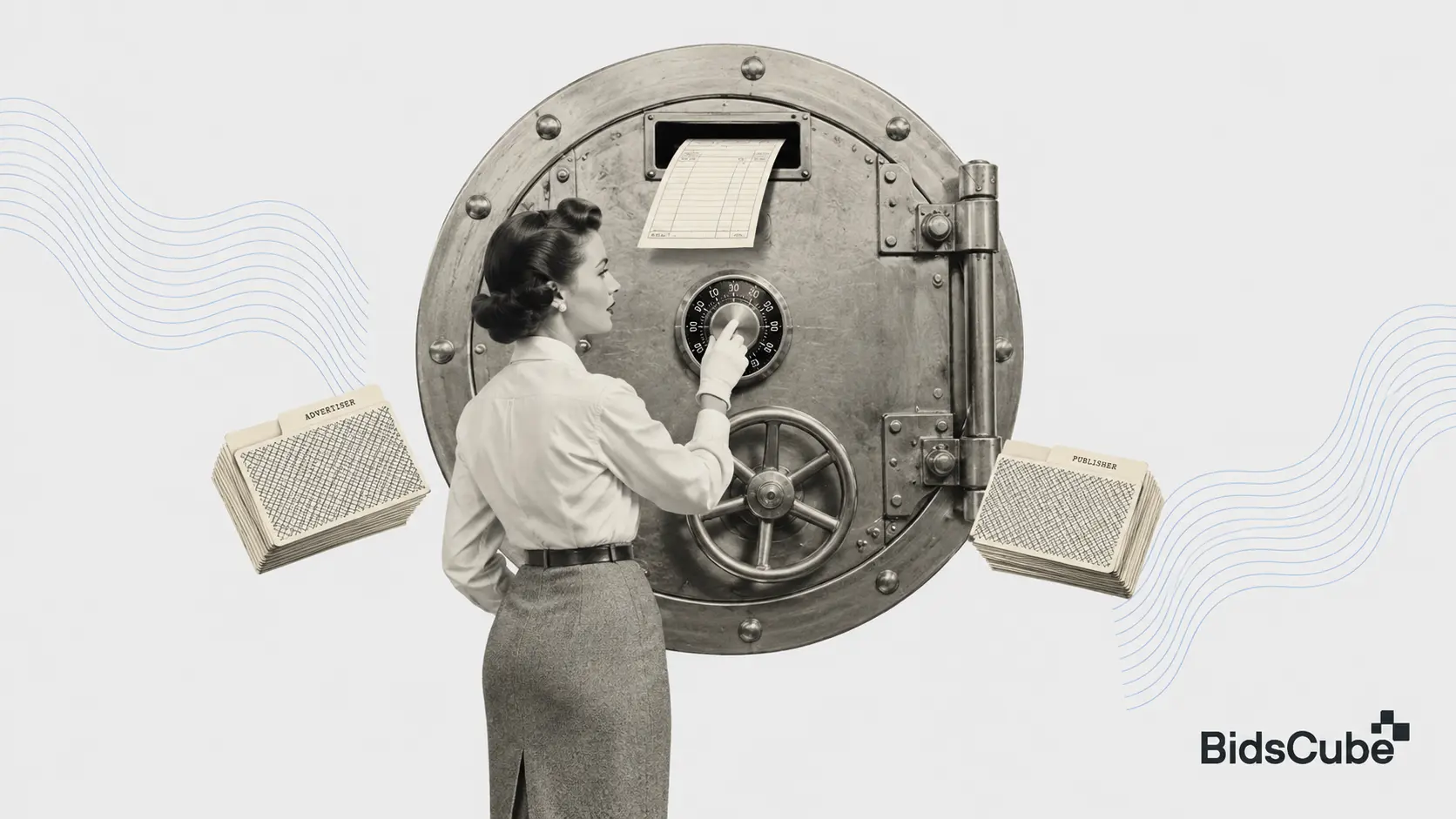
The workflow follows the same pattern on almost every platform.
- Both parties load their data. The advertiser and the publisher upload hashed or encrypted data sets, often customer lists keyed by hashed email, into the clean room environment.
- The clean room links the records. The platform performs record linkage, such as hashed email matching, to identify which entries in one data set correspond to entries in the other.
- The parties define queries. Analysts request audience overlap analysis, attribution reports, or audience insights through a controlled query interface.
- The clean room returns aggregated results only. Outputs come back as segment-level numbers. Queries that would expose small groups get blocked or noised.
- Each side gets insights, not data. The advertiser learns what worked. The publisher proves value. Neither sees the other’s raw records.
Incorporating statistical noise into outputs together, differential privacy ensures that the results of no specific individual can be reverse-engineered from the results themselves. Secure multi-party computation, or just secure MPC, allows parties to compute the joint results over encrypted inputs without ever decrypting one another’s data. Understanding how data clean rooms work at this level helps you evaluate vendor claims rather than taking them on faith.
Main Data Clean Room Use Cases
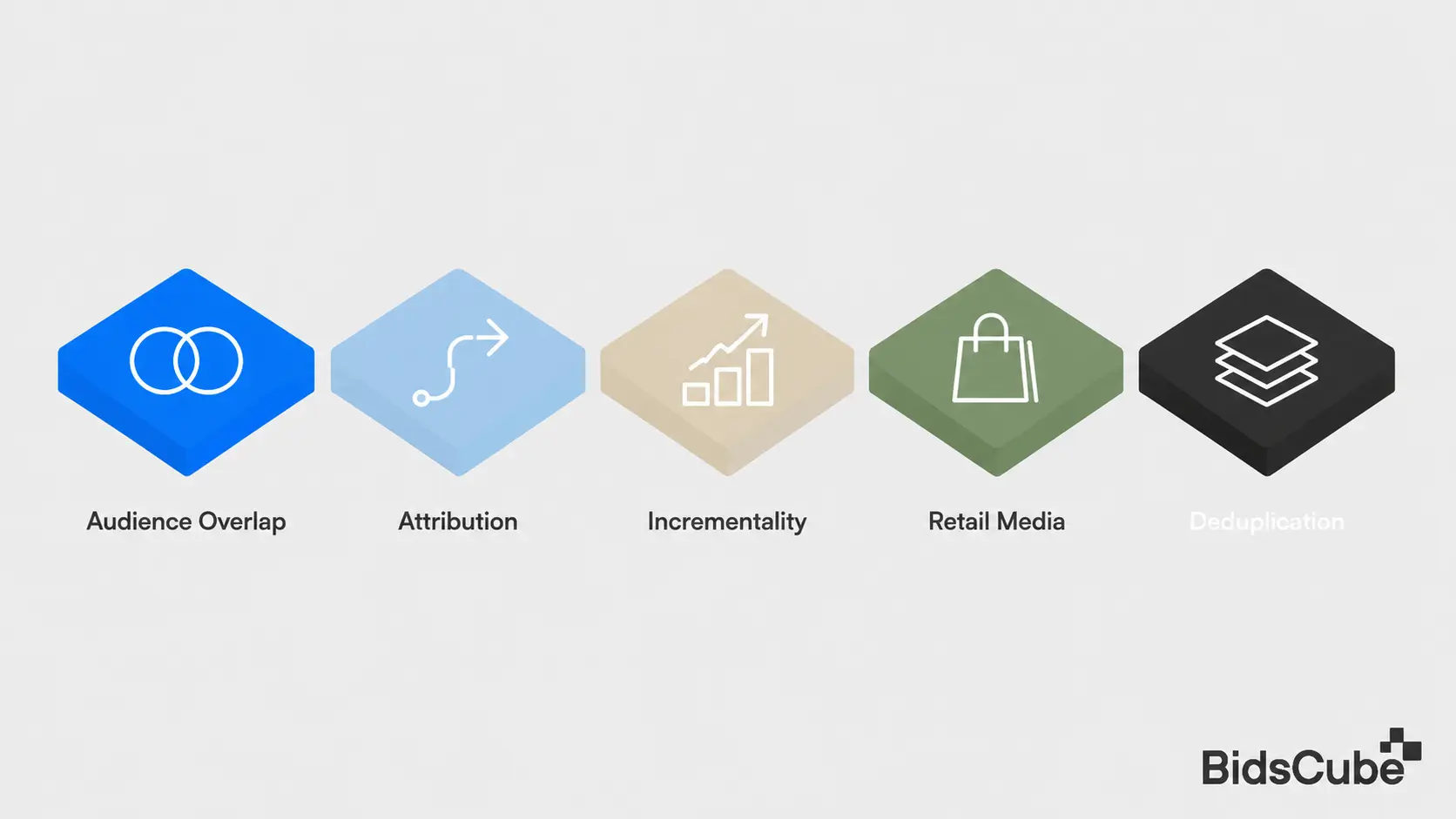
Advertisers run a fairly consistent set of analyses inside clean rooms.
- Audience overlap analysis. An advertiser and a publisher check how much their audiences intersect before any media is bought. This prevents paying for reach that mostly duplicates existing customers.
- Campaign measurement and attribution. Clean rooms connect the full path from ad exposure to conversion using cross-platform data that no single system holds alone.
- Frequency management. Partners reconcile how many times a single user saw a campaign across different platforms, ensuring frequency capping remains honest.
- Incrementality testing. Brands measure the real lift ads created in sales, separating ad-driven purchases from purchases that would have happened anyway.
- Lookalike audience building. Joint data powers models that find prospects who resemble proven converters.
- Retail media measurement. An advertiser checks how online ad exposure influenced in-store or online purchases using a retailer’s transaction data.
- Cross-platform deduplication. Clean rooms remove duplicate impressions counted separately by each walled garden, which corrects reach and frequency reports.
| Use Case | Who Benefits | Data Inputs | Output |
| Audience overlap | Advertiser, publisher | Hashed customer and audience lists | Overlap size and composition |
| Attribution | Advertiser | Exposure logs, conversion data | Conversion paths by channel |
| Incrementality | Advertiser | Exposed and holdout groups, sales data | Lift in sales from ads |
| Retail media measurement | Brand, retailer | Ad exposure, transaction records | Sales impact per campaign |
| Deduplication | Advertiser, agency | Impression logs from several platforms | True reach and frequency |
Planning a privacy-safe programmatic setup? BidsCube builds white-label infrastructure that works with hashed IDs and first-party data. Talk to the team.
Major Data Clean Room Platforms
The vendor landscape splits into three types: walled garden clean rooms, neutral platforms, and infrastructure you build on.
- Google Ads Data Hub. Walled garden. The clean room for the Google ecosystem, covering YouTube, Display, and Search. Strong inside Google, blind outside it.
- Amazon Marketing Cloud (AMC). Walled garden. Amazon’s clean room for Amazon DSP and retail media measurement. The reference point for retail media analytics.
- Meta Advanced Analytics. Walled garden. Clean room measurement for Meta Ads with conversion modeling across Facebook and Instagram.
- LiveRamp Data Collaboration. Neutral. An independent platform built around RampID that connects data across many partners, not just one ecosystem.
- Snowflake Data Clean Room. Infrastructure. Technology for building custom clean rooms inside the Snowflake data cloud, suited to teams with strong engineering.
- Habu. Neutral SaaS. A specialized clean room application layer, acquired by LiveRamp, that simplifies multi-cloud collaboration.
- InfoSum. Neutral, privacy-first. Uses a federated approach where data never moves at all. WPP acquired the company in 2025.
When you compare data clean room platforms, start with one question: Are you measuring in a single walled garden or across walled gardens? The answer usually picks the category for you.
Benefits of Data Clean Rooms for Advertisers
Data clean rooms help advertisers answer hard measurement questions without exposing raw customer data. They bring approved datasets into a controlled environment so teams can analyze outcomes, improve planning, and protect privacy simultaneously.
- Cross-platform attribution without sharing raw PII. You connect exposure to outcomes while every record stays protected.
- Access to publisher first-party data. Clean rooms unlock targeting and planning insights from data you could never license directly.
- Regulatory compliance. Data never changes hands, hence the architecture naturally supports the various privacy regulations like GDPR, CCPA and others.
- Cookieless measurement. Matching runs on hashed email and other durable identifiers, so measurement survives in a post-cookie environment.
- Incrementality proof for ad spend. Finance teams get lift numbers, not click-based guesses, which makes budget defense easier.
- True reach and frequency. Deduplicated cross-platform reporting shows what campaigns actually delivered.
Advertisers need a big enough question, consented data, and scale for data clean rooms to work. They do not replace a DSP or ad server, but they can make both systems easier to measure and defend.
Limitations and Challenges of Data Clean Rooms
Data clean rooms add control, but they also add requirements. Before choosing one, teams should understand the engineering work, audience thresholds, platform limits, and budget that shape what they can actually learn.
- Technical complexity. Setup and maintenance require real data engineering resources. A clean room is a project, not a plugin.
- Minimum audience thresholds. However, outputs will often only be released once platforms have sufficiently aggregated numbers, and this is often between 5,000 and 50,000 users.
- Walled garden isolation. Each walled garden clean room is sealed. Cross-garden analysis needs a neutral platform on top, which adds cost and complexity.
- No real-time activation. Clean rooms fit measurement and insights. They do not replace real-time bidding, and audience activation still happens in your DSP.
- Price. Enterprise clean room deployments are expensive to implement and run, which is why adoption skews toward larger advertisers.
These limits do not make data clean rooms less useful. They mean teams should treat a clean room as part of a wider measurement strategy, with realistic budgets, strong data governance, and clear ownership.
How BidsCube Can Help
Clean rooms answer the measurement question. You still need trading infrastructure that respects the same privacy rules. BidsCube provides that layer of the data clean room advertising stack.
- The BidsCube DSP activates campaigns with first-party data, hashed identifiers, and contextual signals, so the audiences you validate in a clean room can actually be bought.
- The BidsCube SSP helps publishers monetize first-party data in a privacy-safe way, with consent signals passed correctly in every bid request.
- The White-Label Ad Exchange gives you your own trading environment with full log-level data ownership. Your own logs are the raw material you bring to any clean room collaboration.
Client reviews on Clutch show how teams run this stack in production. For industry standards on privacy-safe collaboration, the IAB Europe knowledge hub is a useful reference.
Clean rooms changed the question advertisers ask. It is no longer how do I get the data, it is how do I get the answer without the data ever moving. That mindset shift matters more than any single platform. Teams that own their log-level data and keep it clean will get the most out of every collaboration.
Roman Vayukov, CEO at BidsCube
Final Thoughts
Privacy regulation will not loosen, and walled gardens will not open up. That makes neutral analysis environments a lasting part of the advertising stack rather than a passing trend. The practical play is to know which questions belong in a clean room, which belong in your analytics, and which belong in your trading platform.
Get your first-party data and log-level reporting in order first, because they are your ticket into every collaboration. If you want a programmatic foundation built for that future, get in touch with us for a walkthrough.
Our tech staff and AdOps are formed by the best AdTech and MarTech industry specialists with 10+ years of proven track record!

FAQ
What is a data clean room?
It is a secure environment where two or more parties analyze combined data sets without revealing raw, individual-level data to each other. Only aggregated results leave the environment, which keeps the analysis privacy-safe.
How do data clean rooms work?
Each party uploads hashed or encrypted data. The clean room performs record linkage, runs the approved queries, and returns aggregated outputs. Methods like differential privacy and secure MPC make sure no individual can be identified from the results. That is how data clean rooms work across all major vendors.
What are the main data clean room use cases?
The most common include audience overlap analysis, campaign attribution, Incrementality Measure, frequency deduplication, lookalike modeling, and retail media measurement.
What is the difference between a data clean room and a DMP?
A DMP collects and activates audience data for targeting, and the data moves between systems. A data clean room analyzes data from several parties in place, and raw data never moves or changes hands. One is for activation, the other is for collaboration and measurement.
Which platforms offer data clean room solutions?
Google Ads Data Hub, Amazon Marketing Cloud and Meta Advanced Analytics cover their own ecosystems. That said, LiveRamp, Habu, and InfoSum provide neutral collaboration while Snowflake provides the infrastructure for building your own. These data clean room platforms serve different needs, so match the type to your measurement goal.
Are data clean rooms GDPR compliant?
The architecture supports compliance because individual-level data is never exposed or transferred. Compliance still depends on proper consent for the underlying data and correct configuration, so the data clean room advertising workflow must be reviewed with your legal team.


