



The old ad playbook now has an expiration date. In 2026, advertisers no longer deal with one big shift. They face several at once: streaming growth, privacy rules, weaker third-party signals, tighter budgets, and higher pressure to prove return on every dollar.
Table of Contents
Peter Drucker put it well:
One cannot manage change. One can only be ahead of it.
That idea fits today’s buyer side of programmatic advertising.
There is no time for the market to settle for advertisers. To Do So, They Need Systems to Test Quicker, Waste Less, and Make Data-Driven Decisions. The DSP from BidsCube, for example, enables this transformation by giving advertisers confidence in their decisions with advertiser-anonymized data, targeting controls and bidstream insights with campaign autorules.
CTV and digital video now sit near the center of this shift.
- U.S. digital video ad spend grew 18% year over year in 2024, largely due to CTV, social video and online video, to $64 billion, IAB reported, and it was expected to hit $72 billion in 2025.
- At the same time, Google also confirmed in 2025 Chrome would leave the choice for third-party cookies in user settings while continuing to invest in the Privacy Sandbox and tracking protection work.
These changes create new advertiser challenges programmatic aspects. Media buyers need better measurement across streaming platforms, stronger privacy-compliant targeting, and more control over campaign setup.
Here, we provide an overview of the key challenges that advertisers will face as we head into 2026 and beyond. In this article, we will discuss streaming rising, the third party data changes, cookieless advertising, less invasive ad formats, and how we can maintain ROMI positive when budgets are under pressure.
The Rise of Streaming Platforms
CTV is no longer an “emerging” channel. It is now a core part of digital video planning, but its fast growth has created new programmatic advertising challenges around measurement, identity, and supply fragmentation.
IAB reported that U.S. digital video ad spend grew 18% year over year to $64 billion and was projected to reach $72 billion in 2025. The same report points to CTV, social video, and online video as the main forces behind digital video’s larger share of TV and video budgets. Nielsen also reported that streaming represented 43.8% of total U.S. TV time in March 2025, up 10 points in two years.
Yahoo Finance reported, on the other hand, no need to tell me that 68 percent settles increased TV ad impressions for the top 100 U.S. In Q2 2025 the channels are significantly outperforming linear television with a 46% growth rate on CTV viewing, versus only 1% for linear TV.
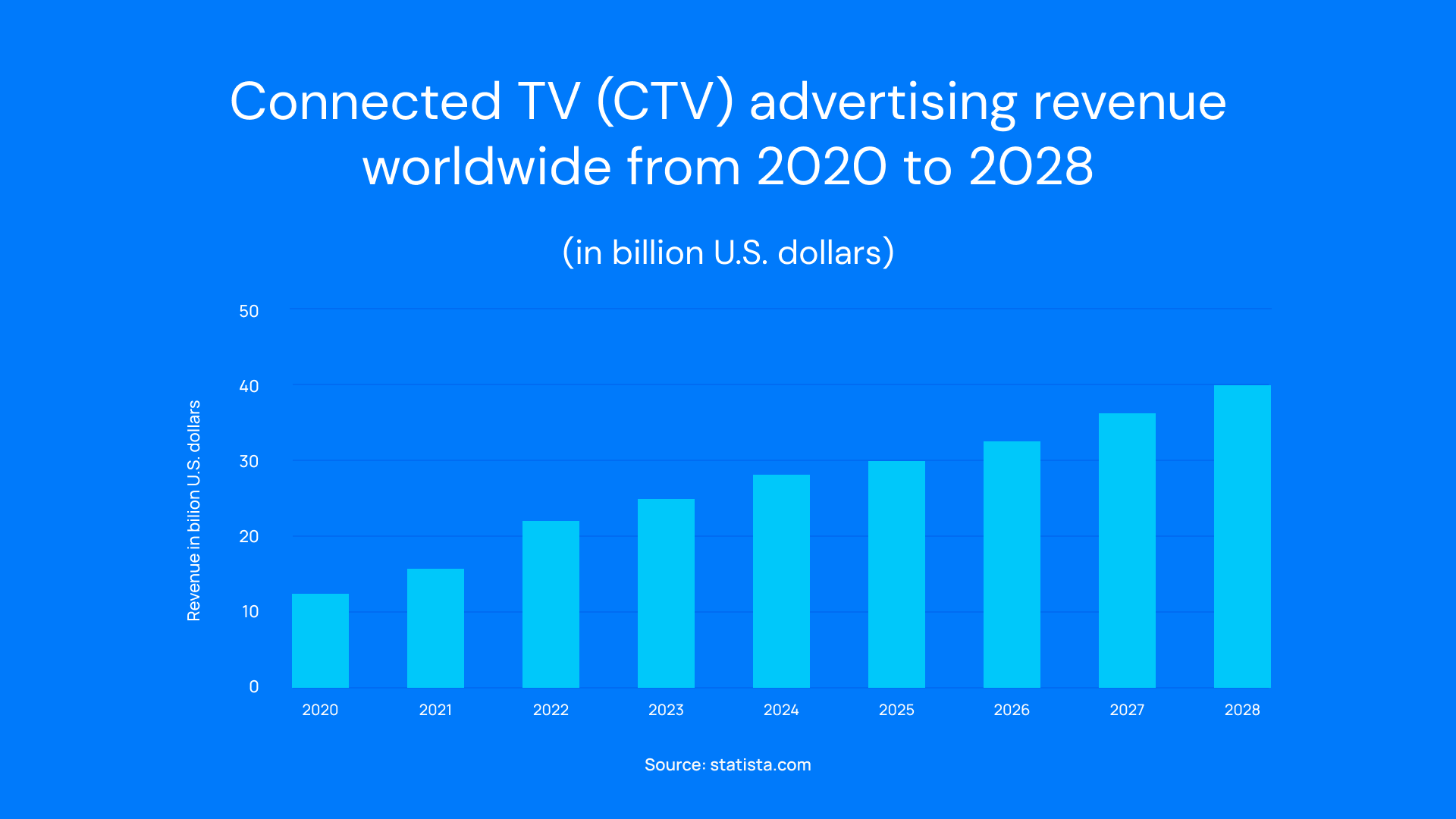
This increased feasibility carries opportunity, but also greater complexity for advertisers. Compared with other inventory types, CTV inventory is fragmented across myriad apps, device manufacturers, FAST channels, streaming services and programmatic sellers. This leads to fragmented reporting, unequal audience reach, and different measurement guidelines per partner.
| CTV Advantage | Explanation | Advertiser Benefit |
| Growing viewership | More households now spend a large share of TV time in streaming environments. | Advertisers can reach users who are harder to reach through linear TV. |
| Programmatic buying access | CTV supply can be bought through open auctions, PMPs, and programmatic guaranteed deals. | Buyers can control pacing, pricing, and audience rules more closely. |
| Stronger targeting options | CTV supports household, contextual, device, and first-party data signals where available. | Campaigns can focus on higher-value users, not only broad reach. |
| Better creative formats | Video ads on large screens support brand storytelling and product education. | Brands can combine awareness and performance goals in one channel. |
| Measurement pressure | CTV still has gaps in cross-platform attribution, frequency, and identity. | Advertisers need cleaner reporting and stronger partner checks before scaling. |
For teams that need more control over CTV buying paths, a White Label AdExchange can help manage supply routes, partner access, and deal logic in one marketplace layer.
Third-Party Data Deprecation: What Advertisers Must Address
This growth offers opportunity, but also a greater challenge for advertisers. One of the aspects of CTV inventory is that it exists across numerous apps, device makers, FAST channels, streaming services, and programmatic sellers. This usually leads to disconnected reporting, inconsistency in reach, and variable measurement parameters from one partner to another.
This does not mean advertisers can ignore signal loss. Safari and Firefox already limit third-party tracking. Mobile IDs face consent limits. Privacy laws are constantly pushing the market closer to privacy-compliant targeting, cleaner consent flows, and more powerful irst-party data advertising.
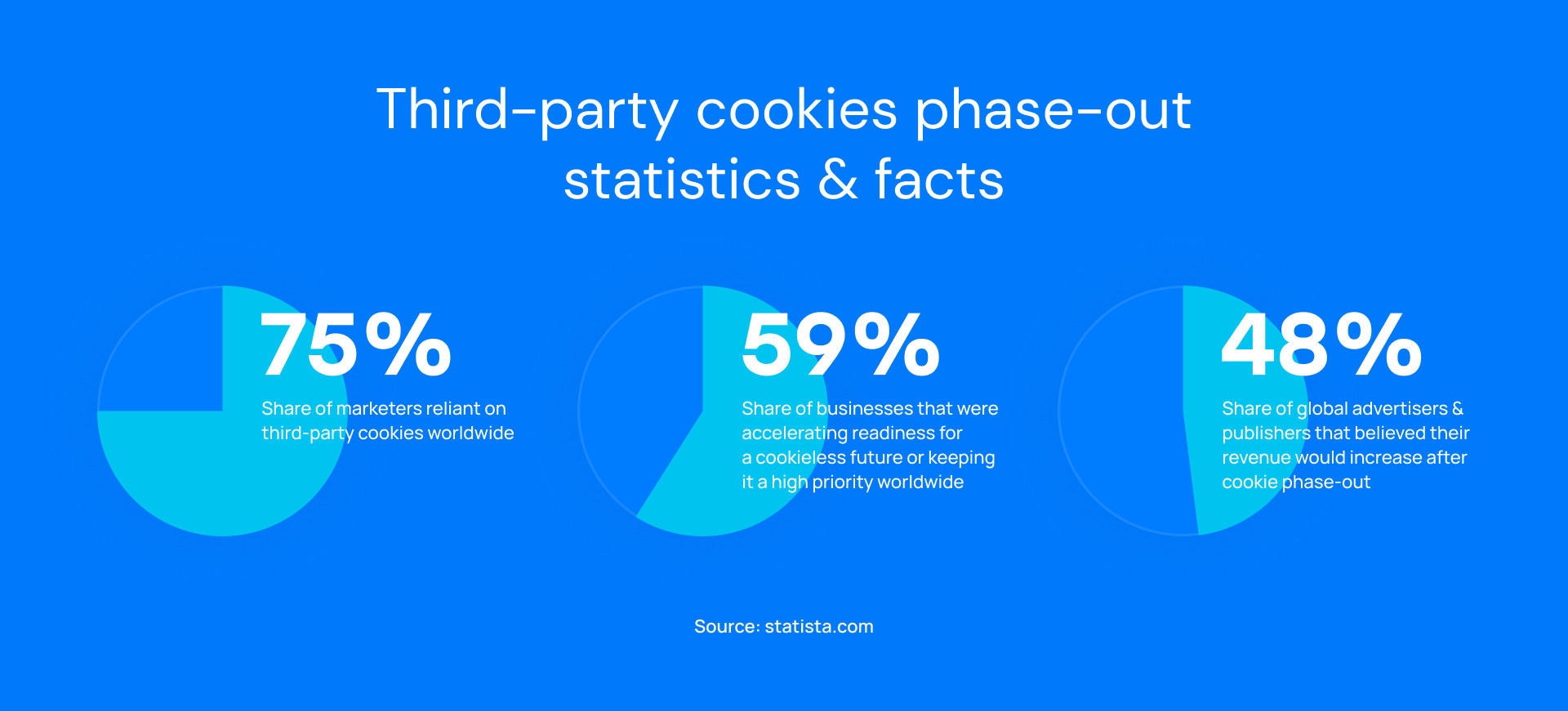
This presents one of the primary challenges for advertisers face today: Even though third-party cookies now remain in Chrome, they do not offer a stable long-term foundation for targeting, attribution or frequency caps. IAB Europe’s 2024 post-cookie survey revealed that nearly half of the industry professionals surveyed were ready for cookie deprecation, however, many also reported a clear reliance upon third-party cookies.
Shift to Cookie-Less Advertising
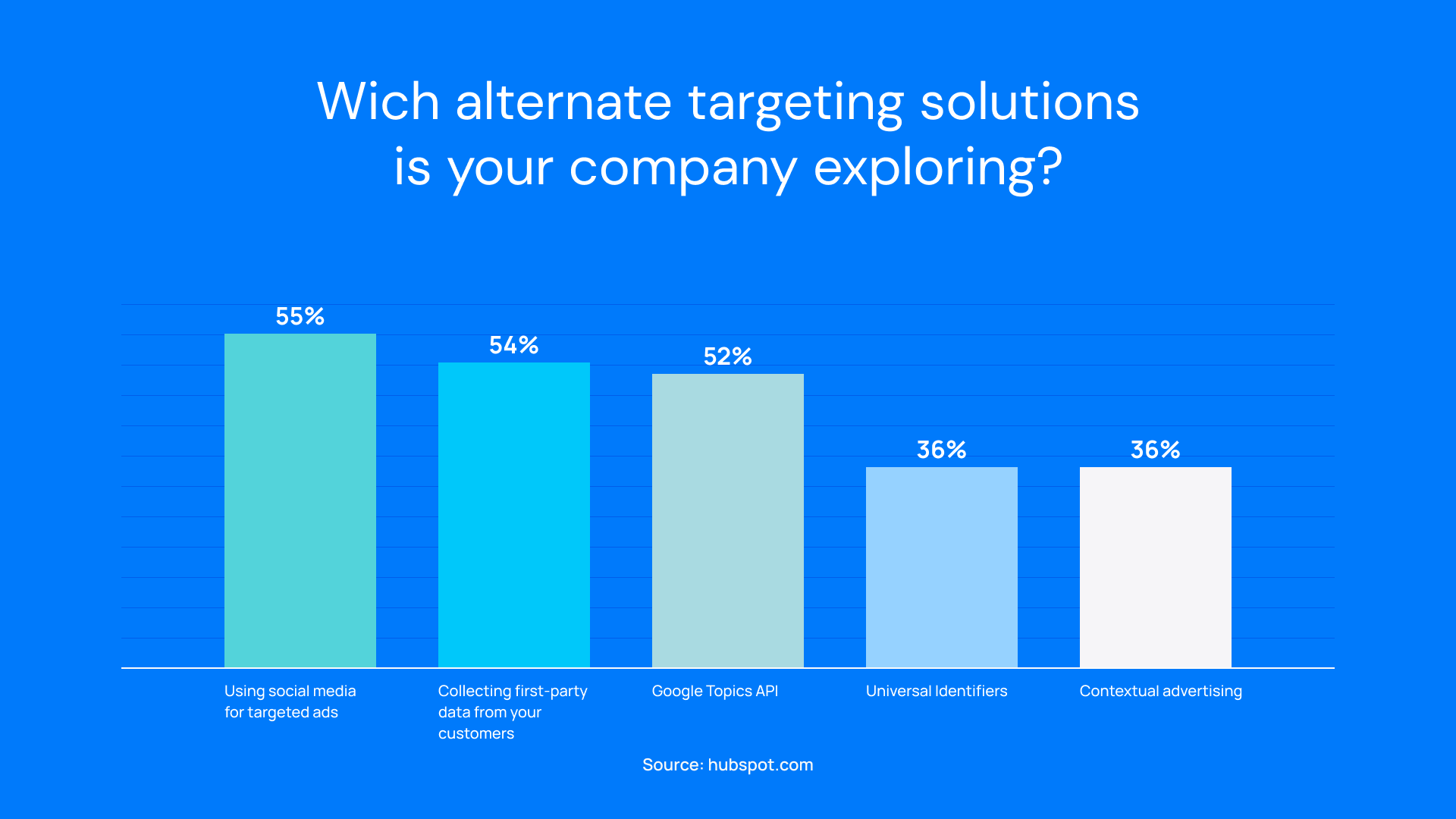
Advertisers do not need one replacement for third-party cookies. They need a mix of consented data, privacy-safe signals, and better campaign logic.
First-Party Data
First-party data includes CRM records, logged in activity, behaviour on the app, purchase & site interactions that are requested explicitly from the user. This helps brands to build direct audience relationship and lessen the dependence on third-party identifiers. Retargeting, lookalike modeling, and customer value analysis all are better on the strength of first-party data advertising.
Universal ID 2.0
Universal ID 2.0 is one of the better-known universal ID solutions. It uses hashed and consented user information to support addressability across participating platforms. It can help with cross-site recognition, but advertisers still need consent management and partner checks.
Topics API
Topics API is a component of the Privacy Sandbox initiatives currently developing at Google. It clusters users into large interest buckets according to their recent web browsing, and never shares site-level history with advertisers. It can service targeting according to interests, but it won’t have the scale that many buyers once expected third party cookies to be able to deliver.
Clean Rooms
Clean rooms allow advertisers, publishers, and platforms to compare datasets without directly exposing user-level data. They work well for match analysis, campaign measurement, and audience modeling. Clean rooms are especially useful when brands and media owners both have strong first-party data.
Contextual Advertising
While contextual advertising the ad is about the context of where it is shown, not so much about the person seeing it. That might mean advertising in + sports, which might mean a fitness, running or outdoor brand is able to purchase ads that surround fitness, running, or outdoor content, among others. This approach enables privacy compliant targeting and does well in the scenarios with few personal identifiers.
Creating Less Invasive Advertising
Less-invasive advertising = less interruption, cleaner consent, and better relevance. Ad blindness is actually a thing, and users are less forgiving of autoplay ads, aggressive popups, and formats that obscure main content. Regulators, and browsers, also keep up their efforts to contain tracking that occurs beyond the clear control of users.
Advertisers can reduce friction with several practical approaches:
- Use contextual advertising for interest alignment without personal tracking.
- Apply frequency caps to avoid overexposure.
- Use attention metrics to understand whether users actually notice ads.
- Create shorter video assets for high-frequency environments.
- Exclude converted users from retargeting pools.
- Make consent choices clear, not hidden in confusing banners.
This is where advertiser challenges programmatic work becomes very practical. Better targeting does not only mean more data. It also means using fewer signals more responsibly.
Keeping Positive ROMI During a Downturn
Advertisers are still under pressure to prove return on marketing investment. In 2025, marketing budgets held steady year-on-year at 7.7% of company revenues and digital channels made up the largest share of marketing budgets at 61.1%, according to Gartner. With flat budgets and an increasingly complex channel landscape, ad spend optimization is a board-level issue, not just an ad ops task.
The main issue is not only budget cuts. It is accountability. Teams need to show which channels drive incremental value, where spend leaks, and which partners help maintain ROAS when demand softens.
A Demand-Side Platform can support this work through real-time data, campaign controls, bidstream access, targeting settings, and autorules. A Supply-Side Platform can help publishers and supply partners improve inventory quality, which also affects advertiser outcomes.
BidsCube’s DSP can support:
- real-time data and filtering;
- bidstream data access;
- built-in issue inspection;
- advanced targeting settings;
- campaign autorules;
- campaign management through a clear interface.
When evaluating partners, advertisers can also check BidsCube feedback on Clutch and G2.
Conclusion
The biggest challenges for advertisers are now at the juncture of privacy, CTV, measurement and budget pressure. Mainstream buyers require better data strategies, more diligent supply chain checks, and greater control over how campaigns run across channels.
The default reaction is to not chase the latest platform at all. To create a programmatic infrastructure which allows the building of it for testing, transparency and trackable outcomes. That is how rules for practical programmatic advertising get made into rules for teams. And that is how teams turn programmatic advertising challenges into practical operating rules.
Our tech staff and AdOps are formed by the best AdTech and MarTech industry specialists with 10+ years of proven track record!

FAQs
What Are the Biggest Challenges for Programmatic Advertisers Today?
Disparate CTV measurement, weakened third-party signals, privacy regulation, over and under privacy risk and an ongoing cap on ROAS Challenges in programmatic advertising, such as data governance, partner selection, and campaign controls, should be addressed.
How Is CTV Changing Programmatic Advertising?
CTV is redeploying programmatic dollars from web-based buying into premium video environments. The change provides broader reach for advertisers on big screens; however, it also introduces more (measurement + addressability) gaps.
What Alternatives to Third-Party Cookies Should Advertisers Use?
Advertisers mix first-party data with clean rooms, contextual advertising, Universal ID 2.0 and Privacy Sandbox signals where needed. There is no one option that solves for third party cookies in all use cases.
How Can Advertisers Maintain ROAS During Market Downturns?
Advertisers can preserve ROAS by trimming low quality supply, real time reporting, tightening frequency caps, and bridging spend with revenue based KPIs. It is vital with ad spend optimization to have feedback in close to real time and rules on exactly where and how budgets are shifted.


