



Looking to start a white-label reseller business? Learn how to choose the best white-label reseller program, including key factors like product quality, pricing, customization, and support. This guide also offers tips for launching a successful white-label website reseller business and scaling your brand efficiently.
Table of Contents
A white label reseller program can give a company a faster path to market than building a product from scratch. That matters even more now, when software demand keeps rising.
- Grand View Research estimates the global SaaS market reached $399.1 billion in 2025 and could grow to $819.2 billion by 2030.
- The IAB and PwC report says U.S. programmatic advertising revenue hit $134.8 billion in 2025, up 18% year over year.
For agencies, media companies, and ad tech firms, those numbers point to more room for white label reseller opportunities, but also more pressure to choose the right model.
The real decision is not whether white-label reselling can work. It is how to choose white-label reseller program options that match your market, margins, technical needs, and growth plan.
What Is a White Label Reseller Program?
A reseller program in a white-label ecosystem gives companies a faster way to launch and sell a branded product without building the full system from scratch. It works best when a business wants to own the client relationship and brand experience, but does not want to carry all the technical cost, time, and operational risk in-house.
Overview of White-Label Reselling
A white-label reseller program allows a business to sell a product or service under its own branding while another company manages the underlying technology, infrastructure, or delivery of the product. The reseller controls the market position, sales process and customer relationship. The provider runs the backend.
This “white-label” model is very typical for SaaS, web services, martech (marketing technology), and white-label ad tech. In ad tech, for instance, a reseller may build a branded DSP, SSP or exchange in lieu of paying for a complete internal solution.
| Parameter | White-Label | Private-Label | In-House |
| Core product ownership | Provider owns core product | Manufacturer builds to retailer brand spec | Company builds and owns product |
| Customization level | Moderate | Higher | Highest |
| Time to market | Fast | Medium | Slow |
| Upfront cost | Lower | Medium | Highest |
| Best for | Fast launch, service expansion, branded resale | More product control and exclusivity | Companies with budget, team, and long roadmap |
BidsCube’s own comparison of private-label and white-label models follows the same logic: private-label offers greater exclusivity and control, while white-label is usually faster to launch and easier to scale.
Advantages for Businesses and Entrepreneurs
| Advantage | Description |
| Lower startup cost | You avoid the full cost of product development, QA, and infrastructure. |
| Faster launch | You can go live in weeks, or sometimes days, instead of waiting through a long build cycle. |
| Branded client experience | The product appears under your own business identity. |
| Easier scaling | The provider handles product maintenance and technical updates as demand grows. |
For many buyers, that is why best white label reseller programs stay attractive. They remove a large part of the engineering burden, while still letting the reseller own the commercial side.
Downsides of White-Label Reseller Programs
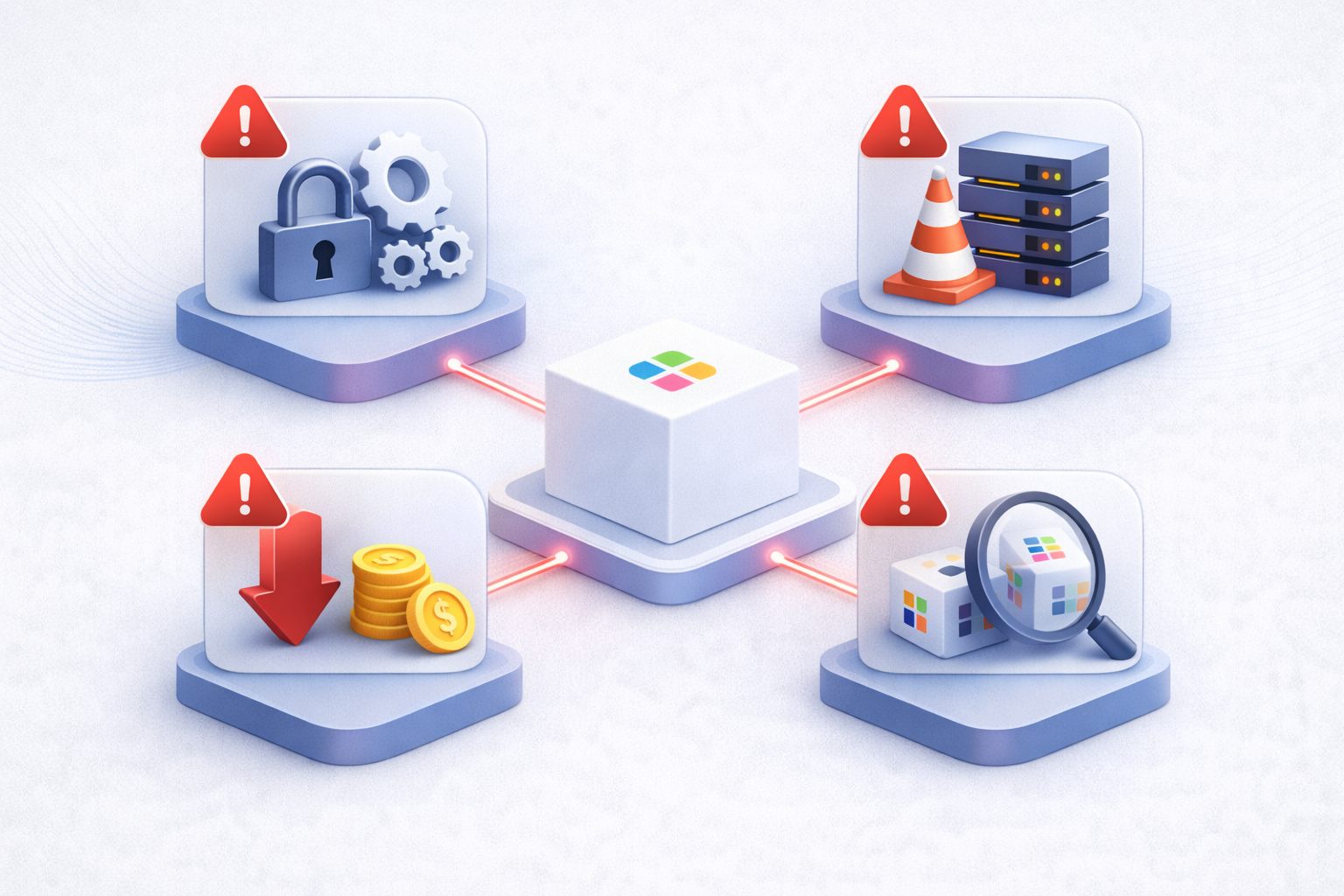
It is a useful model, but it is not a magic one. Four common trade-offs exist within most white-label reseller programs:
- Less product control: you can brand and configure the offer, but in most cases you cannot rewrite the underlying product roadmap.
- Provider dependence: outages, slow updates, or weak support from the vendor can hurt your clients.
- Margin pressure: reseller program pricing can narrow your profit if too many companies sell the same offer.
- Differentiation limits: if the white-label layer is merely cosmetic, your product might appear like everyone else’s.
How to Choose the Best White-Label Reseller Program
Choosing well means checking the product, the contract, the support model, and the revenue logic together. That is the practical answer to how to choose white-label reseller program options without wasting time on weak vendors.
Evaluating Product Quality and Customization
Start with product quality. Ask for a live demo, admin access, and real use cases, not only sales slides. Review performance, reporting depth, permissions, branding control, and update frequency.
Customization also matters. A serious white-label reseller setup should allow more than logo changes. Look for:
- custom domains and email branding;
- flexible reporting and dashboard views;
- user roles and account-level settings;
- API integration capabilities;
- webhook or third-party system support.
If API access is weak, integrations with CRM, billing, analytics, or campaign systems can become messy later. That is a major red flag for any white-label reseller business.
Analyzing Pricing and Profit Potential
Reseller program pricing often looks simple at first, but the real margin depends on usage rules, setup fees, support scope, and overage charges.
Tiered pricing is common. As an example, a vendor may have one monthly rate up to 10 clients and then reduce the per-client cost after you’ve hit 25 or 50 accounts. That setup can improve your margin as volume grows. It can also hurt margin if the next tier comes with required commitments you cannot yet support.
Check these items before you sign:
- setup or onboarding fees;
- minimum monthly commitments;
- usage caps or spend thresholds;
- custom development fees;
- revenue share or seat-based pricing.
This is where many buyers separate good vendors from the best white label reseller programs. Clear pricing is not exciting, but it saves pain later.
Assessing Provider Support and Resources
Support needs to be practical. You need to know who answers technical issues, how fast they respond, and whether onboarding is documented.
A good provider should offer:
- onboarding and training;
- technical documentation;
- a clear escalation path;
- account management;
- basic sales or marketing resources when relevant.
This matters even more for a white label website reseller or ad tech reseller, where clients expect fast answers and low downtime.
| Criteria | What to Check | Red Flags |
| Product quality | Live demo, reporting, stability, update cadence | Outdated UI, vague roadmap, no sandbox |
| Branding and customization | Custom domains, dashboard branding, user roles | Logo-only branding |
| API and integrations | API docs, webhook support, partner integrations | No API, weak documentation |
| Pricing model | Transparent tiers, setup cost, usage terms | Hidden fees, unclear limits |
| Support | SLA, onboarding, dedicated manager | Slow replies, no escalation path |
| Scalability | Multi-account support, growing partner load | Performance issues under volume |
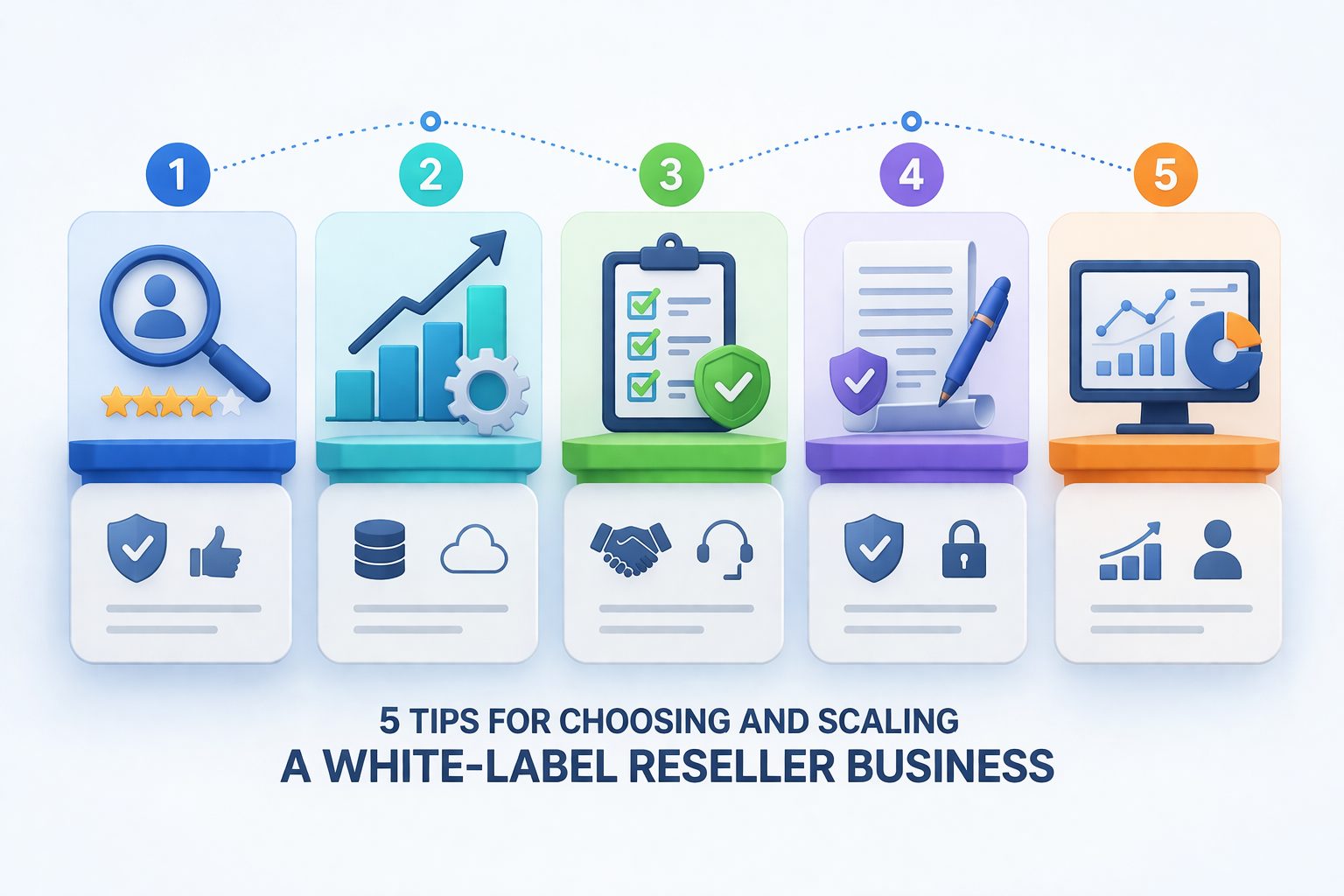
5 Tips for Choosing and Scaling a White-Label Reseller Business
Scaling a reseller offer takes more than picking a product with a logo-ready dashboard. The right provider, contract structure, support model, and operating metrics will shape whether the business stays profitable as client volume grows.
Tip 1. Research Provider Reputation and Customer Feedback
Verify that the vendor has a history of serving companies like yours. Reviews, case studies and public product feedback show you how the partnership functions once contracts are signed.
If you were reviewing BidsCube, rather than only looking at vendor copy, look up third-party pages like Clutch and G2, not only vendor copy.
Tip 2. Make Sure the Offer Can Scale
A reseller product should support growth in users, traffic, accounts, and features. Ask what happens when client count doubles. Ask whether the provider offers separate infrastructure, more endpoints, or higher-volume support when needed.
That question is central for any company building a white label reseller business in ad tech, because scale changes both cost and client expectations.
Tip 3. Seek Comprehensive Marketing and Technical Support
Support should cover both sales enablement and operations. Marketing kits, pitch materials, and product one-pagers help the commercial team. Technical documentation, issue handling, and onboarding support help retention.
This is especially important for white label website reseller and martech models, where the buyer often sells a service wrapped around the platform.
Tip 4. Negotiate Contract Terms Early
Review conditions for termination, renewal terms, clauses on exclusivity and ownership of data before launching, pausing or transferring ownership. The more simple the contract: the easier to change later if there is a new/ offer.
Do not leave billing logic or support scope open to interpretation. That usually turns into friction.
Tip 5. Track Performance and Improve the Offer
Reselling is not a one-time setup. Track sales cycle length, client retention, support tickets, and gross margin by client type. That gives you a clearer view of which white label reseller opportunities are worth pushing, and which are dragging the business down.
Bidscube’s White-Label Solution
BidsCube is one example of a vendor focused on programmatic infrastructure rather than generic software resale. Its public product pages center on three branded options: a white-label ad exchange, a DSP, and an SSP. The company positions these as branded ad tech products for businesses that want to launch or extend advertising operations without building the stack internally.
Why Bidscube’s White-Label Solution?
For companies comparing ad tech vendors, the relevant question is not “is it white-label?” The better question is whether the platform gives enough control to support your business model.
BidsCube’s public materials point to branded platform deployment, exchange connectivity, and infrastructure built for programmatic use cases. That makes it more relevant for companies evaluating a white-label DSP, an SSP, or a broader programmatic white-label solution than for buyers who only need a simple resale catalog.
Benefits
| Benefit | What It Means for Your Business |
| Branded platform setup | You can sell under your own brand instead of sending clients to a third-party interface. |
| Ad tech focus | The offer is built for programmatic operations, not generic SaaS resale. |
| Multiple product paths | You can evaluate exchange, buy-side, and sell-side options depending on your model. |
| Faster launch than in-house build | You avoid the full time and cost of building a platform from zero. |
| Public proof points | You can review external feedback on Clutch and G2 before deciding. |
Conclusion
The most effective method for selecting a white-label reseller program is to view it as you would an operating model, not a product brochure. Before you lock in, never forget to check the product quality; pricing logic, API depth, support structure, and scale opportunity.
That is how you reduce risk and find the best white label reseller programs for your market. And you can easily achieve that with the right partner at your side. Contact us and let’s start working on the project together.
Our tech staff and AdOps are formed by the best AdTech and MarTech industry specialists with 10+ years of proven track record!

FAQ
What is a white label reseller program?
A white-label reseller program enables a business to rebrand products or services from another company and sell them as its own. Without saying, a ‘reseller model’, where the reseller handles branding, sales and relationship with end-use customer and the provider manages product + backend delivery.
How do I choose the best white-label reseller program?
If you want to know how to choose white-label reseller program options smartly, begin with these five checks, product quality, customization, API integration capabilities, pricing structure, and support model. And then make sure that the vendor can accommodate your growth.
What are the benefits of a white-label reseller business?
A white label reseller business can reduce startup costs, shorten time to market, and allow you to develop a branded offer without complete product development. If the provider gives enough freedom and support, then it can also unlock new white-label reseller opportunities as well.
What is the difference between white-label and private-label reselling?
Customisation of shared components means quicker time to market, and therefore broad reuse of core components, making white label reselling what they will do best. Private-label reselling typically provides greater exclusivity and more control over the finished product, but it generally comes at a higher price and time-to-market.


