



Most car shoppers start online, even when they plan to buy in person. McKinsey reports that almost 60% of potential buyers under 45 prefer to purchase online.
That shift changes how dealerships, OEMs, and marketplaces should plan campaigns.
Table of Contents
- Understanding the Automotive Customer
- Planning Your Automotive Digital Marketing Strategy
- Reaching Customers Across Channels
- Automating and Scaling With Programmatic Advertising
- Spotlight On White-Label Programmatic Platforms
- Measuring And Optimizing Campaign Performance
- Building Campaigns that Convert
- Real-World Examples
- Expert Insight: Programmatic Advertising In Automotive
- Conclusion
- FAQ
This guide breaks down channels, measurement, and how programmatic helps scale without losing control.
Understanding the Automotive Customer
Car buying looks like a straight line on a slide deck. In real life, people jump between research, comparisons, and “maybe later.”
The McKinsey report shows that used car online searches account for more than 95% of total searches because customers use third-party websites to verify prices.
Key intent signals to watch in digital marketing in automotive industry campaigns:
- Vehicle detail page visits (and repeat views)
- “Compare trims” and payment calculator usage
- Test drive booking starts (even if abandoned)
- Trade-in valuation checks
- Searches for “near me,” service hours, and directions
What each channel should do:
| Funnel Stage | Primary Goal | Best-Fit Channels | Example KPI |
| Awareness | Reach local demand | Video, Display, CTV, Social | Reach, view rate |
| Consideration | Build trust and proof | SEO, Content, Reviews, Email | Engaged sessions |
| Conversion | Drive leads and visits | Search, Retargeting, CRM | CPL, booked drives |
| Retention | Service and repeat sales | CRM, Email, Remarketing | ROAS, LTV |
Planning Your Automotive Digital Marketing Strategy
A plan works when it links spend to inventory and profit. Set targets by model line, margin, and turnover speed.
Use this checklist for a digital marketing strategy for automotive industry rollout:
- Define “sell” vs “lead” goals per campaign
- Map inventory feeds to creative (price, trim, location)
- Set geo rules (radius by dealership density)
- Build audiences by intent level, not only demographics
- Decide reporting cadence and owners
Reaching Customers Across Channels
Omnichannel should not mean “post everywhere.” It should mean one message, with different jobs per channel.
A practical model for digital marketing and branding for automotive:
- Use video to create familiarity
- Use search to capture demand
- Use retargeting to close timing gaps
- Use CRM to follow up fast
#1. Search and Local SEO
Search still does heavy lifting, especially for “near me” queries. Local pages, inventory schema, and reviews affect results.
Core steps for digital marketing for automotive industry search wins:
- Keep Google Business Profile data consistent
- Build model pages with unique copy (trim, use case, pricing context)
- Add inventory and service pages that load fast on mobile
- Collect reviews, and respond with real details
#2. Content and Social Media Marketing
Social works best when it answers real questions. Short posts about financing, trade-ins, and service offers often beat glossy launches.
Use this content mix for digital marketing for auto businesses:
- “What it costs” posts (payment examples, not promises)
- Walkaround clips and feature demos
- Customer delivery photos (with consent)
- Service reminders tied to seasons
#3. Video and Influencer Partnerships
Video reduces uncertainty. It also helps when a shopper cannot visit today.
If the goal is reach + trust in digital marketing for automobile industry plans:
- Run 15–30s video for awareness, then retarget viewers
- Partner with local creators who show real ownership use
- Track dealership visits and lead lift, not only views
#4. Email and CRM
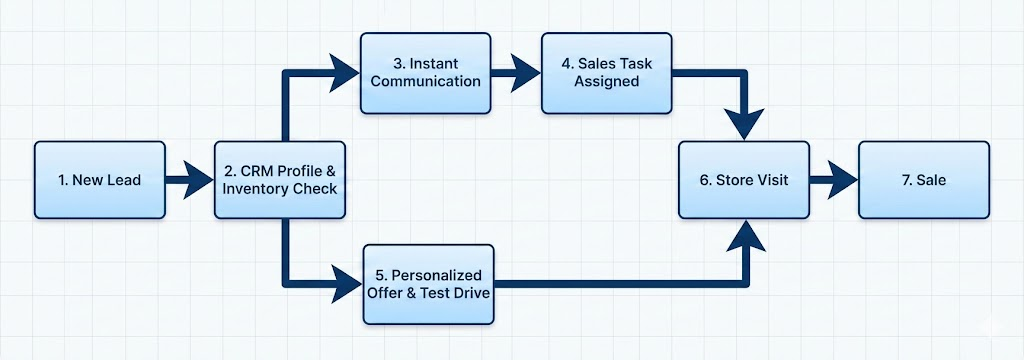
Most automotive leads die from slow response. Email and CRM automation should move fast, and stay personal.
Common automation flows for digital marketing in auto businesses:
- Lead response within minutes (not hours)
- Test drive reminders + calendar links
- Trade-in follow-up with next steps
- Service-to-sales upsell (upgrade timing, not spam)
#5. Paid Media and Retargeting
Paid media is where mistakes get expensive. Cap frequency, block bad placements, and keep creative tied to inventory reality.
A practical setup for digital marketing for auto industry campaigns:
- Prospecting: broad + contextual + in-market audiences
- Mid-funnel: site visitors segmented by model interest
- Bottom-funnel: finance page visitors, VDP repeat viewers
- Exclusions: recent buyers, service-only visitors (case by case)
Retargeting rules that usually help digital marketing in auto industry performance:
- Rotate creative every 10–14 days
- Add “price drop” or “back in stock” triggers
- Separate mobile vs desktop bids if behavior differs
Treat each channel like a specialist, not a megaphone. Keep the message consistent, then let search capture intent, content and video build trust, paid and retargeting handle timing, and CRM closes the loop fast. When you cap frequency, match creative to inventory, and respond in minutes, you turn browsing into test drives, and test drives into sales.
Automating and Scaling With Programmatic Advertising
Programmatic buying helps when teams need speed, control, and measurable outcomes. It also supports dynamic creatives tied to location and inventory.
Statista Market Insights data (via a 2023 Statista report) projects that programmatic will make up a very large share of digital advertising revenue by 2028.
Programmatic works best when the data foundation is clean. Gartner highlights the shift toward first-party data and stronger identity and measurement practices as cookies change.
Use this scaling checklist:
- Connect CRM events (lead, booked drive, sale) to reporting
- Set clear conversion priorities (not 12 goals at once)
- Build brand safety rules and site lists early
- Run incrementality tests, not only last-click
Spotlight On White-Label Programmatic Platforms
White-label platforms fit teams that want control of the stack, the UI, and the commercial model. They also help agencies offer programmatic under their own brand.
Common building blocks:
- An exchange layer for access and routing
- A DSP for buying, targeting, and optimization
- An SSP if the business also monetizes owned media
- A video ad server for VAST, instream, and reporting
If reviews matter in vendor selection, check BidsCube on Clutch and BidsCube White-Label AdExchange reviews on G2.
Recommended background reads:
- White-Label DSP vs. Self-Serve DSP
- How White-Label Platforms Revolutionize AdTech
- Staying Top of Mind: Reminder Ads Explained
- Optimizing Your Programmatic Strategy
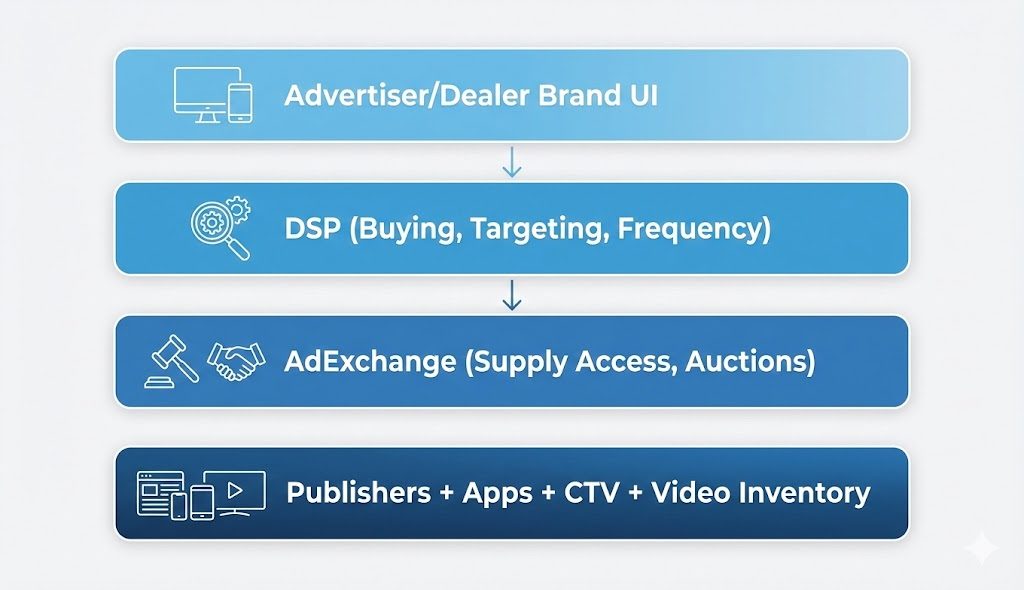
White-label programmatic platforms give teams a way to run buying, selling, and reporting under their own brand, with clear control over workflow and commercial terms. When you combine a DSP, an exchange layer, and optional SSP and video ad serving, you can scale campaigns across web, app, CTV, and video without losing visibility into what drives results. The best setups stay simple: define roles for each layer, connect measurement end to end, and keep governance tight.
Measuring And Optimizing Campaign Performance
Click-through rate alone will lie to you. Automotive needs outcome tracking tied to leads, appointments, and sales.
Use a KPI set like this:
- Lead quality: booked test drives, contact rate
- Sales efficiency: cost per booked drive, cost per sale (if available)
- Media health: viewability, invalid traffic rate, frequency
- Business impact: inventory days-on-lot reduction by model
IAB reporting on data practices also keeps pointing to the same theme: measurement and addressability depend on consented data and clear governance.
Building Campaigns that Convert
Conversions rise when messaging matches the shopper’s next step.
Use this creative checklist:
- Show real offers and clear terms
- Match creative to local inventory
- Add “book a test drive” as the main action
- Use landing pages that load fast and answer price questions
- Keep forms short, and confirm instantly
Real-World Examples
Examples that often work for digital marketing for automotive dealers:
- New model launch: video awareness → search capture → retargeting to test drive
- Slow-moving trims: dynamic ads with price or incentive triggers → lead forms
- Service-to-sales: service reminders → upgrade offers for owners nearing lease end
Expert Insight: Programmatic Advertising In Automotive
Below is a BidsCube team perspective that translates well to auto.
You do not want to burn budget by serving the wrong ads to the wrong people.
In automotive, that usually means simple discipline: separate audiences by budget band, vehicle type, and intent stage. Then let automation optimize bids inside those guardrails.
Conclusion
Automotive campaigns drive sales when they connect three things: intent, inventory, and follow-up speed. Use SEO and content to earn trust, paid media to capture demand, and CRM to close the gap.
Programmatic and white-label platforms help scale, but only after the data and measurement basics work.
Our tech staff and AdOps are formed by the best AdTech and MarTech industry specialists with 10+ years of proven track record!

FAQ
How can I integrate a white-label programmatic platform with my dealership’s existing crm and inventory systems?
The system should begin by receiving inventory data which includes prices and trim levels and location information before it can process CRM events for reporting purposes. Server-to-server events should be used whenever possible because they help minimize the amount of lost data.
Which audience data types work best for programmatic car buyer targeting through advertising?
High-intent signals work effectively because customers show their intentions by viewing VDPs and using payment tools and performing trade-in checks and returning to the site multiple times. First-party data which comes from CRM systems and website user activities delivers superior results than using general demographic information.
White-label programmatic solutions which handle brand safety requirements through what methods to prevent my ads from showing up with inappropriate content?
The system should include features that detect blocklists and support category exclusions and app-ads.txt and sellers.json files and perform fraud detection and display placement metrics. The system requires particular allowlists which premium automotive organizations need to defend their systems against high-risk situations that affect their brand.
What privacy and compliance measures should automotive marketers consider when collecting and using customer data for programmatic campaigns?
Organizations need to establish basic consent procedures which should limit their data collection and documentation requirements and maintain separate storage for personal information and media activation identifiers. Align teams on governance, since measurement changes fast when regulations and browsers change.
What level of support and training does the provider offer to help my team manage and optimize programmatic campaigns?
The team should request information about their onboarding process and their review schedule for campaigns and their documentation system and their process for handling emergencies. The team needs to determine who will perform measurement setup because this process delivers greater project success than any modifications made to the bid.


