



ublishers often treat Telegram traffic like any other referral source. That is usually the first mistake. Traffic from Telegram channels, private groups, Reddit communities, WhatsApp groups, Discord servers, or niche forums behaves differently from search traffic and differently from classic display traffic. It often lands fast, reads fast, and leaves fast. The audience can be highly relevant, but the session is usually short. That changes how ads load, how many impressions fire, and how much value the visit creates.
Table of Contents
That is why monetize telegram traffic is not the same task as monetizing search, SEO, or broad social traffic.
- With search, the visit usually starts with a clear query and often leads to deeper page exploration.
- With display traffic, the publisher often works with a broader reach and more familiar ad patterns.
Community traffic is sharper, more intentional, and less patient. If you want a better yield, you need a setup built for that reality.
What Is Telegram and Community Traffic?
Telegram and community traffic includes visits that come from channels, group chats, forum threads, creator communities, private newsletters, and other audience clusters built around a shared topic. These visits are not random. They usually come from people who clicked because the content already matched their interest.
That is why telegram traffic monetization can look promising on paper. The users often know the topic, trust the person or group that shared the link, and arrive with stronger intent than a cold display click. At the same time, many of them want one answer, one update, or one offer. They are less likely to browse five pages just because the site has a long content hub.
In practice, this traffic usually has three traits:
- direct or semi direct referral behavior;
- strong topic alignment;
- short sessions with low page depth.
Those traits matter because they change what “good monetization” looks like. You are not trying to squeeze ten pageviews out of one user. You are trying to make the first page load count.
If you are asking how to monetize community traffic, start with the real business value of that visit. A community click is often warmer than a cold social click. It may convert better on offers, newsletters, or lead forms. It may also produce better ad response if the ad matches the page context well enough. That is one reason contextual setups gained attention again as privacy focused alternatives to third-party cookie-driven targeting became more important. IAB Europe’s guide frames contextual advertising as a strong option in a post-third-party cookie environment, and Google’s publisher guidance also shows that publishers now need partner setups that fit a lower signal world.
Why Telegram Traffic Is Hard to Monetize by Default
The hard part is simple. Most ad stacks assume the user will stay long enough for lazy loaded units, bidder calls, and viewability thresholds to do their job. Telegram and community visitors often do not wait.
Google Ad Manager explains that faster loading improves viewability, and it also notes a tradeoff with lazy loading: if an ad loads too late, the user may scroll or leave before the ad can be seen. Google also defines a viewable display impression as one where at least 50% of the ad’s pixels stay visible for one continuous second. For short sessions, that one second matters a lot.
This is where many publishers lose money. The audience may be qualified, but the stack is slow. The page may be useful, but the placements are too low. The traffic may be real, but the ad request chain is too long.
Here is the common pattern:
| Traffic Reality | What Goes Wrong | Revenue Result |
| One fast pageview | Below the fold units never load | Fewer impressions |
| Short dwell time | Viewability target is missed | Lower CPM demand |
| Thin behavioral signal | Behavioral targeting is weak | Lower match quality |
| Burst traffic spikes | Timeouts and passbacks rise | Lower fill rate |
So, yes, community clicks can create strong value. But community traffic ad revenue depends on speed, placement, and signal quality more than on raw audience size.
Reddit Case: Publishers on Monetizing Telegram and Community Traffic
The Reddit discussion in r/Telegram gives a useful reality check. The original poster said they had built a channel to about 3,000 subscribers, tried direct sponsors, earned only a few hundred dollars, and found sponsor outreach too time consuming.
They also said affiliate links barely moved the needle. In replies, one creator argued that direct monetization worked better for smaller but engaged audiences, including guides, small group sessions, consulting, exclusive content, and paid access. Another commenter warned that turning a free channel into a paid one can cost followers, even at a low monthly fee.
That thread matters because it shows the same tension publishers face on site. A community audience can be engaged, but direct monetization inside the channel does not always scale. Sponsorships take time. Affiliate revenue can stay weak. Paid access can hurt reach. That is why many publishers look for a cleaner bridge between community distribution and on site monetization.
A website gives you more control. You control the layout, the page speed, the ad mix, the contextual signals, and the demand path. That is often the smarter route if your goal is monetize telegram channel website traffic without turning every Telegram post into a sales pitch.
Best Monetization Strategies for Telegram and Community Traffic
There is no single fix for community traffic monetization. The right setup depends on your traffic source, your page speed, and how well your ad formats match the way community visitors actually read. These four strategies cover the most important levers.
Use Contextual Advertising Over Behavioral
For Telegram and community visits, contextual matching usually beats heavy dependence on behavioral targeting. The user may arrive with limited identifier depth, but the page topic is often clear. If the page is about crypto market updates, sports betting regulation, game patch notes, celebrity news, or AI tools, the ad opportunity is already visible from the content itself.
IAB Europe describes contextual advertising as a practical response to the move away from third party cookie dependence. That matters for community visits because you often have less usable cross site history at the point of arrival. A contextual model does not need to guess what the user wanted last week. It only needs to understand what the user is reading now.
This is where a good community traffic monetization strategy starts. Match the ad to the page topic, not to a long identity chain you may not have.
Optimize for CPM Efficiency on Short Sessions
Short sessions do not kill monetization by themselves. Bad timing kills monetization.
If the first ad loads too late, the visit is wasted. If the only strong unit sits far below the fold, the visit is wasted. If your setup waits too long for bidders, the visit is wasted. Google’s own guidance says speed, responsiveness, and lower latency support better viewability, while passbacks and delays hurt it.
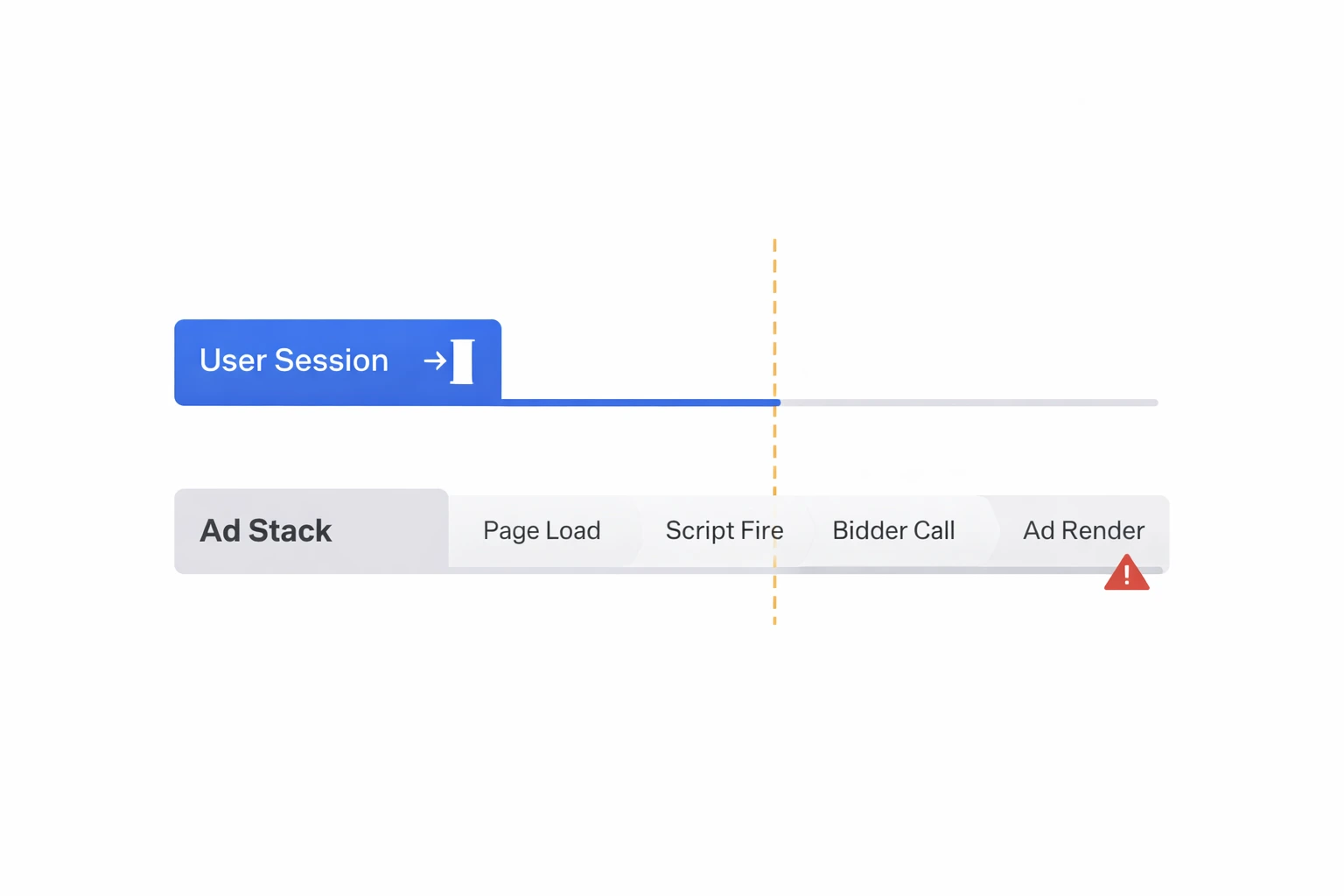
To improve performance on community visits:
- place one strong unit near the top of the content;
- keep at least one monetization opportunity visible early;
- trim bidder timeouts for fast exit audiences;
- reduce unnecessary passbacks and heavy scripts.
For this traffic type, one visible impression with decent viewability usually beats three theoretical impressions that never render in time.
Native Ad Formats for Community Audiences
Telegram and community visitors often hate obvious ad clutter. They clicked because a trusted source recommended the page. If the page opens with a wall of intrusive creatives, the trust collapses fast.
Native units, clean in feed placements, related content blocks, and compact sticky units often work better than noisy formats. The goal is not to trick the user. The goal is to fit monetization into the reading pattern without breaking it.
That is especially important for telegram referral traffic monetization. Referral users have a strong reason to leave if the first screen feels messy. A lighter format mix can protect both bounce rate and viewability.
Segment Community Traffic Before Monetization
Not all community traffic is the same. A Telegram channel that posts finance alerts is not the same as a Reddit community for memes. A private Discord around gaming patches is not the same as a WhatsApp group for local deals.
Segment by source and by intent before you optimize. At minimum, split traffic into:
- creator channel referrals;
- private group referrals;
- forum or Reddit referrals;
- direct return users from those communities.
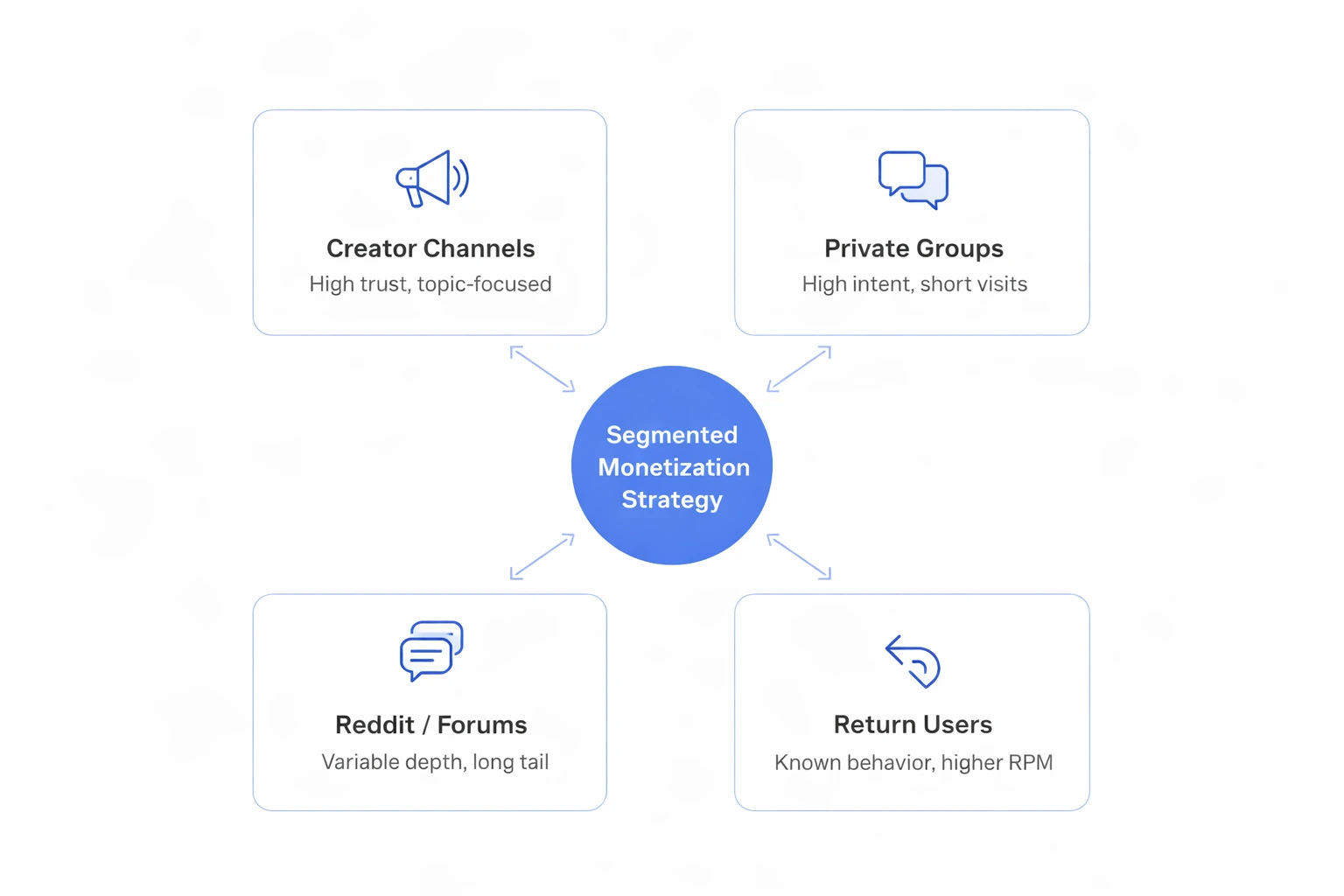
Then look at RPM, viewability, scroll depth, first ad render time, and bounce rate by segment. You may find that Telegram traffic performs well with one ad layout, while Reddit traffic performs better with another. This is also where you can test different landing pages for different community types.
By the way, you can read verified client feedback about BidsCube on Clutch to see how publishers and partners use these tools in practice. G2 also has user reviews of BidsCube White-Label AdExchange if you want a second source of independent feedback before making a decision.
How to Increase RPM for Telegram Referral Visitors
RPM rises when more of the visit becomes monetizable. That sounds obvious, but publishers often chase higher CPM first and forget the mechanics that make CPM possible.
For Telegram referral traffic, start with landing page setup:
- keep the first content block and the first ad block close;
- use fast, lightweight templates;
- avoid giant headers that push ads and content down;
- test one sticky or anchor placement for mobile;
- cut script weight where possible.
Then review your demand path. If your site uses header bidding, shorten bidder timeout for community traffic pages. Fast exits need fast auctions. Google’s publisher guidance points to header bidding and SSP specific implementation choices in lower signal environments, and BidsCube’s SSP explicitly lists header bidding support, real time data, and reporting tools that can help publishers tune performance.
This is also where programmatic advertising needs to be used with discipline. For Telegram audiences, the goal is not a complex stack for its own sake. The goal is a simple, fast path from page open to valid impression.
A practical RPM workflow looks like this:
- identify top community sources;
- build a landing page template for each major source type;
- move key ad units higher on page;
- cut timeout, passbacks, and heavy tags;
- compare RPM by source, device, and layout.
That process matters because website monetization for community audiences usually fails from friction, not from lack of demand. The audience came ready. The stack just did not meet them fast enough.
If you need more buyer-side control for testing contextual segments, frequency, or spend logic on community cohorts, BidsCube’s DSP promotes real-time filtering, bidstream access, and targeting controls. If you need a marketplace layer between demand and supply, the company’s AdExchange highlights real-time reports, bidstream data access, troubleshooting tools, and block list controls. Those are the kinds of features publishers and partners often look for when seeking greater control over short-session yield.
Conclusion
Telegram and community audiences are not low quality traffic. They are just impatient traffic.
That difference changes everything. If you want better results, do not copy a search layout and hope for the best. Build pages for fast entry, fast loading, clear context, and early monetization. Use source level segmentation. Favor contextual matching. Protect the first screen. Then test the demand path until RPM starts to reflect the quality of the audience.
That is the core of monetize telegram traffic done right. It is also the cleanest answer to publishers asking how to turn referral spikes into stable income without wrecking the user experience.
Our tech staff and AdOps are formed by the best AdTech and MarTech industry specialists with 10+ years of proven track record!

FAQ
Can Telegram traffic generate strong ad revenue?
Yes, Telegram traffic can generate strong ad revenue if the page layout and ad stack are built for short visits. Community visitors often arrive with clear topic intent, but publishers need fast load speed, early ad visibility, and strong contextual matching to convert that intent into revenue. Google’s guidance on speed and viewability, plus IAB Europe’s work on contextual advertising, both point in that direction.
What is the best way to monetize community traffic on a website?
The best way depends on the source, but the usual starting point is simple: segment the traffic, use topic matched ads, place one strong unit high on the page, and reduce auction delay. If you are asking how to monetize community traffic at scale, treat each community source as its own product, not as generic referral traffic. That is how community traffic ad revenue becomes more stable over time.


