



Supply Path Optimization, or SPO, is a set of practices to help advertisers navigate the tangle of the programmatic supply chain. SPO is a better way to reduce waste in ad spend, build more transparency, and enhance performance for advertisers and publishers.
Table of Contents
The programmatic ad supply chain is bloated, costing advertisers millions. In 2024, ANA and TAG TrustNet reported that about one-quarter of programmatic ad spend was wasted. Their benchmark also found that only 36 cents of every dollar entering a DSP effectively reached the consumer, while DSP and SSP fees accounted for 29 percent of each dollar. Invalid, nonmeasurable, non-viewable, and MFA impressions accounted for another 35 percent.
That is why supply path optimization matters. SPO helps advertisers audit how impressions move through DSPs, SSPs, exchanges, resellers, and publishers. The goal is not just to reduce costs. It is to improve programmatic advertising transparency, remove duplicate bid paths, and spend more budget on supply that can actually deliver measurable outcomes.
So, what is supply path optimization exactly?
It is a structured process for selecting the most direct, transparent, and cost-efficient paths to inventory. SPO brings together the buying logic, supply quality, and platform controls into a single standardized, repeatable process for teams working with supply path optimization programmatic strategies.
What Is Supply Path Optimization (SPO)?
SPO, which is the practice of analysing and optimising the most efficient supply path between a buyer and a publisher†s inventory. When it comes to programmatic advertising, that path typically has three key components: DSP, SSP, and an ad exchange.
A DSP helps advertisers buy impressions based on audience, price, format, and campaign goals. An SSP helps publishers sell inventory and manage yield. A programmatic ad exchange connects supply and demand, runs auctions, and supports ad exchange efficiency across multiple partners.
SPO checks whether these connections create value or add waste. If the same impression appears through several SSPs, the buyer may bid against itself. If the path includes too many resellers, fees rise, and visibility drops. Bid path optimization helps buyers decide which partners deserve budget and which routes should be reduced or removed.
The idea behind SPO is simple:
- Fewer hops mean better pricing. SPO brings together the buying logic, supply quality, and platform controls into a single standardized, repeatable process for teams working with SPO programmatic strategies.
- Higher transparency. SPO gives buyers a clearer view of seller IDs, reseller relationships, auction mechanics, and inventory quality. This helps teams understand where money goes before, during, and after the bid.
- Less fraud. Shorter, cleaner paths reduce exposure to low-quality domains, spoofed inventory, and MFA-heavy supply. SPO does not replace verification tools, but it gives fraud controls better supply data to work with.
What is supply path optimization about? It’s about making smarter buying decisions and cutting unnecessary costs from your media spend.
The Rise of SPO: Cleaning Up the Programmatic Supply Chain
Over the past few years, SPO advertising has gained massive momentum. With the rise of automated buying through DSPs, brands gained efficiency. But they also lost some visibility. Advertisers often didn’t know how many intermediaries touched their ad impressions—or how much margin each one took.
Buyer-side adoption is now easier to see in market behavior. ANA and TAG TrustNet’s 2024 benchmark found that MFA spend among participating advertisers dropped from 15 percent to 4 percent after the 2023 transparency study. The same benchmark reported that average campaign reach across websites and apps fell from 44,000 to 23,000, and many advertisers reduced their number of SSP and exchange partners.
Agency and brand buyers also continue to consolidate supply partnerships. Magnite noted in 2024 that groups such as GroupM, Canvas Worldwide, Dentsu, and Horizon had moved toward fewer supply partners as part of SPO-led buying models.
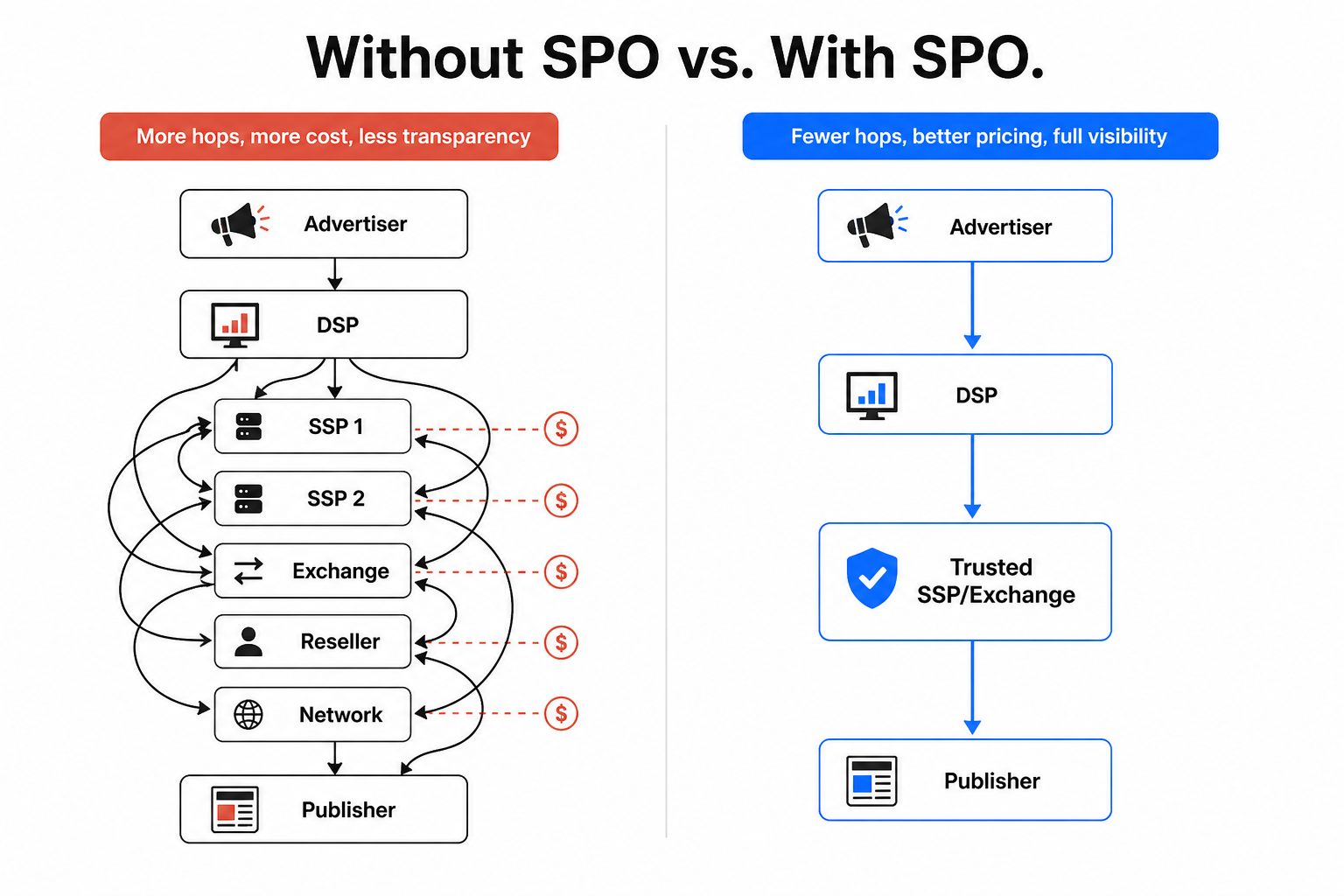
This lack of clarity led to problems:
- Higher costs for advertisers
- Lower revenue for publishers
- More opportunities for fraud
Supply path optimization for publishers and advertisers started as a response to these issues. Brands began demanding cleaner, more transparent deals. Major players like The Trade Desk launched SPO initiatives to work only with trusted supply partners.
Today, why supply path optimization is important is clear: it restores trust, improves Return on Investment (ROI), and promotes better outcomes for everyone involved. The rise of SPO advertising is about taking control back in a complex, automated world.
How SPO Works in Practice
SPO starts by evaluating all available supply paths. Advertisers look at metrics like:
| Metric | What It Measures | Why It Matters |
| Number of hops | How many SSPs, exchanges, resellers, or intermediaries sit between buyer and publisher. | Fewer hops usually mean lower fees, faster auctions, and clearer accountability. |
| Inventory quality | Viewability, brand safety, IVT levels, domain quality, and MFA exposure. | Buyers need to know whether impressions have a real chance to create value. |
| Pricing efficiency | CPM, take rates, bid duplication, and auction overlap across partners. | This shows whether buyers pay fair prices or compete against their own bids. |
| Transparency level | Seller IDs, ads.txt status, sellers.json data, schain clarity, and reporting depth. | Strong transparency helps teams verify where inventory comes from. |
| Performance output | Win rate, conversion rate, ROAS, engagement, and post-click quality. | SPO should support business outcomes, not just cleaner-looking reports. |
With the data in their hands, advertisers can rate supply partners and eliminate the less efficient paths. Hold Chains Interactive Data AssetsMore direct relationships to publishersBrandsPartnering with a white-label SSP or reputable programmatic ad exchange makes it easier to establish direct connections to the publishers.
This means that an advertiser may identify only 2 or 3 platforms to conduct bidding across rather than 10. They confirm quality and price by integrating their DSP to track performance in actual time.
What is supply path optimization in practice?
It’s making sure your ads take the fastest, cleanest, and most cost-effective route to the user.
SPO Tactics That Deliver Results
Several proven SPO tactics in advertising help brands streamline the buying process, cut wasted spend, and gain more control over campaign outcomes. Below are some of the most effective strategies advertisers are using today:
Direct Relationships
How To Implement
Start by identifying publishers, SSPs, and exchange partners that consistently deliver quality inventory. Move a larger share of budget to those partners through direct deals, PMPs, or preferred supply routes. Review fee structure, ads.txt status, and reporting access before increasing spend.
Curated Supply
How To Implement
Build a supply list based on verified inventory, low reseller activity, strong viewability, and clear seller relationships. Remove domains, apps, and partners that create duplication or poor performance. Keep the list active because supply quality changes over time.
First-Party Data
How To Implement
Use first-party segments to prioritize supply that matches high-value users, not just cheap impressions. Connect CRM, site, app, or conversion signals to buying rules inside the DSP. This makes supply path optimization programmatic work more precise because supply decisions reflect audience value.
Real-Time Results
How To Implement
Track CPM, bid rate, win rate, viewability, IVT, and conversion quality in near real time. Set review windows by campaign type, not by habit. For fast-moving campaigns, weekly SPO reviews can catch wasted routes before they burn through budget.
High-Quality Supply Sources
How To Implement
Use trusted SSPs, direct publisher deals, and controlled exchange paths where reporting depth supports daily decisions. Check whether the partner can show seller-level data, fee logic, and inventory source details. This improves ad exchange efficiency and reduces blind buying.
| SPO Tactic | Benefit | Complexity | Best For |
| Direct relationships | Lower duplication and clearer pricing | Medium | Brands with stable publisher priorities |
| Curated supply | Cleaner inventory and better control | Medium | Agencies managing multiple campaigns |
| First-party data | Better relevance and stronger targeting | High | Advertisers with owned data |
| Real-time audits | Faster waste detection | Medium | Performance and always-on campaigns |
| High-quality supply sources | Lower risk and better accountability | Low to medium | Buyers seeking programmatic advertising transparency |
In short, effective SPO is not a one-time switch. It’s an ongoing, data-driven effort to affirm that every dollar is spent with purpose, through routes that are fast, transparent, and aligned with your campaign objectives.
What Results Can You Expect from SPO?
SPO results depend on spend level, supply quality, partner setup, and DSP controls. In most cases, teams use SPO to reduce waste, improve reporting clarity, and shift spend toward paths that support campaign goals.
| Result | Description | Who Benefits |
| Lower media waste | Buyers reduce duplicate auctions, unnecessary resellers, and low-value routes. | Advertisers and agencies |
| Better inventory quality | Budgets move toward supply with stronger viewability, lower IVT, and better brand safety. | Advertisers and publishers |
| Higher transparency | Teams see more detail about sellers, fees, paths, and auction behavior. | Advertisers, agencies, and ad ops teams |
| Stronger publisher demand | Publishers with clean, direct supply paths can become preferred partners. | Publishers |
| Cleaner optimization | DSP rules can focus on trusted supply instead of chasing every available bid request. | Advertisers and trading teams |
For publishers, working closely with demand sources selected through supply path optimization for publishers means better monetization opportunities and stronger demand for their inventory. With smart SPO advertising, everyone wins: advertisers, publishers, and ultimately, the end users.
Custom SPO Implementation: How to Tailor It to Your Stack
There’s no one-size-fits-all way to implement SPO. Every advertiser has a different stack, different goals, and different partners.
To tailor an SPO strategy:
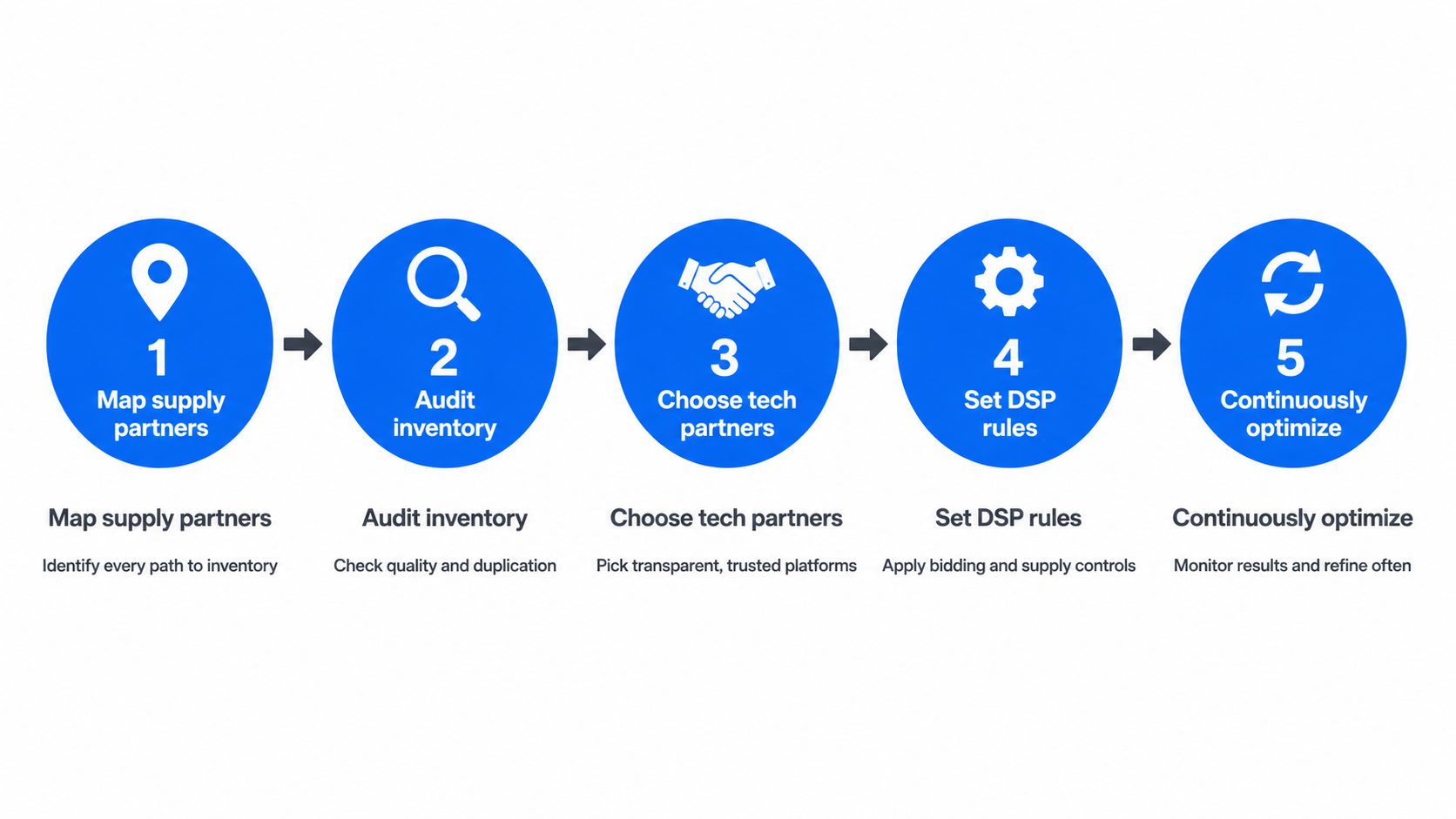
Step #1. Map Out Your Current Supply Partners
List every SSP, exchange, reseller, and publisher path that carries your bids. Include seller IDs, ads.txt records, sellers.json data, and schain details where available. This map should show where the same inventory appears more than once. Those overlaps usually reveal the first bid path optimization opportunities.
Step #2. Audit Your Inventory Sources
Check each source for viewability, IVT, MFA exposure, win rate, CPM, conversion quality, and post-click engagement. Do not look at CPM alone because cheap supply can still waste budget. Compare direct and reseller paths for the same inventory. Keep partners that add clear value, not just more reach.
Step #3. Work With Trusted Tech Partners
Choose platforms that give you clear reporting, partner controls, and flexible routing. A White Label AdExchange can support marketplace-level control, while SSP and DSP components help teams manage both sides of programmatic trading. Review vendor reputation through sources such as Clutch and G2 during due diligence.
Step #4. Integrate SPO Rules Into Your DSP
SPO should live inside DSP settings, not only in a spreadsheet. Set preferred supply partners, block weak seller paths, adjust bid rules by SSP, and use deal IDs for trusted inventory. DSP-level SPO rules help traders apply the same logic across campaigns without rebuilding decisions manually each time.
Step #5. Continuously Optimize
Publishers continue to add partners to the supply path, exchanges update rules and goals shift with campaigns, which create inventory sources that are not reflective. For stable campaigns, a monthly SPO performance review may be suitable, but for high-spend or seasonal campaigns, consider reviewing more often. Monitor changes in win rate, CPM, viewability and conversion quality. SPO works best as a continual operating process Вood1! not a one time clean up effort.
Using platforms like a DSP with built-in SPO features makes tailoring easier. They allow advertisers to control how and where they buy inventory in real time. Customizing your SPO in advertising strategy guarantees that it fits your business model, maximizing returns without unnecessary risks.
Conclusion
The short answer is yes. SPO is a gateway to more control, better pricing, and more transparent partnerships in a busy and often opaque programmatic marketplace. As a result, it does not matter if you are a brand, an agency, or even a publisher; knowing what SPO is and implementing SPO strategies will result in a great return on your investment.
The supply path optimization provides advertisers granular control over how their budget flows through the programmatic supply chain. It reduces the number of duplicate auctions, makes the auction process less of a black box, and directs spend to supply partners that can also demonstrate real value. Publishers also benefit when they offer clean paths, verified inventory, and reliable reporting. If your media buying still depends on too many unclear routes, SPO should become part of your 2025 programmatic strategy.
Prioritize SPO in your strategy and do much more with BidsCube. Contact us for a free consultation.
Our tech staff and AdOps are formed by the best AdTech and MarTech industry specialists with 10+ years of proven track record!

FAQs
What are the main benefits of SPO for advertisers?
Supply path optimisation (SPO) lowers media prices, offers better inventory quality, enhances campaign transparency and raises the return on ad spend (ROAS). Advertisers can validate how their ad dollars are allocated and confirm more positive results from secure supply partners.
How does SPO differ from DSP optimization?
SPO in advertising focuses on selecting the cleanest and most efficient supply paths, while DSP optimization is about bidding smarter across available inventory. SPO happens before the bid, at the supply selection stage. DSP optimization happens during or after bidding.
Is SPO only relevant for large advertisers?
No. SPO is essential not just for big advertisers who were early to market. Smart SPO provides the transparent price and bidding benefits that no one can afford to miss out on, whether they’re spending $10,000 monthly, or $10 million.
What tools or platforms help with SPO implementation?
Platforms like a white label SSP, DSP, or curated programmatic ad exchange offer features that support SPO strategies. They help validate supply quality and make real-time optimization easier.
Can publishers benefit from advertisers’ SPO strategies?
Yes. With supply path optimization for publishers, direct relationships with advertisers lead to stronger demand, better pricing, and less reliance on third-party resellers. Publishers that align with SPO efforts can validate their value more effectively to premium buyers.


