



- When cookie syncing explained, it also called cookie matching, is how two ad platforms, such as a DSP and an SSP, agree that they see the same user.
- Each platform assigns its own user ID. A sync pixel and a redirect exchange those IDs and store the pair in a match table.
- Without a cookie sync, a DSP cannot connect a bid request to its audience data. It bids blind or skips the auction.
- Cookie syncing powers frequency capping, audience targeting, retargeting, attribution, and cross-device measurement.
- Typical match rates range from 30% – 50%. Match rates on Safari and Firefox is near-zero because those browsers block third-party cookies.
- In April 2025, Google abandoned its plan to block third-party cookies in Chrome. With Chrome accounting for around two thirds of browser traffic globally, this means that cookie syncing is still effectively backing the majority of RTB trading.
- For cookieless environment, there are four significant options in terms of solutions Universal ID, hashed emails, contextual targeting, server to server sync.
Table of Contents
- Cookie Syncing Explained in Simple Terms
- How Does Cookie Syncing Work: Step-by-Step
- Cookie Sync vs Cookie Matching: Is There a Difference?
- Why Cookie Syncing Matters for Programmatic Advertising
- Limitations and Challenges of Cookie Syncing
- Cookie Syncing in 2026: Still Relevant?
- Alternatives to Cookie Syncing
- How BidsCube Can Help
- Final Thoughts
- FAQ
Programmatic advertising runs on recognition. A DSP can only apply targeting, capping, and measurement if it can recognize the same user that the SSP sees. That recognition does not happen by magic. It happens through cookie syncing.
Here is the paradox. Many people call cookie syncing an outdated technology. Yet it still keeps user data consistent between DSPs and SSPs in most real-time bidding deals. The stakes are large.
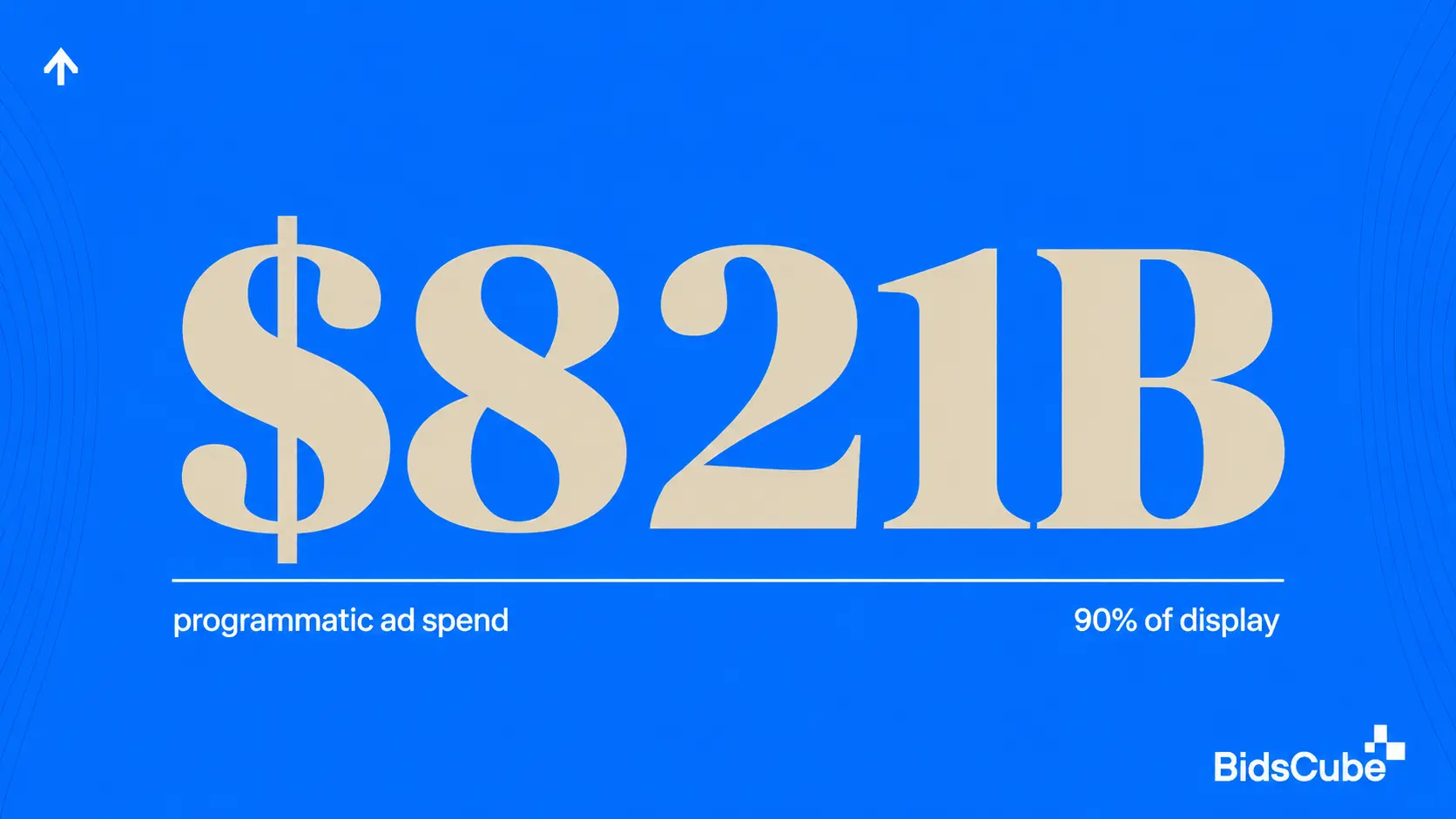
Industry estimates based on EMARKETER projections place total global programmatic ad spend at over $821 billion in 2026, around 90% of all digital display trades. Winnie: Most of that money is funneled into those RTB auctions, where there needs to be an agreement between the buyers and sellers on exactly who it is behind that cookie.
This article presents cookie syncing explained from the ground up, what it is, how it works step by step, why its still important, where does it fails and what will replace eventually.
Cookie Syncing Explained in Simple Terms
Cookie syncing, or cookie matching, is the process of aligning user identifiers between two different ad platforms, for example a DSP and an SSP, through an exchange of cookie IDs. Each platform stores its identifier inside an HTTP cookie in the user’s browser.
The problem it solves is simple. Every platform assigns its own internal user ID. The SSP might know a visitor as user_789. The DSP might know the same person as ABC123. Without a sync, these platforms have no idea they deal with the same individual. The data each platform holds about that user stays locked inside its own walls.
So what is cookie syncing in practice?
It is a quiet handshake that happens in the background of a page load. Its place is between a DSP and an SSP, between a DMP and a DSP, between an ad exchange and data provider. This means that any pair of systems that have to share user-level data should first synchronize.
How Does Cookie Syncing Work: Step-by-Step
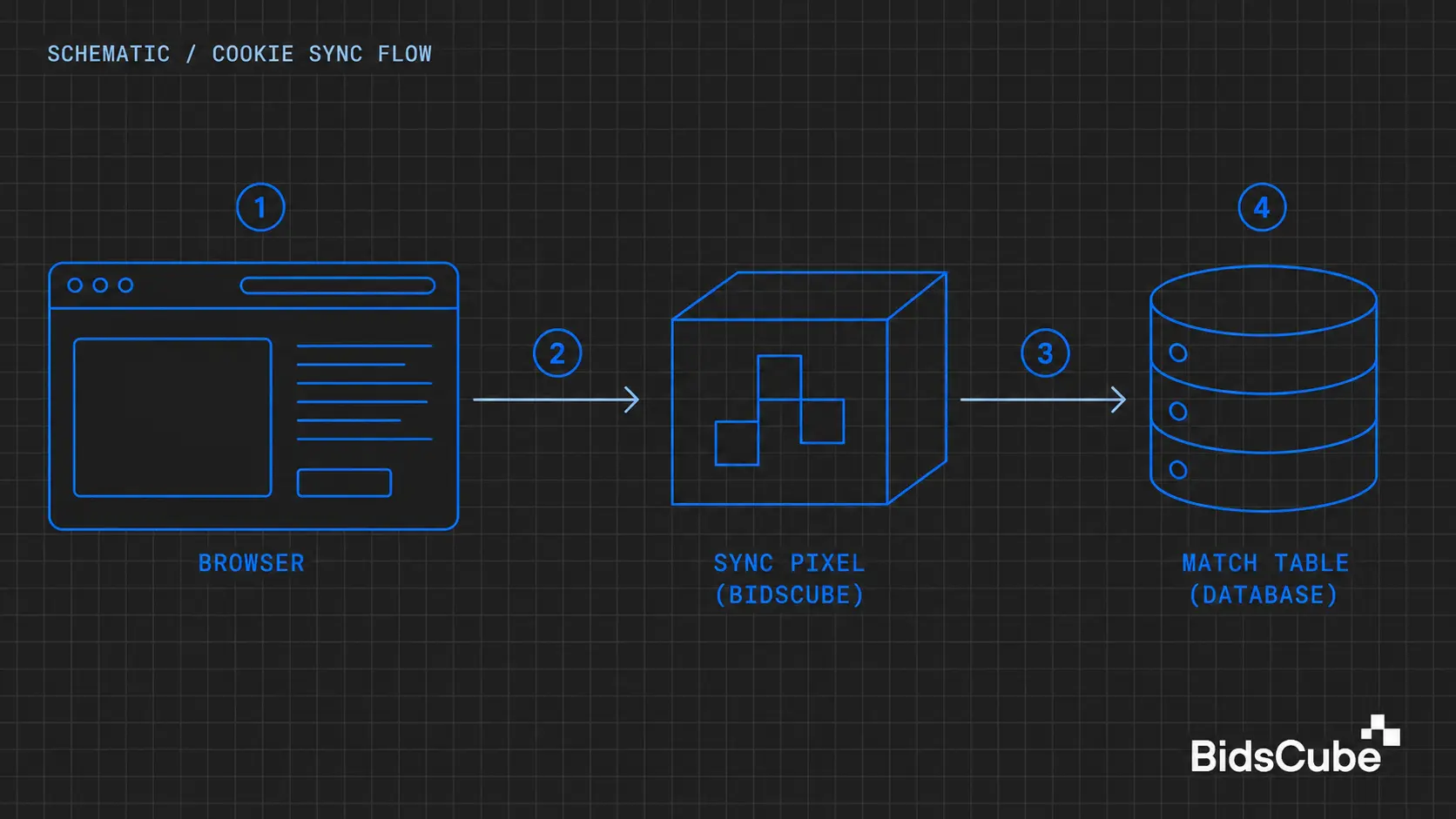
The mechanics look complex, but the cookie syncing programmatic platforms perform today follows four repeatable steps.
- The user visits a publisher’s website. The SSP that monetizes the page sets a cookie with its own user ID in the browser.
- The SSP calls the DSP’s sync pixel. The page fires a sync tag, which is a tiny invisible pixel hosted by the DSP. The call includes the SSP’s user ID. Through a redirect, the DSP reads it and checks its own cookie for the same browser.
- The DSP stores the mapping. The DSP saves the pair {SSP user ID: DSP user ID} in its match table. The match table is a database of ID correspondences between different systems.
- The mapping pays off at auction time. When an impression goes up for sale, the SSP sends its user ID in the bid request. The DSP looks up the mapping, finds its own ID, applies its audience data, and places an informed bid.
The sync pixel and the redirect do the heavy lifting. The pixel triggers the exchange, and the redirect lets each platform read and write its own cookie, since browsers only allow a domain to access its own cookies. The match table turns that one-time exchange into a durable asset the DSP can use across millions of future auctions.
Cookie Sync vs Cookie Matching: Is There a Difference?
No. Cookie syncing and cookie matching describe the same process. The two names come from different corners of the industry.
“Cookie matching” appears more often in technical documentation. Google uses it in its developer guides, and the IAB Tech Lab cookie matching specification standardized the term for the open RTB ecosystem. “Cookie syncing” dominates everyday industry practice and vendor marketing. If a partner mentions either one, they mean the same handshake between platforms.
Why Cookie Syncing Matters for Programmatic Advertising

Cookie matching is not a nice-to-have. Several core programmatic functions break without it.
- Frequency capping across platforms. Advertisers cap how often one user sees an ad. Without a sync, each platform counts impressions for what it thinks are different users. The same person can see the same creative ten times, and budgets burn on waste.
- Audience targeting accuracy. A DSP cannot apply an audience segment if it does not know who the user is. The match table connects the segment data to the live bid request.
- Attribution and measurement. Conversion tracking needs consistent IDs between the ad server and analytics systems. Broken ID chains produce broken reports.
- Retargeting. Showing an ad to someone who visited an advertiser’s site requires a mapping between the advertiser’s platform and the seller’s platform. No mapping, no retargeting.
- Cross-device measurement. Synced IDs form the base layer that cross-device graphs build on. Without them, every device looks like a separate stranger.
Without the cookie syncing programmatic buyers depend on, every one of these functions degrades at once. That is why the industry keeps the plumbing running even while it builds replacements.
Limitations and Challenges of Cookie Syncing
The technology works, but it carries real costs and growing constraints.
- Low match rates. A typical cookie sync match rate falls between 40% and 70%, depending on the platform pair. Some industry studies report rates as low as 31% to 45%. The unmatched share of traffic trades blind, which lowers CPMs for sellers and reach for buyers.
- Latency. Every pixel call adds milliseconds to page load. A single page can fire dozens of sync calls, and the delay becomes visible to users and harmful to publishers.
- Third-party cookie restrictions. Third-party cookies are blocked by default on Safari and Firefox. Chrome retained them after Google abandoned its plan to deprecate them, but their viability continues to deteriorate.
- Privacy regulations. GDPR and CCPA restrict data exchange without explicit consent. A sync that fires before consent is a compliance risk, not just a technical event.
- Browser tracking prevention. Intelligent Tracking Prevention (ITP) in Safari caps the lifetime of many cookies at 7 days. Even where a sync succeeds, the match table entry can expire within a week.
Cookie syncing still supports a large share of Chrome-based programmatic trading, but its weaknesses are hard to ignore. SSPs and DSPs need to track match rates, reduce unnecessary pixels, enforce consent checks, and prepare identity alternatives before browser restrictions remove more addressable traffic.
Cookie Syncing in 2026: Still Relevant?
Yes, and the honest answer is more nuanced than either camp admits.
The case for relevance. At present, cookie-based RTB, which covers about 67% of global browser traffic, still operates in Chrome. Shortly after the October 2023 crisis, Google confirmed that third-party cookies remained in Chrome, mitigated in-depth in March 2024, and by October 2025 sequentially retired most Privacy Sandbox APIs, including the Topics API.
The volume of auction-level syncs has not fallen. For most open-web impressions, cookie matching is still how identity resolves.
The case against. Match rates in Safari and Firefox sit near zero. Regulatory pressure keeps rising, and consent requirements shrink the syncable pool even in Chrome. Any strategy built only on third-party cookies has a hard ceiling.
The transitional reality. Cookie syncing remains the backbone in the Chrome environment. For Safari, Firefox, and consent-restricted traffic, platforms need alternative ID solutions such as Universal ID frameworks and first-party data strategies. The winning setup runs both in parallel.
Cookie Syncing vs Privacy-Preserving Alternatives
| Criteria | Cookie Syncing | Universal IDs | Contextual Targeting |
| Identity basis | Third-party cookies | Hashed email or login | Page content, no user ID |
| Browser coverage | Chrome only, in practice | All browsers, where users log in | All browsers |
| Typical match rate | 40% to 70% | High on authenticated traffic, low scale overall | Not applicable |
| Privacy posture | Consent-dependent, under pressure | Consent-based by design | Strongest, no personal data |
| Best use today | Open-web RTB in Chrome | Premium publishers with logins | Cookieless and consent-restricted traffic |
Alternatives to Cookie Syncing
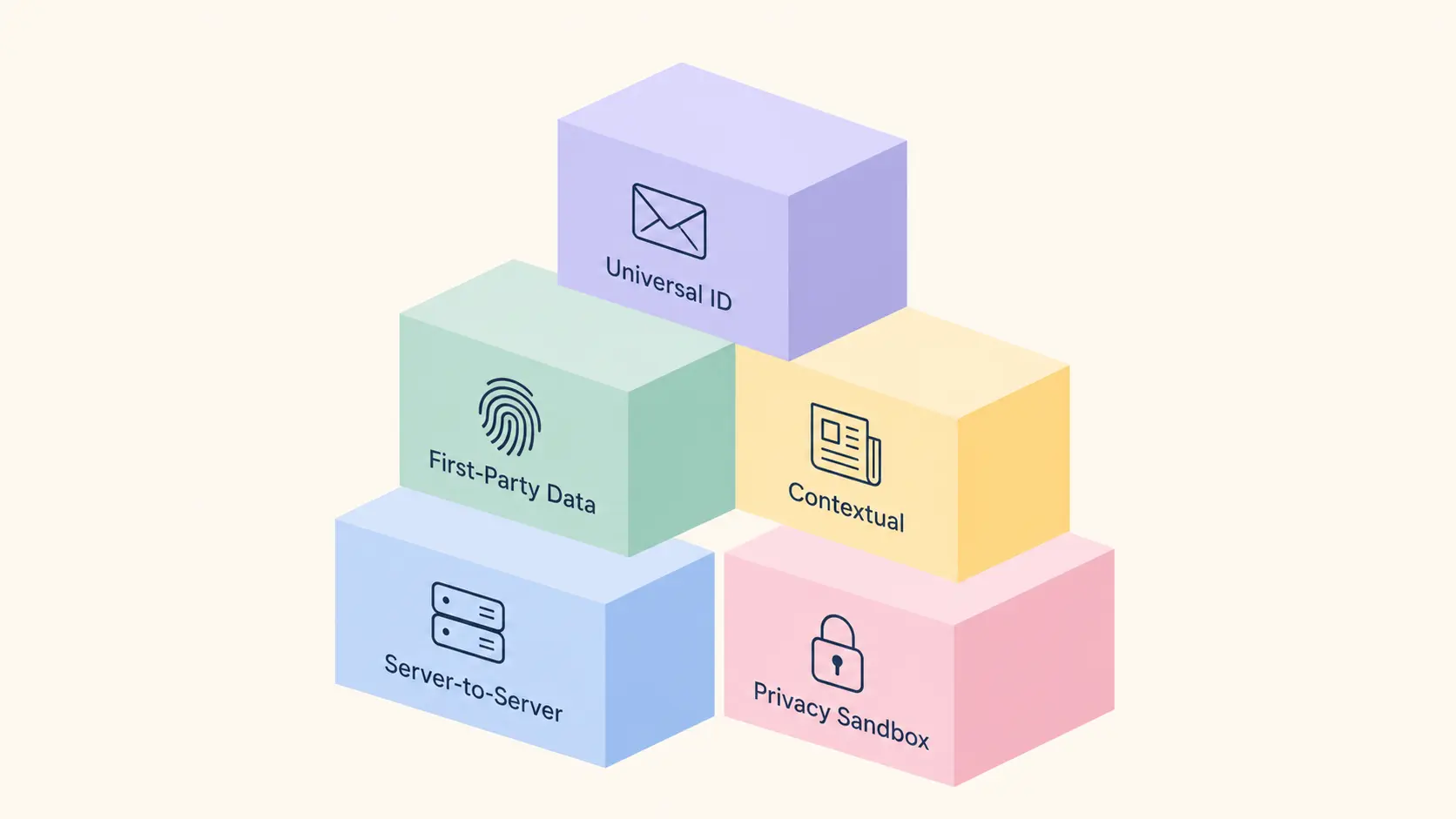
No single replacement exists. The market is converging on a layered identity stack.
- Universal ID solutions. Unified ID 2.0 from The Trade Desk, RampID from LiveRamp, and ID5 replace cookie IDs with shared identifiers. They work across browsers but depend on adoption by both sides of every trade.
- First-party data and email hashing. Publishers convert logins into SHA-256 hashed emails that act as stable identifiers. Strong where users authenticate, weak on anonymous traffic.
- Contextual targeting. Targets the page, not the person, so it needs no user ID at all. It scales everywhere but cannot support retargeting or frequency capping.
- Google Privacy Sandbox. Once promoted as the cookie-free future, the program was largely wound down in October 2025. Google retired the Topics API and most advertising APIs, keeping only a few features such as CHIPS and FedCM.
- Server-to-server sync. Moves ID matching from the browser to the server level. It cuts page latency and survives some browser restrictions, but it still requires a shared identifier to match on.
There won’t be a universal replacement servicing the post-cookie market. The majority of teams will leverage first-party data combined with Universal IDs, contextual signals and server-side matching depending on each browser’s rules, consent and campaign.
How BidsCube Can Help
Identity infrastructure is not something most companies should build alone. BidsCube provides the full programmatic stack with cookie sync and ID matching built in.
- The BidsCube DSP maintains match tables with major supply partners, so your campaigns apply audience data, capping, and retargeting on every matched bid request.
- The BidsCube SSP handles sync pixels and user ID passing on the sell side, which lifts match rates and keeps demand partners bidding with confidence.
- The White-Label Ad Exchange gives you your own trading infrastructure with correct cookie matching between every connected DSP and SSP, plus support for alternative IDs as the market shifts.
Independent reviews on Clutch reflect how BidsCube clients rate that infrastructure in production.
Cookie syncing is still the workhorse of identity in Chrome, and Chrome is still most of the open web. The smart move is not to rip it out but to run it alongside Universal IDs and first-party data. Companies that treat identity as a portfolio, not a single technology, will keep their match rates and their revenue through the transition.
Roman Vayukov, CEO at BidsCube
Final Thoughts
The industry has predicted the death of the cookie for years, yet the cookie sync remains the default identity layer of open-web RTB. The real story is a slow transition, not a sudden switch. Chrome traffic still resolves identity through match tables, while cookieless browsers force buyers and sellers to test alternative IDs today, not someday. The teams that win will run cookie syncing at full quality where it works and layer new identifiers where it does not.
If you want infrastructure that already does both, talk to the BidsCube team and see the platform in action.
Our tech staff and AdOps are formed by the best AdTech and MarTech industry specialists with 10+ years of proven track record!

FAQ
What is cookie syncing?
Cookie syncing is when two ad platforms (e.g, DSP and SSP) exchange cookie IDs to synchronize user identifiers. It allows both systems to identify the same user and exchange information about the user.
How does cookie syncing work in programmatic advertising?
When a user views a page, an SSP writes its cookie and then calls the sync pixel at the DSP. Using a redirect, the DSP matches the user ID from the SSP with its own user ID from a bid request and saves the pair in a match table. When a bid request is sent, the DSP uses that mapping to apply audience data.
What is the difference between cookie syncing and cookie matching?
There is none. They are two names for the same process. Technical documentation from Google and IAB Tech Lab prefers cookie matching, while industry practice prefers cookie syncing.
Why is cookie syncing important for DSPs and SSPs?
A DSP cannot identify the user behind an SSP’s bid request without it. ID mapping is what syncs do, and therefore most of the important features of any marketing platform (frequency capping, audience targeting, retargeting and attribution) are relying on this as well.
Is cookie syncing still relevant in 2026?
Yes. Chromebooks must have third-party cookies on, and Chrome accounts for approximately two thirds of global browser traffic. Cookie syncing is still the backbone of most open-web RTB, except Safari and Firefox, which need other ID solutions.
What are the alternatives to cookie syncing?
The primary alternatives are Universal ID solutions like Unified ID 2.0, RampID and ID5, first-party data hashed with SHA-256 email, contextual targeting and server-to-server sync. Companies typically combine several of these into a layered identity stack.


